Historic India-New Zealand FTA to Be Signed April 27: Goyal Welcomes McClay

Synopsis
India and New Zealand are set to sign a landmark Free Trade Agreement on April 27, 2026, as Commerce Minister Piyush Goyal welcomed NZ Trade Minister Todd McClay to New Delhi. The deal promises reduced tariffs, expanded market access, and new economic opportunities — marking one of India's most significant bilateral trade milestones in years.
Key Takeaways
Commerce Minister Piyush Goyal welcomed New Zealand Trade Minister Todd McClay to New Delhi on Friday, April 24, 2026 , ahead of the FTA signing.
The India-New Zealand Free Trade Agreement is set to be formally signed on Monday, April 27, 2026 .
New Zealand PM Christopher Luxon confirmed the deal will improve market access for Kiwi exporters, including manufacturers of marine jet systems exported to over 70 countries .
The FTA is expected to progressively reduce tariffs on New Zealand goods entering the Indian market , boosting competitiveness and trade flows.
The deal is projected to generate more jobs, higher wages, and expanded business opportunities in New Zealand while opening export avenues for Indian industries.
This agreement is part of India's broader FTA strategy , following similar deals with the UAE, Australia, and the UK under the Modi government.
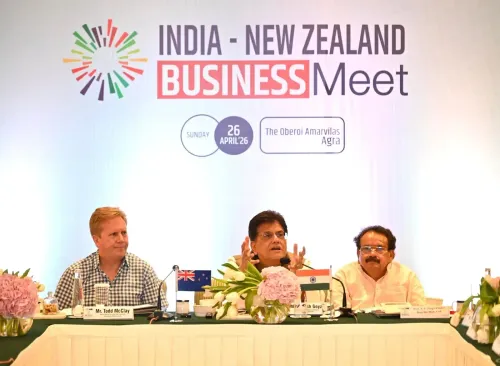
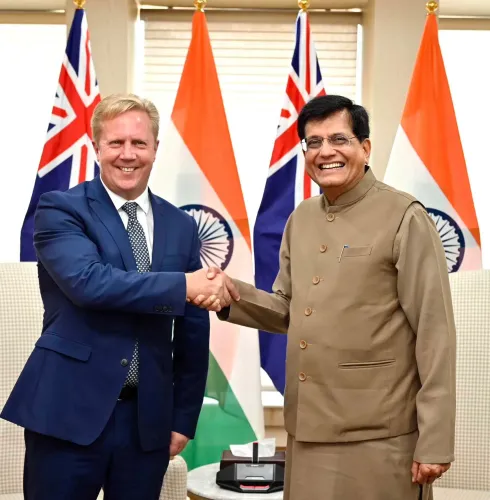
New Delhi, April 24: Commerce and Industry Minister Piyush Goyal on Friday received New Zealand Minister for Trade and Investment Todd McClay in New Delhi, marking a pivotal diplomatic moment ahead of the landmark India-New Zealand Free Trade Agreement (FTA) scheduled for signing on April 27, 2026. The bilateral deal is expected to significantly expand trade volumes, open new market access channels, and deepen economic ties between the two nations.
Goyal Calls Visit a 'Defining Moment' in Bilateral Journey
Taking to social media platform X, Minister Goyal expressed enthusiasm over McClay's arrival, stating he was "delighted" to welcome the New Zealand minister as both countries "begin a new chapter in India-New Zealand economic ties."
Goyal described McClay's visit as "a defining moment in our bilateral journey," emphasizing that it reflects "the trust, shared values, and common vision" that form the foundation of the partnership. He stressed the deal is oriented toward "sustainable economic growth" and driving "prosperity for both nations."
The visit comes just days before the formal FTA signing on April 27, underscoring the high-level political commitment both governments have invested in concluding the agreement.
New Zealand PM Luxon Announces FTA Signing, Highlights Key Benefits
New Zealand Prime Minister Christopher Luxon also confirmed the development earlier on Friday, April 24, posting on X: "We will sign a Free Trade Agreement with India on Monday."
In an accompanying video message, Luxon outlined the tangible benefits for New Zealand exporters, specifically citing manufacturers of marine jet systems — components used in boats and exported to over 70 countries globally — as among the primary beneficiaries of improved market access to India.
Luxon further noted that several New Zealand exporters currently face tariff barriers when accessing the Indian market. The FTA is designed to gradually reduce and eventually eliminate such duties, making New Zealand goods more price-competitive in one of the world's fastest-growing consumer markets.
Economic Impact: Jobs, Wages, and Trade Flows
The New Zealand Prime Minister projected wide-ranging economic benefits from the agreement, promising "more jobs, higher wages and more opportunities" for New Zealand citizens. He highlighted that the deal would stimulate increased business activity and support employment generation across key export-oriented sectors.
On the Indian side, the FTA is expected to open up greater export opportunities in New Zealand's market for Indian goods and services, particularly in sectors such as pharmaceuticals, textiles, IT services, and agricultural products — areas where India holds a competitive advantage.
Both sides are expected to benefit from reduced trade barriers and strengthened commercial engagement, which analysts say could substantially boost bilateral trade volumes that have historically remained below potential given the geographic distance between the two economies.
Strategic Context: India's FTA Push Under Modi Government
This agreement is part of India's broader strategic push to finalize multiple Free Trade Agreements with key partners globally. Notably, India has in recent years concluded or advanced FTAs with the UAE, Australia, and the UK, signaling a decisive shift in trade policy under the Modi government after years of relative caution on multilateral and bilateral trade deals.
The India-New Zealand FTA negotiations had been in progress for an extended period, making the April 27 signing a significant diplomatic achievement. This comes amid a global environment where nations are increasingly seeking to diversify supply chains and reduce dependence on single trade partners — a trend accelerated by post-pandemic disruptions and geopolitical realignments.
Critically, India's growing middle class — projected to reach 500 million consumers by 2030 — represents a massive and largely untapped market for New Zealand premium goods, from dairy and meat products to high-value manufactured exports. Conversely, New Zealand offers Indian exporters a gateway to the broader Pacific regional trade ecosystem.
What Happens Next
The formal FTA signing ceremony is scheduled for Monday, April 27, 2026, and is expected to be attended by senior ministers from both governments. Following the signing, the agreement will likely go through respective parliamentary or legislative ratification processes before entering into force.
Once ratified, the deal is anticipated to progressively dismantle tariff and non-tariff barriers across multiple product categories, with implementation timelines potentially spanning several years for the most sensitive sectors. Trade and industry bodies on both sides are expected to issue detailed sector-by-sector impact assessments in the coming weeks.
Point of View
The Modi government's FTA blitz — UAE, Australia, UK, and now New Zealand — reflects a strategic recalibration that acknowledges India cannot grow at 8% in isolation. What the mainstream narrative misses, however, is the asymmetry: New Zealand's dairy lobby has long been a sticking point for Indian farmers, and the devil will be in the implementation details. The real test is not the signing ceremony, but whether Indian agriculture and small manufacturers are adequately shielded even as new trade corridors open.
NationPress
16 Sept 2026
Frequently Asked Questions
When will the India-New Zealand Free Trade Agreement be signed?
The India-New Zealand Free Trade Agreement is scheduled to be signed on April 27, 2026 . The signing will take place following a high-level visit by New Zealand Trade Minister Todd McClay to New Delhi.
What are the key benefits of the India-New Zealand FTA?
The FTA is expected to reduce tariff barriers, improve market access for exporters on both sides, and boost trade in sectors like marine manufacturing, pharmaceuticals, textiles, and IT services. New Zealand PM Luxon said it would bring 'more jobs, higher wages and more opportunities' for New Zealand citizens.
Who is Todd McClay and why is he visiting India?
Todd McClay is New Zealand's Minister for Trade and Investment. He visited New Delhi on April 24, 2026, to meet Commerce Minister Piyush Goyal ahead of the formal India-New Zealand FTA signing ceremony on April 27.
How does the India-New Zealand FTA fit into India's broader trade strategy?
The India-New Zealand FTA is part of India's accelerated bilateral trade agreement push under the Modi government, which has also concluded or advanced FTAs with the UAE, Australia, and the UK. It reflects India's shift toward proactive engagement in global trade frameworks.
Which sectors will benefit most from the India-New Zealand trade deal?
New Zealand exporters in marine jet systems manufacturing and premium goods stand to gain improved access to India's large consumer market. Indian exporters in pharmaceuticals, textiles, IT services, and agriculture are expected to benefit from reduced barriers in the New Zealand market.