India-New Zealand FTA to take effect in 2025, says Trade Minister Todd McClay
Synopsis
New Zealand's Trade Minister Todd McClay has told IANS that the freshly signed India-New Zealand FTA will be rushed to Parliament for ratification as early as Tuesday, with a target of full entry into force before 2025 ends. The deal offers Indian exporters zero tariffs from day one — a rare and immediate market-access win in an era of rising global trade uncertainty.
Key Takeaways
The India–New Zealand FTA was signed on Monday, 28 April 2025 , and will be placed before New Zealand's Parliament as early as Tuesday .
New Zealand Trade Minister Todd McClay confirmed the deal is targeted to enter into force before the end of 2025 .
All Indian exports to New Zealand will attract a zero tariff rate from day one .
Over 50 per cent of New Zealand's exports to India will also drop to zero tariffs immediately; 95 per cent will be tariff-free or significantly reduced after seven years .
Key Indian export categories include agricultural equipment, chemicals, fertilisers, oil products , and manufactured goods.
New Zealand will supply India with lamb, seafood , and horticultural products under the deal.
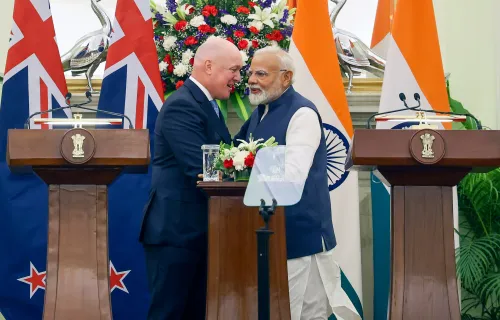
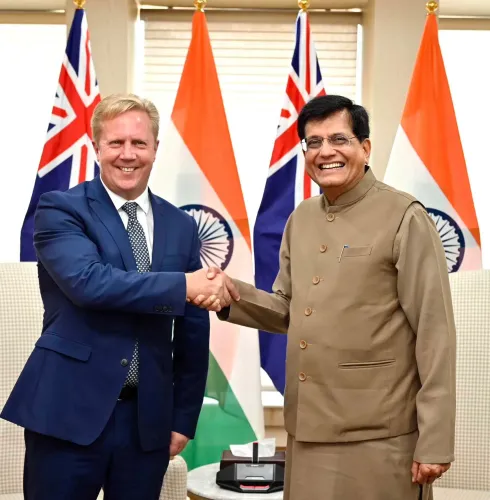
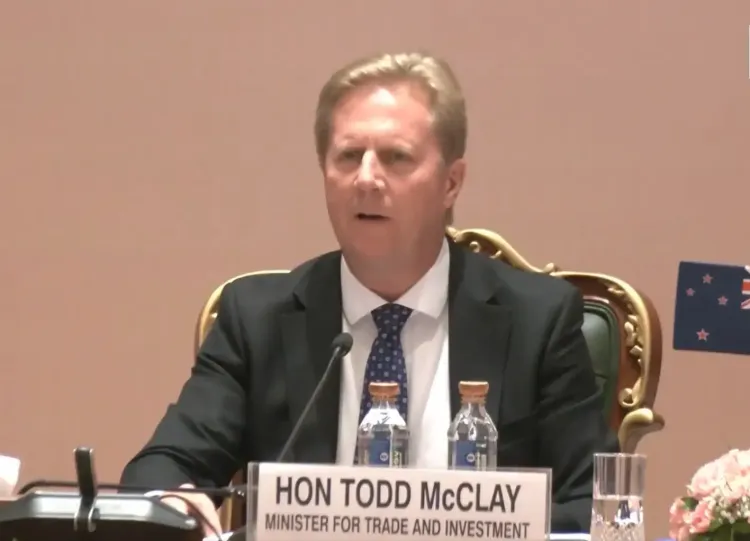
New Zealand's Minister for Trade and Investment, Todd McClay, has said that the Free Trade Agreement (FTA) signed between India and New Zealand on Monday, 28 April 2025, will be placed before New Zealand's Parliament as early as Tuesday to fast-track ratification, with the goal of bringing it into force before the end of 2025. McClay made the remarks in an exclusive interview with IANS in New Delhi.
Timeline and Implementation
"We will start very, very quickly. We hope to have it enter into force before the end of the year, and then it will be fully implemented over about a seven-year period," McClay told IANS. He added that both governments would be "working very hard" over the coming months to ensure that the deal's benefits reach citizens on both sides.
On the tariff structure, McClay clarified that from day one, all exports from India to New Zealand will attract a zero tariff rate. For New Zealand's exports to India, over 50 per cent will drop to zero tariffs immediately, while the remainder will be phased in over the seven-year implementation window. By the end of that period, approximately 95 per cent of New Zealand's exports will either be tariff-free or enjoy significant tariff reductions.
Why the FTA Matters Amid Global Uncertainty
Asked about the agreement's significance in the context of ongoing global trade disruptions, McClay said the FTA creates "a common set of rights and obligations that businesses can rely upon." He described it as a public commitment by both nations to establish and honour rules — providing business communities with the certainty needed to invest in the bilateral trading relationship.
"This agreement serves as a beacon, a bright light that shows how negotiating high-quality agreements and honouring commitments can help economies grow, which ultimately benefits our citizens," McClay said. This comes amid heightened global trade tensions, with several major economies imposing or threatening new tariffs, making rules-based bilateral agreements increasingly valuable for exporters and investors.
Benefits for Indian Exporters and Consumers
McClay said Indian exporters stand to gain substantially, noting that New Zealand imposes very few restrictions and a zero tariff rate on Indian goods from day one. He highlighted a broad range of Indian export categories — from agricultural equipment and chemicals to fertilisers, oil products, and a wide variety of manufactured goods — as likely beneficiaries.
"New Zealand consumers are selective; they value both competition and choice, so India is likely to perform very well," McClay observed. The minister's remarks suggest particular optimism for Indian manufactured goods finding new market access in New Zealand.
What New Zealand Brings to Indian Markets
From New Zealand's side, McClay pointed to complementary sectors where the two economies do not directly compete. He specifically mentioned lamb, seafood, and certain horticultural products as areas where New Zealand supply could fill gaps in Indian import demand.
For Indian consumers, McClay said the FTA would translate into greater choice, potentially lower prices, and guaranteed quality standards. "If it comes from New Zealand, it is safe, delicious, and enjoyable," he said. New Zealand is widely regarded as one of the world's leading producers of premium, safety-certified food products.
What Comes Next
With the agreement now signed, both governments are expected to complete their respective domestic ratification processes in the coming months. Full implementation will be phased over seven years, with the most significant tariff liberalisation taking effect immediately upon entry into force. Industry bodies and trade associations in both countries are expected to begin mapping new export opportunities as the agreement moves toward formal operationalisation.
Point of View
But its symbolism is outsized. At a moment when the global trading order is fragmenting, both governments have chosen to accelerate — not delay — a rules-based agreement, and the decision to table it in Parliament within 24 hours of signing signals unusual political urgency. The real test will be on the Indian side: zero tariffs on Indian exports to New Zealand from day one is a strong headline, but New Zealand is a small market. The more consequential question is whether Indian manufacturers and agri-exporters have the export infrastructure to actually capitalise on the access being offered, or whether the deal's benefits remain theoretical for years, as has happened with several of India's earlier FTAs.
NationPress
17 Sept 2026
Frequently Asked Questions
What is the India–New Zealand Free Trade Agreement?
The India–New Zealand FTA is a bilateral trade agreement signed on 28 April 2025 that eliminates or significantly reduces tariffs on goods traded between the two countries. It offers Indian exporters zero tariffs from day one and will be fully implemented over a seven-year period.
When will the India–New Zealand FTA come into force?
New Zealand Trade Minister Todd McClay has said both governments aim to bring the FTA into force before the end of 2025. New Zealand plans to place the agreement before its Parliament as early as 29 April 2025 to fast-track ratification.
What are the tariff benefits for Indian exporters under the FTA?
All exports from India to New Zealand will attract a zero tariff rate from the very first day the agreement enters into force, with no phased reduction required. This covers a wide range of goods including agricultural equipment, chemicals, fertilisers, oil products, and manufactured goods.
What will New Zealand export to India under the FTA?
New Zealand is expected to increase exports of lamb, seafood, and horticultural products to India — categories where India relies on imports. Indian consumers are expected to benefit from greater choice, potentially lower prices, and New Zealand's internationally recognised food safety standards.
How does the FTA address global trade uncertainty?
According to Minister Todd McClay, the FTA creates a common set of rights and obligations that businesses can rely on, providing certainty for investors and exporters at a time when the global trade environment is volatile. He described it as a model for how rules-based agreements can support economic growth.