WTO consensus-based decision-making must to protect developing nations: India
Synopsis
India's Commerce Ministry has sounded a clear alarm: the WTO's consensus-based architecture is under threat from plurilateral deals, eroding MFN obligations, and climate-linked trade tools like CBAM that could disadvantage developing nations. With the Appellate Body still paralysed since 2019, the multilateral trading system is at a crossroads — and India is pushing hard to ensure reform doesn't come at the cost of equity.
Key Takeaways
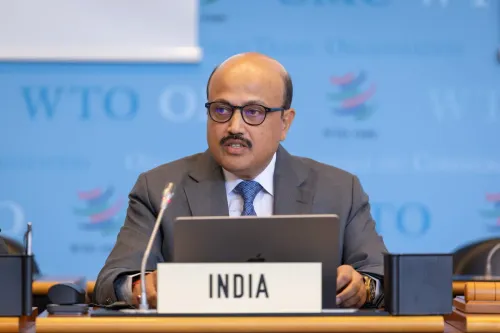
Amitabh Kumar , Additional Secretary, Commerce Ministry , called for preserving WTO consensus-based decision-making and special and differential treatment for developing countries.
The WTO Appellate Body has remained non-functional since 2019 , crippling the two-tier dispute settlement mechanism.
Erosion of the most-favoured-nation (MFN) obligation and rising national security exceptions were flagged as structural threats.
Mark Wu of Harvard Law School cited geopolitical contestation, technological change, and economic imbalances as key pressures on the WTO.
Former WTO Ambassador Ujal Singh Bhatia linked carbon governance with global justice, raising concerns over instruments like the CBAM .
The discussion was jointly organised by IIFT , the Centre for Trade and Investment Law , and the South Asia International Economic Law Network .
Amitabh Kumar, Additional Secretary in the Commerce Ministry, on Tuesday, 29 April 2025, urged the preservation of the World Trade Organization's (WTO) consensus-based decision-making framework and special and differential treatment for developing countries, warning against the rising tide of plurilateral approaches and non-tariff measures. His remarks came during a virtual discussion on the evolving role of the WTO in governing multilateral trade.
Key Concerns Raised
The virtual discussion, jointly organised by the Centre for Trade and Investment Law, the Indian Institute of Foreign Trade (IIFT), and the South Asia International Economic Law Network, brought together senior policymakers, academics, researchers, and students to examine the mounting pressures on the multilateral trading system.
Central to the deliberations was the continued non-functionality of the WTO Appellate Body since 2019, which has effectively paralysed the organisation's two-tier dispute settlement mechanism. Panellists also flagged the erosion of foundational trade principles, including the most-favoured-nation (MFN) obligation, and the growing invocation of national security exceptions to justify trade-restrictive measures.
Geopolitical and Technological Pressures on WTO
Prof. Mark Wu of Harvard Law School examined the broader structural forces bearing down on the WTO, including geopolitical contestation between major powers, rapid technological transformation, and deepening global economic imbalances. According to Prof. Wu, these factors collectively signal a period of fundamental transition for the multilateral trading system, with significant implications for the WTO's future authority and effectiveness.
Notably, the growing resort to plurilateral agreements — which bind only willing members rather than the full WTO membership — was identified as a structural threat to the level-playing field that consensus-based governance is designed to protect.
Carbon Border Adjustment and Climate Justice
A separate session featured Ujal Singh Bhatia, India's former Ambassador and Permanent Representative to the WTO, who underscored the intrinsic link between carbon governance and global justice. Panellists critically examined the legal, ethical, and economic implications of climate-linked trade instruments, including the Carbon Border Adjustment Mechanism (CBAM) and other carbon pricing frameworks.
The discussion emphasised the need to balance trade competitiveness with climate responsibilities while ensuring equitable outcomes for developing nations, according to an official statement from the Commerce and Industry Ministry. Critics have argued that mechanisms like CBAM, introduced by the European Union, risk functioning as de facto trade barriers that disproportionately burden lower-income economies still building their industrial base.
What This Means for India and Developing Nations
India has consistently championed the interests of developing and least-developed countries within WTO forums, pushing back against attempts to dilute special and differential treatment provisions. The concerns raised at this discussion align with India's broader trade diplomacy posture — that reforms to the WTO must not come at the cost of equity and inclusivity in global governance.
As the WTO's 14th Ministerial Conference approaches, the outcomes of discussions like these are expected to shape India's negotiating positions on dispute settlement reform, climate-trade linkages, and the future architecture of multilateral trade rules.
Point of View
Rather than simply resist it.
NationPress
18 Sept 2026
Frequently Asked Questions
What is consensus-based decision-making at the WTO?
Consensus-based decision-making means that WTO rules and agreements require the agreement of all member countries, ensuring no single nation or bloc can impose outcomes on others. India and other developing nations argue this principle is essential to maintaining a level playing field in global trade.
Why has the WTO Appellate Body been non-functional since 2019?
The WTO Appellate Body has been non-functional since 2019 primarily because the United States blocked the appointment of new judges, citing concerns about the body's rulings overstepping its mandate. This has left trade disputes unresolved at the appellate level, weakening the WTO's enforcement capacity.
What is CBAM and why are developing nations concerned?
The Carbon Border Adjustment Mechanism (CBAM) is a European Union policy that imposes a carbon cost on imports from countries with less stringent climate regulations. Developing nations, including India, argue it functions as a trade barrier that disproportionately burdens economies still industrialising, raising concerns about equity and compatibility with WTO rules.
What are plurilateral agreements and why are they controversial?
Plurilateral agreements are trade deals negotiated among a subset of WTO members rather than the full membership. Critics argue they undermine the consensus-based architecture of the WTO by allowing powerful economies to set rules that eventually pressure non-signatories to comply, eroding special and differential treatment for developing countries.
What is India's position on WTO reform?
India has consistently advocated for WTO reforms that preserve consensus-based governance, restore the Appellate Body's functionality, and protect special and differential treatment for developing and least-developed countries. India opposes reforms that would dilute these provisions in favour of frameworks driven by major trading blocs.