India-US Relations Under Stress Test: Hudson Institute Panel Warns of Strategic Drift
Synopsis
Top US and Indian strategists at the Hudson Institute's New India Conference warned on April 23 that the India-US partnership is under a visible stress test — fractured by strategic divergence over China, net negative FDI, diaspora anxiety, and a fading democratic narrative. The relationship's survival depends on urgent recalibration.
Key Takeaways
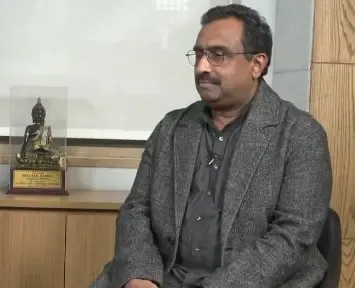
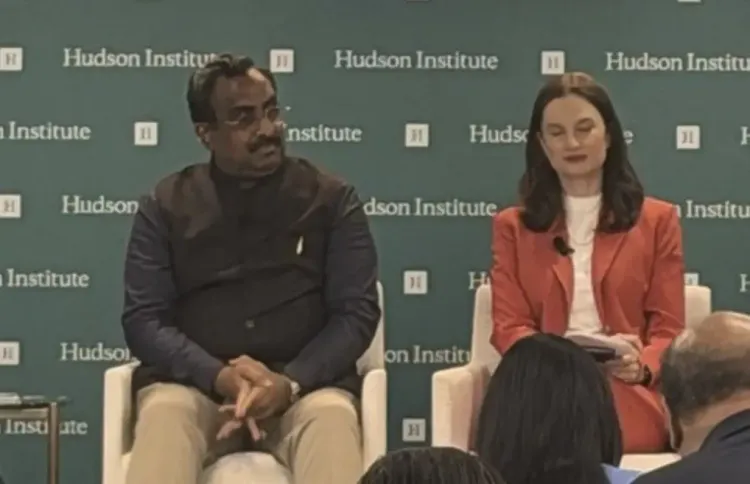
Ram Madhav , President of the India Foundation , said the India-US relationship is under visible stress across strategic, economic, and people-to-people pillars as of April 2025 .
India is experiencing net negative FDI from the United States , signalling a widening gap between diplomatic rhetoric and actual investment flows.
Kurt Campbell , former US Deputy Secretary of State , called India-US ties "the most important relationship for the US in the 21st century" but flagged bureaucratic misalignment as a persistent obstacle.
Elizabeth Threlkeld of the Stimson Centre noted that the shared democratic narrative underpinning the partnership now has "less traction than it used to." The widening conflict in the Indian Ocean region is exposing supply chain and energy security vulnerabilities, with experts calling for deeper India-US cooperation in logistics and intelligence sharing .
An upcoming bilateral trade deal is seen as a potential stabiliser for the relationship, though structural and strategic misalignments remain unresolved.
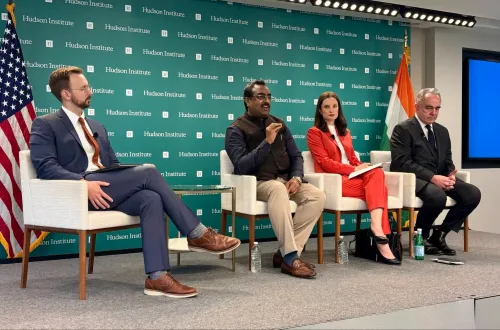
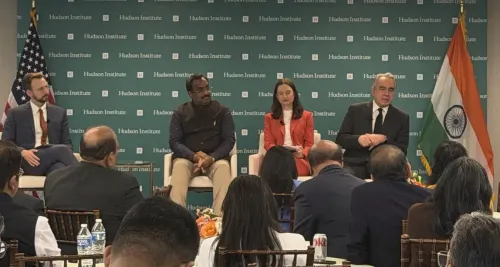
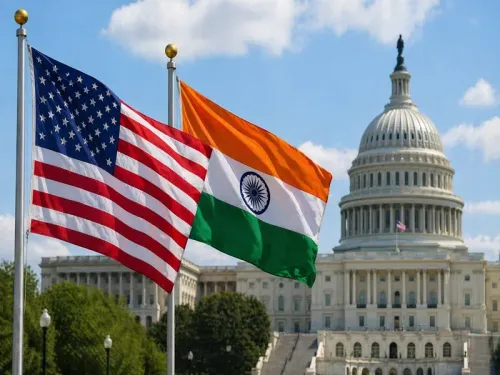
Washington, April 23: The India-United States relationship is undergoing a serious stress test, with experts at a high-level panel at the Hudson Institute calling for an urgent recalibration built on mutual respect, mutual sensitivity, and shared strategic interests. The discussion, held as part of the New India Conference on April 23, 2025, brought together senior policymakers and analysts to examine the fractures emerging across strategic, economic, and people-to-people pillars of one of the world's most consequential bilateral partnerships.
Strategic Divergence and Geopolitical Friction
Ram Madhav, President of the India Foundation, opened with a candid assessment, describing the relationship as both "very important" and "lasting," while acknowledging visible stress across its foundational pillars. "We had a great understanding of our geostrategic priorities… Today doesn't seem so anymore," he said, pointing to growing divergence over China policy and a lack of broader strategic clarity between the two nations.
Madhav's remarks reflect a wider concern in New Delhi that Washington's shifting posture — particularly under evolving domestic political pressures — has introduced unpredictability into a partnership that both sides once described as a natural alliance of democracies. The Indo-Pacific strategy, which placed India at its centre, now faces questions about its long-term coherence as US resources and attention shift.
Economic Tensions and Trade Deal Hopes
On the economic front, Ram Madhav flagged a troubling trend: net negative Foreign Direct Investment (FDI) from the United States into India, a signal that investment flows are not matching the rhetorical warmth of the bilateral relationship. He cited escalating trade tensions and investment imbalances as key stressors, while expressing cautious optimism that an upcoming bilateral trade agreement could help stabilise ties.
Elizabeth Threlkeld of the Stimson Centre offered a more measured view, noting that major investments by US technology companies in India continue to provide "ballast" to the relationship. She described India's response to Washington's policy shifts as "remarkably measured and mature," characterising New Delhi's outreach to alternative partners as "incremental calibration rather than any sort of fundamental shift."
This nuance matters. India's simultaneous engagement with Russia, the European Union, and the Gulf states is not a pivot away from Washington — it is a strategic hedge that reflects the lessons of a post-unipolar world. Critics, however, argue that New Delhi's caution risks being read as ambivalence by a Washington that increasingly demands clear alignment.
Diaspora Anxiety and People-to-People Ties Under Pressure
One of the most emotionally resonant portions of the panel addressed the Indian-American diaspora, a community of nearly 4.4 million people that has historically served as a bridge between the two nations. Ram Madhav warned of "a lot of anxiety, a lot of worries" within Indian-origin communities in the United States, a sentiment tied to immigration policy uncertainty, visa processing delays, and a broader climate of social unease.
Kurt Campbell, former US Deputy Secretary of State, echoed this concern while highlighting the diaspora's resilience, recalling how Indian-American communities mobilised rapidly during the Covid-19 crisis. He called for expanding education and technology partnerships, noting strong and sustained demand among Indian students and professionals seeking opportunities in the United States.
Elizabeth Threlkeld flagged immigration and visa uncertainty as a critical vulnerability — one that affects not just individuals but the broader business and innovation ecosystem that underpins US-India economic cooperation.
Kurt Campbell: "Most Important Relationship of the 21st Century"
Kurt Campbell described the India-US partnership as "the most important… for the United States in the 21st century," a framing that underscores just how much is at stake. Yet he acknowledged rising unease on both sides, stating plainly: "It is troubling… that we have to have a reminder around mutual respect."
Campbell also warned that bureaucratic and strategic misalignment within the US system — particularly in defence structures that span multiple regional commands — continues to complicate meaningful engagement with India. This is not a new problem, but it has become more acute as the bilateral agenda has grown in complexity, spanning defence co-production, semiconductor supply chains, space cooperation, and clean energy.
Notably, the shared democratic narrative that once served as the moral foundation of the partnership has, as Threlkeld observed, "less traction than it used to" — a sobering admission that values-based diplomacy alone cannot sustain a relationship under structural pressure.
Indian Ocean Conflict and Indo-Pacific Security Concerns
The panel also addressed the widening scope of global conflict impacting the Indian Ocean region. Ram Madhav described the expansion of hostilities into the broader Indian Ocean theatre as "certainly a matter of big concern" for India, stressing the urgent need for negotiation and dialogue to contain the crisis.
Elizabeth Threlkeld said the crisis has exposed deep vulnerabilities in supply chains, energy security, and maritime operations, and called for deeper bilateral cooperation in logistics, intelligence sharing, and contingency planning. These are areas where the India-US defence partnership, including frameworks like COMCASA and BECA, has made progress — but where implementation gaps remain.
Kurt Campbell issued the starkest warning, cautioning that the long-term economic and military consequences of the conflict would be "greater… than anyone is really ready to acknowledge," particularly for the Indo-Pacific, as US military and financial resources are drawn toward other theatres. For India, this raises a fundamental question: can New Delhi fill parts of the security vacuum, and at what cost?
As both nations navigate this inflection point, the coming months — particularly the trajectory of trade negotiations, defence co-production timelines, and diaspora policy — will determine whether the India-US partnership emerges from its stress test stronger or structurally weakened.
Point of View
But the admission that the democratic values narrative, once the bedrock of India-US bonding, has lost its persuasive power. This reflects a global trend where transactional interests are overtaking ideological alignment. India's measured response to Washington's volatility is strategically sound, but New Delhi must not mistake patience for passivity — the window to shape the terms of this partnership is narrowing as US strategic attention fragments across multiple global crises.
NationPress
19 Sept 2026
Frequently Asked Questions
Why is the India-US relationship under a stress test in 2025?
The India-US relationship is facing a stress test due to strategic divergence over China policy, trade tensions, net negative FDI flows, immigration and visa uncertainty, and reduced high-level diplomatic engagement. Experts at the Hudson Institute's New India Conference on April 23, 2025 outlined these fractures while stressing the partnership remains essential.
What did Kurt Campbell say about India-US ties at the Hudson Institute?
Former US Deputy Secretary of State Kurt Campbell described the India-US relationship as 'the most important for the United States in the 21st century.' However, he acknowledged rising unease and said it was 'troubling' that mutual respect needed to be explicitly reaffirmed between the two nations.
What is the impact of US-India tensions on the Indian diaspora?
Ram Madhav of the India Foundation warned of widespread 'anxiety and worries' among Indian-origin communities in the United States, driven by immigration policy uncertainty and visa processing issues. The Indian-American diaspora, numbering nearly 4.4 million, has historically been a key pillar of people-to-people ties.
How is the Indian Ocean conflict affecting India-US relations?
The expansion of global conflict into the Indian Ocean region has exposed vulnerabilities in supply chains, energy security, and maritime operations, according to Elizabeth Threlkeld of the Stimson Centre. Kurt Campbell warned that the long-term consequences for the Indo-Pacific would be greater than currently acknowledged.
What is the New India Conference at the Hudson Institute?
The New India Conference is a high-level forum held at the Hudson Institute in Washington, bringing together senior policymakers, strategists, and analysts to assess India's evolving global role and the future of US-India relations. The 2025 edition was held on April 23.