India industrial warehousing leasing hits 18.3 mn sq ft in Q1 2026

Synopsis
India's industrial and warehousing sector absorbed 18.3 million sq ft in just the first quarter of 2026 — and the headline number understates the shift. Grade A space now accounts for 57 per cent of total stock after a 20 per cent year-on-year surge, signalling that occupiers are no longer just expanding, they are upgrading. With cumulative stock targeting 850 million sq ft by 2030, the structural rerating of Indian industrial real estate is well underway.
Key Takeaways
India's industrial and warehousing market recorded gross absorption of 18.3 million sq ft in Q1 2026 (January–March) .
Total cumulative stock across eight major cities stands at 514 million sq ft , with Grade A space at 293 million sq ft — up 20 per cent year-on-year.
Manufacturing contributed 28 per cent of Q1 absorption; engineering led within manufacturing at a 47 per cent share.
Warehousing drove 72 per cent of Q1 absorption, led by third-party logistics , e-commerce, FMCG, and retail.
Mumbai–Pune accounted for 43 per cent of total Q1 absorption; Delhi-NCR followed at 20 per cent .
The market is projected to reach 850 million sq ft by 2030 , a CAGR of 11.4 per cent , according to JLL .
India's industrial and warehousing real estate market recorded gross absorption of 18.3 million square feet in the first quarter of 2026 (January–March), with manufacturing contributing 28 per cent of total leasing activity, according to data released by property consultancy JLL on 8 June 2026. Cumulative stock across eight major cities has reached 514 million sq ft, reinforcing India's growing stature as a global manufacturing and logistics destination.
Key Developments in Q1 2026
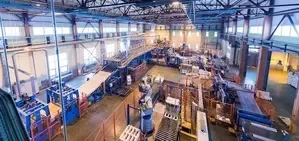
Manufacturing activity alone accounted for 5.1 million sq ft of gross absorption during the quarter, building on a strong 2025 when the sector leased 19.3 million sq ft — representing 26 per cent of that year's total gross absorption of 73.7 million sq ft. Within manufacturing transactions, engineering dominated with a 47 per cent share, while auto and ancillaries accounted for 32 per cent of manufacturing activity.
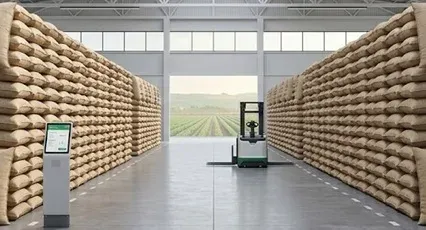
Warehousing remained the larger driver, capturing 72 per cent of Q1 2026 absorption at 13.2 million sq ft. Demand was led by the third-party logistics sector, followed by consumption-driven segments including e-commerce, FMCG, FMCD, and retail.
Grade A Space Surges 20% Year-on-Year
'India's industrial and warehousing market continues to evolve with increasing concentration of Grade A space, which grew 20 per cent year-on-year to reach 293 million sq ft, now representing 57 per cent of the total market stock,' said Yogesh Shevade, Managing Director and Head of Industrial and Logistics, India, JLL. The shift toward Grade A facilities reflects occupier demand for modern, compliant, and energy-efficient infrastructure — a trend accelerating across both manufacturing and logistics segments.
City-Wise Absorption: Mumbai-Pune Lead
Mumbai and Pune together commanded a dominant 43 per cent share of total absorption in Q1 2026, underscoring the western corridor's role as the country's primary industrial belt. Delhi-NCR captured 20 per cent, maintaining its position as a critical northern gateway for logistics and distribution. Bengaluru and Chennai accounted for 13 per cent and 12 per cent respectively, reflecting sustained southern demand driven by electronics, auto, and export-oriented manufacturing.
Outlook: 850 Million Sq Ft by 2030
The market is on track to reach approximately 850 million sq ft by 2030, according to JLL projections — implying a compound annual growth rate of 11.4 per cent from current levels. This trajectory is supported by policy tailwinds including the Production-Linked Incentive scheme, infrastructure investment in logistics parks, and multinational supply-chain diversification away from China. Notably, this is the sector's third consecutive quarter of above-trend absorption, signalling that demand is structural rather than cyclical. How quickly Grade A supply keeps pace with occupier upgrades will be a key variable to watch in the quarters ahead.
Point of View
But the more consequential data point is the Grade A share crossing 57 per cent — a structural upgrade cycle is compressing what used to take a decade into a few years. The Mumbai–Pune corridor's 43 per cent dominance also raises a concentration risk: if western India logistics infrastructure faces bottlenecks, national supply chains feel it disproportionately. The 850 million sq ft target by 2030 assumes sustained PLI execution and uninterrupted FDI in manufacturing — both of which carry policy and geopolitical uncertainty. Mainstream coverage tends to celebrate the headline absorption; the harder question is whether Grade A supply pipelines in Tier-2 cities can absorb demand overflow as gateway markets tighten.
NationPress
22 Sept 2026
Frequently Asked Questions
What was India's industrial and warehousing gross absorption in Q1 2026?
India's industrial and warehousing market recorded gross absorption of 18.3 million square feet in Q1 2026 (January–March), with manufacturing accounting for 28 per cent and warehousing for 72 per cent of the total, according to JLL data.
What is the total industrial and warehousing stock in India as of Q1 2026?
Total cumulative stock across eight major cities stood at 514 million sq ft as of Q1 2026. Of this, Grade A space accounted for 293 million sq ft — or 57 per cent of the total — after growing 20 per cent year-on-year.
Which cities led industrial and warehousing absorption in Q1 2026?
Mumbai and Pune together led with a 43 per cent share of total Q1 2026 absorption. Delhi-NCR followed at 20 per cent, while Bengaluru and Chennai accounted for 13 per cent and 12 per cent respectively.
What is the outlook for India's industrial real estate market by 2030?
According to JLL projections, India's industrial and warehousing stock is on track to reach approximately 850 million sq ft by 2030, implying a compound annual growth rate of 11.4 per cent from current levels of 514 million sq ft.
Which sectors are driving warehousing demand in India?
Third-party logistics firms account for the highest share of warehousing absorption, followed by consumption-driven sectors including e-commerce, FMCG, FMCD, and retail, according to the JLL report for Q1 2026.