Why Are Sensex and Nifty Trading Nearly Flat?
Synopsis
The Indian equity markets opened the week with a flat performance, reflecting concerns over a disappointing earnings season and pressures on technology stocks. With mixed sector performances and a cautious investor sentiment, market watchers are keenly observing for further global cues. Stay updated on the latest trends affecting your investments.
Key Takeaways
Sensex down by 22 points.
Nifty down by 6 points.
Mixed sector performance with pharma gaining.
Immediate support for Nifty at 25,300-25,350 .
Bank Nifty shows resilience above 60,000 .
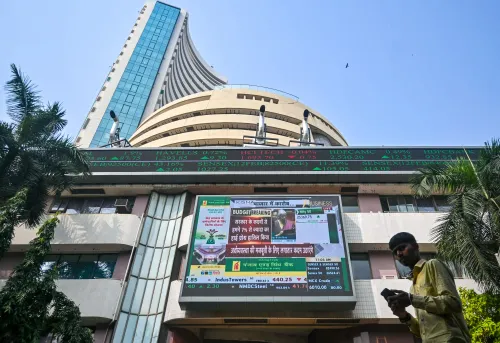
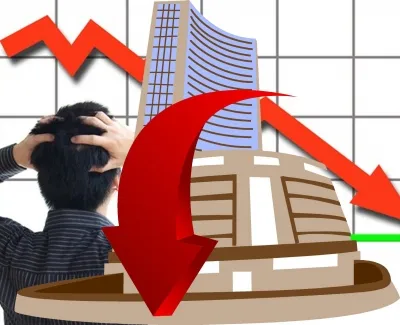
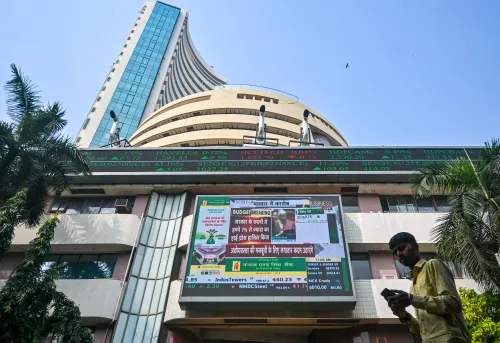
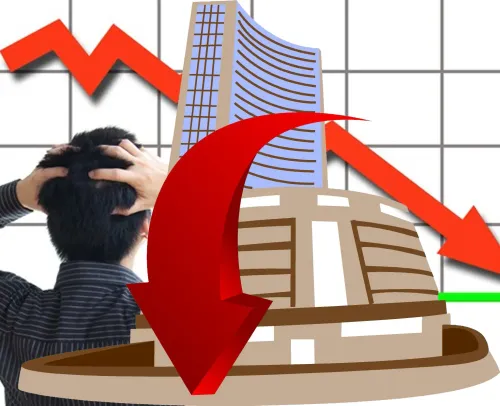
Mumbai, Feb 16 (NationPress) The Indian equity markets commenced the week with a nearly flat performance, showing a slight negative inclination on Monday. This was primarily attributed to a disappointing earnings season and pressure on technology stocks driven by artificial intelligence trends.
As of 9:25 AM, the Sensex dipped by 22 points, or 0.02 percent, settling at 83,604, while the Nifty fell by 6 points, or 0.03 percent, to reach 25,464.
Among the major broad-cap indices, losses were more pronounced compared to the benchmark indices, with the Nifty Midcap 100 dropping 0.34 percent and the Nifty Smallcap 100 decreasing 0.47 percent.
Sector performance was mixed, with notable declines in the Nifty IT index, which fell by 0.55 percent, and the media sector, which saw a drop of 0.84 percent. However, the Nifty pharma sector recorded a gain of 0.93 percent, while real estate rose by 0.55 percent.
Market analysts indicated that immediate support for the Nifty is situated in the 25,300-25,350 range, while resistance is set at 26,600-26,650.
The Bank Nifty has shown notable resilience, maintaining position above the crucial psychological level of 60,000. Critical support lies between 60,000 and 59,700, aligning with the 20-day Exponential Moving Average (EMA), which is essential for sustaining a bullish trend.
Domestic markets are expected to remain sensitive to global cues, especially following last week’s significant correction influenced by weak technology stocks. Ongoing concerns regarding AI-driven disruptions may counteract earlier optimism related to the US-India interim trade framework, creating a broader risk-off sentiment.
Foreign Institutional Investor (FII) involvement has shifted to a mixed and cautious stance in recent sessions as investors reassess inflated valuations. Conversely, steady Domestic Institutional Investor (DII) inflows provide some level of domestic support.
In the short term, market sentiment appears fragile, likely remaining in a consolidation phase until clearer direction emerges from global macroeconomic indicators.
Investors are keenly observing upcoming global catalysts, including US Federal Reserve minutes, PCE inflation data, and PMI reports.
In Asian markets, China’s Shanghai index fell by 1.26 percent, and Shenzhen dropped 1.28 percent. Japan’s Nikkei gained 0.12 percent, while Hong Kong’s Hang Seng Index saw an increase of 0.38 percent. South Korea’s Kospi declined by 0.28 percent.
US markets closed predominantly in the green during the last trading session, despite the Nasdaq dipping 0.22 percent. The S&P 500 rose by 0.05 percent and the Dow Jones increased by 0.1 percent.
On February 13, foreign institutional investors (FIIs) recorded a net sale of equities valued at Rs 7,395 crore, while domestic institutional investors (DIIs) were net buyers of equities amounting to Rs 5,553 crore.
Point of View
It's crucial to recognize the current challenges facing the Indian equity markets. With a mixed performance influenced by global factors, it's vital for investors to remain vigilant and informed. Our coverage aims to provide expert analysis and insights, ensuring our audience is well-equipped to navigate these turbulent waters.
NationPress
30 Sept 2026
Frequently Asked Questions
What are the key factors affecting the Indian equity markets?
The Indian equity markets are currently influenced by a weaker-than-expected earnings season and pressures on technology stocks due to AI trends.
What is the current performance of Sensex and Nifty?
As of the latest update, the Sensex has lost 22 points, or 0.02 percent, while the Nifty is down 6 points, or 0.03 percent.
What sectors are performing well?
The Nifty pharma sector has gained 0.93 percent, and real estate is up by 0.55 percent.
What are the support and resistance levels for Nifty?
Immediate support for Nifty is at the 25,300-25,350 range, with resistance set at 26,600-26,650.
How are global cues affecting the markets?
The domestic markets are increasingly sensitive to global cues, especially following a significant correction in technology stocks.