Indian Stock Markets Surge as Geopolitical Tensions Diminish

Synopsis
On April 16, Indian stock markets opened positively, buoyed by easing geopolitical tensions between Washington and Tehran. Sensex and Nifty both recorded gains, driven by strong performances from small and mid-cap stocks.
Key Takeaways
Sensex opened 566 points higher, reaching 78,677.
Nifty started at 24,385, up by 154 points.
Positive momentum seen in real estate, media, and financial sectors.
Small-cap stocks are leading the gains.
Geopolitical tensions between Washington and Tehran are easing.
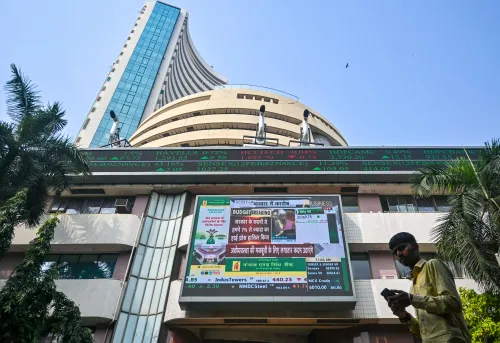
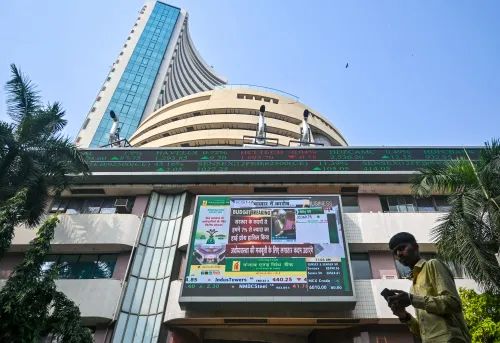
Mumbai, April 16 (NationPress) The Indian stock market commenced on a positive note on Thursday, with the equity indices reflecting global trends amidst optimism surrounding the reduction of geopolitical tensions between Washington and Tehran.
The Sensex surged 566 points or 0.73 percent to reach 78,677 during the initial trading phase, while the Nifty opened at 24,385, rising by 154 points or 0.64 percent. Gains were predominantly seen in sectors such as real estate, media, consumer durables, and financial services.
Among various categories, small-cap and mid-cap stocks emerged as the leading gainers, with the Nifty Smallcap 100, Nifty Smallcap 250, and Nifty Midcap 100 witnessing increases of up to 1 percent in early trading.
On the previous day, foreign institutional investors (FIIs) were net buyers with purchases amounting to approximately Rs 666 crore, whereas domestic institutional investors (DIIs) experienced net outflows totaling around Rs 569 crore.
Analysts indicate that market volatility might escalate again based on international developments and forthcoming triggers.
Following a recent significant rally, the market might face some consolidation or profit-taking at elevated levels, they noted.
In contrast, oil prices showed stability, with Brent crude futures at $94.92 per barrel, marking a slight decline of 0.03 percent, and US WTI crude trading at $91.52, up by 0.25 percent.
Globally, both US and Asian markets exhibited positive momentum. Japan’s Nikkei advanced over 2 percent, the Hang Seng rose by more than 1 percent, and South Korea’s KOSPI increased by about 2 percent.
In the US, major indices such as the S&P 500 and Nasdaq closed 0.80 percent and 1.6 percent higher, respectively.
Meanwhile, the President of the United States remarked that China is 'very pleased' with the permanent opening of the Strait of Hormuz.
"I am doing it for them as well as the world. This situation will not arise again. They have consented to refrain from sending weapons to Iran," he stated on his social media platform, Truth Social.
However, the ongoing conflict has led to the most extensive disruption of global oil and gas supplies by obstructing traffic through the strait, causing crude prices to spike to nearly $120 per barrel.
Point of View
Investors should remain vigilant for potential volatility based on global developments. The current market dynamics suggest a cautious approach, especially following a recent rally.
NationPress
16 Sept 2026
Frequently Asked Questions
What is the current status of the Indian stock markets?
As of April 16, the Indian stock markets opened higher, with Sensex up by 566 points and Nifty by 154 points, reflecting positive global cues.
What sectors are performing well?
Sectors like real estate, media, consumer durables, and financial stocks are leading the gains in the market.
What has been the trend for foreign and domestic institutional investors?
Foreign institutional investors were net buyers with purchases of approximately Rs 666 crore, while domestic investors faced net outflows of around Rs 569 crore.
How are oil prices affected by current events?
Oil commodities are trading firmly, with Brent crude futures at $94.92 per barrel and US WTI crude at $91.52.
What are analysts saying about market volatility?
Analysts indicate that market volatility could increase based on global developments and upcoming triggers, suggesting a cautious approach.