India's 7.8% GDP growth in Q1 FY27 boosts investor confidence: NAREDCO
Synopsis
India's 7.8% GDP growth in Q1 FY27 has drawn praise from NAREDCO President Kamlesh Thakur, who called it a 'pleasant surprise' given global geopolitical pressures. With Mumbai 3's Edu City and Medi City plans advancing — and 12 international university contracts already signed — the data point is being read as a signal for accelerated infrastructure-linked investment.
Key Takeaways
India recorded 7.8 per cent GDP growth in Q1 FY2026-27 , described as a 'pleasant surprise' by NAREDCO President Kamlesh Thakur .
Thakur attributed the resilience to PM Modi 's 'Gati and Shakti' policy framework driving visible economic activity.
Maharashtra 's ' Mumbai 3 ' vision includes an Edu City and Medi City , with contracts signed with 12 international universities .
The Adani Group is involved in developing airports, seaports, and Aero Cities under the Mumbai 3 framework.
Thakur said the initiative could reduce Indian students' dependence on foreign universities, cutting financial outflows.
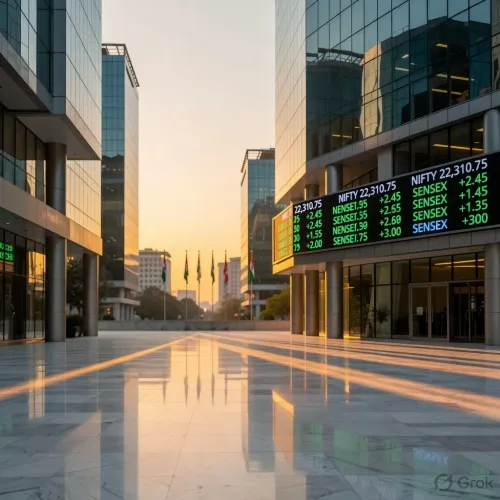
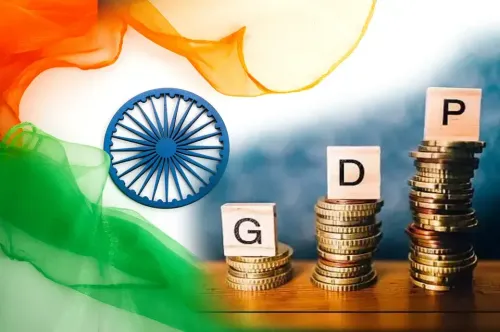
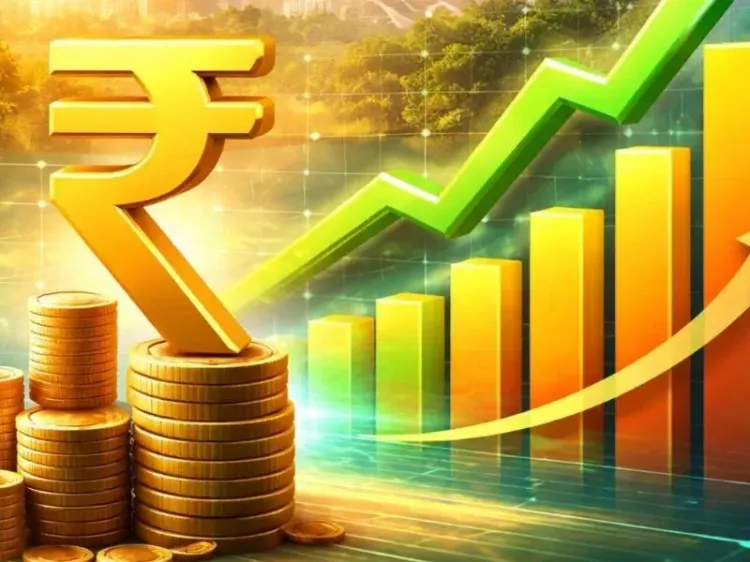
India's 7.8 per cent GDP growth in the first quarter of financial year 2026-27 has come as a welcome surprise amid persistent global geopolitical turbulence, NAREDCO President Kamlesh Thakur said on Thursday, 3 September, adding that the figure would reinforce the confidence of both domestic and international investors in the country's long-term growth trajectory.
A Resilient Number Against Global Headwinds
Thakur acknowledged that India is not shielded from the ripple effects of global geopolitical tensions, which have disrupted economies worldwide. Against that backdrop, he said, sustaining 7.8 per cent growth underscores the structural resilience of the Indian economy.
'First of all, it's a pleasant surprise. We are facing a headwind of geopolitical issues which is now affecting the whole world, including India. India is not detached from what is happening in the global scene,' Thakur said.
He linked the strong performance to Prime Minister Narendra Modi's emphasis on 'Gati and Shakti' — a policy framework centred on infrastructure-led economic momentum — arguing that its impact is now visible in measurable economic activity.
Mumbai 3 Vision: Education, Health and Urban Development
Thakur also commented on Maharashtra's 'Mumbai 3' initiative, describing it as a 'brilliant concept' with the potential to build a wider ecosystem spanning education, healthcare, airports, and urban infrastructure.
He noted that Chief Minister's advisor Kaustubh Dhavse had recently presented plans for developing an Edu City and a Medi City under the vision, and that contracts had already been signed with 12 international universities. Thakur said such developments could meaningfully reduce the need for Indian students to seek higher education abroad, thereby curtailing financial outflows from the country.
Adani Group's Role and Aero City Development
Thakur welcomed the involvement of the Adani Group in supporting the Mumbai 3 vision, pointing to the group's work on airports, seaports, and Aero Cities as capable of generating integrated economic ecosystems around major infrastructure nodes.
'Aero Cities in so many cities they are doing,' Thakur said, highlighting the transformative potential of such projects for the economic landscape surrounding airports. The current geopolitical climate, he added, makes building robust domestic ecosystems for education and services all the more critical.
What This Means for Investors
The Q1 FY27 GDP print, if sustained, would position India as one of the fastest-growing major economies globally — a narrative that real estate and infrastructure sectors, represented by bodies like NAREDCO, are keen to amplify to attract long-term capital. This comes amid a broader push by the Centre to channel foreign and domestic investment into infrastructure-linked urban development projects.
With Mumbai 3 contracts already in motion and Aero City projects expanding across multiple cities, the next few quarters will test whether policy ambition translates into on-ground delivery.
Point of View
But the commentary around it — from a real estate lobby body — should be read in context. NAREDCO has a direct stake in sustained investor confidence and infrastructure spending, which means the enthusiasm is structurally motivated. The more substantive question is whether this growth is broad-based or concentrated in government capex, which has historically front-loaded in Q1. The Mumbai 3 vision is ambitious, but 12 university contracts and an Aero City pipeline are early-stage signals, not outcomes. India's challenge has never been announcements — it has been last-mile execution.
NationPress
3 Sept 2026
Frequently Asked Questions
What was India's GDP growth in Q1 FY2026-27?
India recorded 7.8 per cent GDP growth in the first quarter of financial year 2026-27. NAREDCO President Kamlesh Thakur described the figure as a 'pleasant surprise' given ongoing global geopolitical headwinds.
Who is Kamlesh Thakur and why did he comment on India's GDP?
Kamlesh Thakur is the President of NAREDCO (National Real Estate Development Council), a body representing India's real estate sector. He commented on the GDP data as it directly influences investor sentiment and capital flows into infrastructure and real estate.
What is Maharashtra's Mumbai 3 vision?
Mumbai 3 is a Maharashtra government initiative aimed at developing a wider urban ecosystem encompassing education, healthcare, airports, and urban infrastructure. Plans include an Edu City and a Medi City, with contracts already signed with 12 international universities.
What role is the Adani Group playing in Mumbai 3?
The Adani Group is reportedly involved in developing airports, seaports, and Aero Cities as part of the Mumbai 3 vision, according to Thakur. He said this could create integrated economic ecosystems around major infrastructure projects.
How does India's 7.8% GDP growth compare to global trends?
The 7.8 per cent figure positions India as one of the fastest-growing major economies at a time when global geopolitical tensions are weighing on growth worldwide. Thakur noted that India, while not insulated from global developments, has demonstrated notable economic resilience.