India informal sector employment rises 16.86% to 15.03 crore

Synopsis
India's unincorporated non-agricultural sector employed an estimated 15.03 crore people in July–September 2026, up 16.86% from a year earlier. Working owners made up nearly 62% of the workforce, while the number of hired workers rose by about 5%.
Key Takeaways
India's unincorporated non-agricultural sector employed an estimated 15.03 crore people in July–September 2026 , up 16.86% year-on-year.
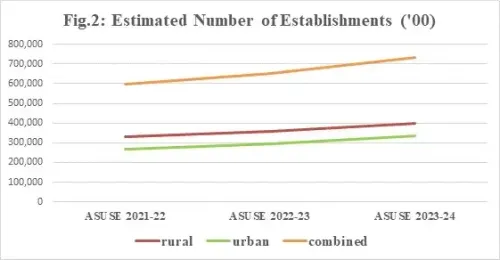
Establishments rose 18.81% to an estimated 9.47 crore , according to the Ministry of Statistics and Programme Implementation .
Rural employment grew 17.52% , compared with 16.30% in urban areas.
Working owners accounted for 61.99% of workers, while the number of hired workers rose by about 5% .
Women made up more than 31% of employment, up from 28.70% a year earlier.
Nearly 84% of establishments had used the internet for entrepreneurial purposes, and nearly 80% had adopted cashless transactions.
India's informal sector employment rose 16.86% year-on-year to an estimated 15.03 crore in July–September 2026, according to figures released on 23 November 2026 by the Ministry of Statistics and Programme Implementation. The data cover unincorporated non-agricultural establishments, whose estimated number increased 18.81% to 9.47 crore.
The ministry's figures showed an all-time high growth in both establishments and employment for the quarter compared with the same period a year earlier. Other services led the sectoral expansion, while women made up a larger share of the workforce than in July–September 2025.
Rural and urban employment growth
Employment grew in both rural and urban areas, with the rural increase marginally ahead. Rural employment rose 17.52% year-on-year, compared with 16.30% in urban areas.
The pattern was reversed for establishment growth: urban areas registered an increase of 22.05%, while rural establishments rose 16.05%. The figures distinguish growth in the number of enterprises from growth in the number of people working in them.
Other services leads sectoral gains
Other services recorded the highest year-on-year growth among the sectors, with estimated establishments up 29% and employment up 33%. The source also described employment growth in the sector as more than 33%.
Trading establishments grew 11.70%, while employment in the sector rose 8.36%. Manufacturing recorded a 10.55% rise in establishments and a 3.52% increase in employment.
The five industrial sectors identified as registering the highest year-on-year growth were retail trade, repair and maintenance services, land transport activities, personal service activities and manufacturing of wearing apparel.
Owners, hired workers and women
Working owners remained the largest group in the workforce, accounting for 61.99% of workers in July–September 2026, up from 59.98% a year earlier. The share of hired workers declined, even though their estimated total number rose by about 5%.
That distinction matters when interpreting the overall employment increase: the workforce includes both people running their own establishments and those hired to work for them. A falling hired-worker share therefore does not mean the number of hired workers fell.
Women constituted more than 31% of employment in the sector, compared with 28.70% in July–September 2025. The increase in their share accompanied the overall rise in estimated employment.
Internet and digital payments
Nearly 84% of establishments had used the internet for entrepreneurial purposes, according to the information and communications technology usage data. Nearly 80% had adopted cashless transactions, including online banking, UPI, point-of-sale devices and other digital payment methods.
The figures provide a snapshot of digital adoption alongside the expansion in establishments and employment. Subsequent releases will show whether the reported growth and shifts in workforce composition continue.
Point of View
But the composition of that growth matters as much as its scale. Working owners increased their share of the workforce, while the number of hired workers grew more slowly than total employment. Future releases should make it possible to assess whether the expansion persists and how opportunities for women and hired workers evolve.
NationPress
23 Nov 2026
Frequently Asked Questions
How much did India's informal sector employment rise in July–September 2026?
Employment in the unincorporated non-agricultural sector rose 16.86% year-on-year to an estimated 15.03 crore. The number of establishments increased 18.81% to 9.47 crore.
Which sector recorded the fastest employment growth?
Other services recorded the highest year-on-year growth among the sectors. Its employment increased by 33%, while the number of establishments rose 29%.
Did rural or urban informal employment grow faster?
Rural informal employment grew slightly faster, rising 17.52% year-on-year against 16.30% in urban areas. Urban areas had faster growth in the number of establishments.
What share of informal sector workers were women?
Women accounted for more than 31% of employment in July–September 2026. Their share was 28.70% in the corresponding quarter of 2025.
Did the number of hired workers decline?
No, the number of hired workers increased by about 5% year-on-year. Their share of total employment fell as the overall workforce grew more quickly.