Jefferies Lowers Indus Towers Rating to 'Underperform', Adjusts Price Target to Rs 375
Synopsis
In a surprising turn of events, Jefferies has downgraded Indus Towers, citing rising risks to growth and cash flows. This move has led to an immediate decline in share prices, prompting concerns about future revenue and competitive pressures in the telecom sector.
Key Takeaways
Jefferies downgraded Indus Towers to 'Underperform'.
Target price reduced to Rs 375 from Rs 530.
Shares fell 3.5% following the announcement.
Concerns over tower lease renewals affecting revenue.
Increased competition may lead to pricing pressures.
Mumbai, April 15 (NationPress) The stock of Indus Towers faced significant pressure following Jefferies' decision to downgrade it to 'Underperform' from 'Buy' and reduce its target price, pointing to escalating risks surrounding growth, cash flows, and valuations.
The firm has adjusted its target price for Indus Towers to Rs 375 from Rs 530, which indicates a potential decline of approximately 14 percent from its current valuation.
This downgrade highlights short-term uncertainties and ongoing structural challenges that may restrict the stock's upside despite a relatively stable operational environment.
Jefferies observed that the risk-reward profile for the company has become less appealing, with moderate earnings growth and dividend yield unlikely to alleviate emerging concerns.
They have decreased their revenue and profit after tax projections by 2–6 percent, forecasting only a 3 percent growth in earnings per share and a 4 percent yield in the near future.
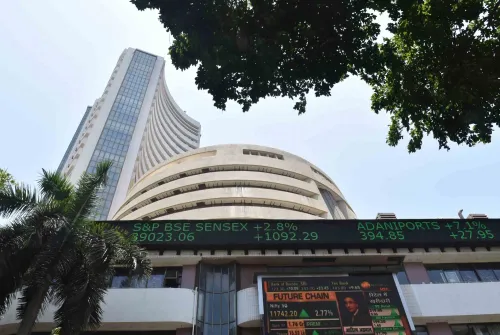
Subsequent to the downgrade, shares of Indus Towers dropped sharply on the BSE, plummeting as much as 3.5 percent during intra-day trading to Rs 423 each.
As of around 11:50 AM, the stock remained 2.7 percent lower, even as the broader BSE Sensex gained 1.5 percent.
Trading volumes surged, with nearly 0.95 million shares exchanged, significantly exceeding the two-week average.
A major concern identified by the brokerage is the clustering of tower lease renewals in FY27, which could negatively affect revenue visibility and growth potential.
A considerable number of Indus Towers’ sites are scheduled for renewal between the latter half of calendar year 2026 and the first half of 2027, heightening the risk of pricing pressures during contract renegotiations.
Jefferies cautioned that a slowdown in new site additions across the telecom industry may ramp up competition for renewals, compelling the company to either provide greater discounts or risk losing clients to competing tower operators.
Moreover, any discounts granted to one telecom provider may necessitate similar concessions for others, such as Vodafone Idea and Bharti Airtel, which could adversely affect overall revenue.
Point of View
It's crucial to present an unbiased view on the recent downgrade of Indus Towers by Jefferies. This decision highlights the evolving dynamics within the telecom industry, raising concerns about growth and revenue amid changing market conditions.
NationPress
17 Sept 2026
Frequently Asked Questions
What prompted Jefferies to downgrade Indus Towers?
Jefferies downgraded Indus Towers due to increasing risks to growth, cash flows, and overall valuations.
What is the new target price for Indus Towers?
The new target price for Indus Towers has been set at Rs 375.
How did the market react to the downgrade?
Following the downgrade, shares of Indus Towers fell sharply, dropping as much as 3.5 percent.
What are the potential risks mentioned by Jefferies?
Key risks include a bunching of tower lease renewals and increased competition for renewals in the telecom sector.
What impact could this downgrade have on investors?
Investors may need to reconsider their positions due to the unfavorable risk-reward profile indicated by Jefferies.