Dr. Jitendra Singh: Govt Built Complete Support System for SCs, STs
Synopsis
Union Minister Dr. Jitendra Singh declared at the J&K launch of the Ambedkar Chamber of Commerce that India has built a full-spectrum support system for SCs and STs from childhood, while urging marginalised communities to pivot from job-seeking to entrepreneurship — backed by schemes like Mudra Yojana and PM Vishwakarma.
Key Takeaways
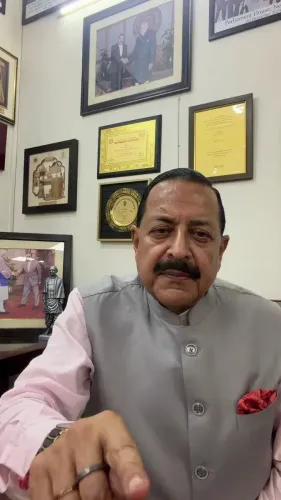
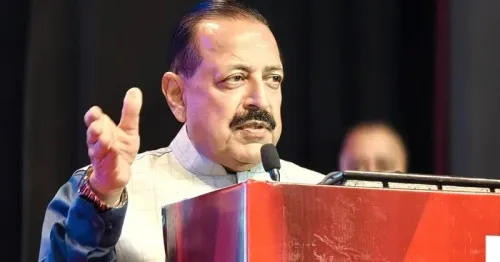
Jitendra Singh , Union Minister for Science and Technology, stated on April 25, 2025 that the government has built a complete support system for SCs and STs from an early age.
The remarks were made at the launch of the Jammu and Kashmir chapter of the Dr.
Ambedkar Chamber of Commerce at the University of Jammu .
Singh urged marginalised communities to shift from dependence on government jobs toward entrepreneurship and enterprise development .
Three flagship schemes were highlighted: PM Jan Dhan Yojana , PM Mudra Yojana , and PM Vishwakarma Yojana targeting financial inclusion, credit access, and skill preservation respectively.
The minister noted that individuals from disadvantaged backgrounds are increasingly clearing civil services examinations , reflecting growing social empowerment.
PM Mudra Yojana has disbursed over Rs 27 lakh crore in loans since 2015 , with a substantial share benefiting SC, ST, and OBC entrepreneurs.
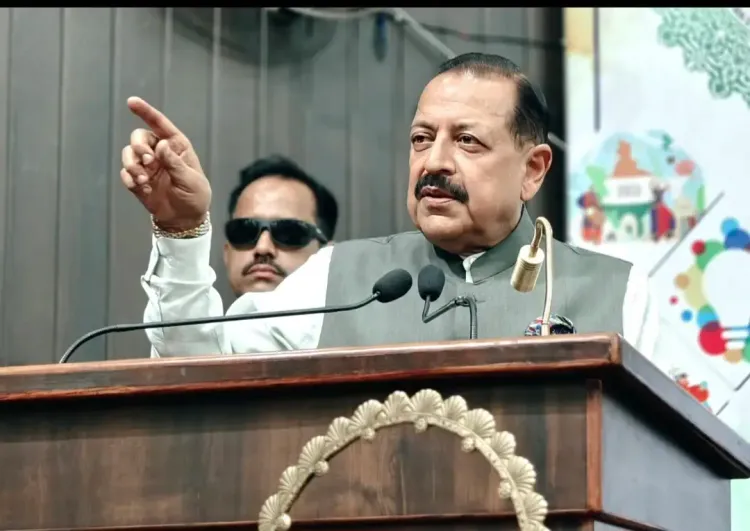
New Delhi, April 25: Union Minister of State (Independent Charge) for Science and Technology and Earth Sciences, Dr. Jitendra Singh, on Saturday declared that the Government of India has built a comprehensive, end-to-end support system for Scheduled Castes (SCs), Scheduled Tribes (STs), and other economically weaker sections — beginning from the earliest stages of life — to ensure sustained socio-economic upliftment through targeted policy interventions and institutional handholding.
Launch of J&K Ambedkar Chamber of Commerce
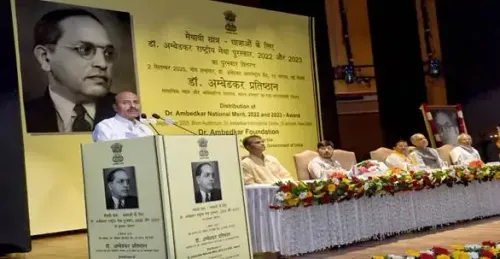
The minister was speaking at the inauguration of the Jammu and Kashmir chapter of the Dr. Ambedkar Chamber of Commerce, held at the University of Jammu. The event marked a significant step toward fostering an entrepreneurial culture among historically marginalised communities in the region.
Dr. Singh emphasized that members of marginalised sections must now look beyond the conventional aspiration of securing government employment and actively pursue opportunities in enterprise development, investment, and business creation, leveraging the suite of welfare and economic schemes launched under Prime Minister Narendra Modi.
Key Government Schemes Highlighted
The minister spotlighted several flagship programmes as pillars of this inclusive economic architecture. He cited the Pradhan Mantri Jan Dhan Yojana as a landmark financial inclusion initiative that brought millions of unbanked citizens into the formal financial ecosystem.
He also underscored the Pradhan Mantri Mudra Yojana, describing it as a transformative credit-access mechanism that has empowered small entrepreneurs from disadvantaged backgrounds to start and scale businesses without collateral barriers.
Additionally, Dr. Singh referenced the PM Vishwakarma Yojana, a scheme designed to preserve and monetise traditional artisanal skills, thereby creating sustainable livelihoods for craftsmen and skilled workers from weaker sections.
The Government has created a wholesome system for weaker sections, including SCs and STs, for handholding and supporting them right from the early age, Dr. Singh stated at the event.
Measurable Impact on Marginalised Communities
Dr. Singh pointed to statistical evidence indicating a positive trajectory in the socio-economic advancement of Dalits and other marginalised groups as a direct result of these interventions. He noted rising aspirations and improved outcomes across multiple indicators.
One of the most telling signs of social empowerment, he argued, is the increasing number of individuals from humble socio-economic backgrounds performing well in competitive examinations, including the prestigious civil services — a domain historically dominated by more privileged sections of society.
Individuals from humble backgrounds are now performing well in competitive examinations, including civil services, reflecting broader social empowerment, he said, calling for expanded outreach to ensure more beneficiaries can access these opportunities.
Why This Matters: Broader Policy Context
This announcement comes at a time when debates around Dalit economic empowerment, reservation policy, and the effectiveness of welfare schemes for marginalised communities are intensifying nationally. The setting — Jammu and Kashmir — is particularly significant, as the Union Territory has its own distinct SC/ST demographic landscape following the reorganisation under the Jammu and Kashmir Reorganisation Act, 2019.
The establishment of the Ambedkar Chamber of Commerce chapter in J&K signals an institutional push to translate welfare benefits into business ownership and wealth creation — a shift from dependency-based models toward agency-driven economic participation. Policy analysts have long argued that while welfare schemes address immediate needs, long-term empowerment requires structural access to markets, credit, and mentorship.
According to government data, the Pradhan Mantri Mudra Yojana had disbursed over Rs 27 lakh crore in loans to micro-entrepreneurs since its launch in 2015, with a significant share of beneficiaries belonging to SC, ST, and OBC categories.
What to Expect Next
With the J&K Ambedkar Chamber of Commerce now formally launched, stakeholders will watch closely whether it translates into on-ground entrepreneurship growth, mentorship networks, and credit linkages for SC/ST communities in the region. The government's next steps are likely to include expanded awareness drives and convergence of multiple schemes to maximise impact among the most underserved populations.
Point of View
Positioning welfare schemes as launchpads rather than lifelines. While the Mudra Yojana disbursement figures are impressive on paper, ground-level reports consistently flag issues of loan repayment stress and limited market access for micro-entrepreneurs from SC/ST backgrounds. The launch of an Ambedkar Chamber of Commerce in J&K is symbolically potent — invoking Ambedkar while pushing a market-economy vision — but its real test will be whether it creates structural opportunity or remains ceremonial. NationPress will track whether this chamber delivers measurable outcomes for J&K's marginalised communities.
NationPress
15 Sept 2026
Frequently Asked Questions
What did Dr. Jitendra Singh say about SC/ST support at the Jammu event?
Dr. Jitendra Singh said the government has created a comprehensive support system for Scheduled Castes and Scheduled Tribes from an early age, including sustained handholding and targeted welfare interventions. He made these remarks at the launch of the J&K chapter of the Dr. Ambedkar Chamber of Commerce at the University of Jammu on April 25, 2025.
What is the Dr. Ambedkar Chamber of Commerce in Jammu and Kashmir?
The Dr. Ambedkar Chamber of Commerce is an organisation aimed at promoting entrepreneurship and enterprise development among marginalised communities including Dalits and tribal groups. Its Jammu and Kashmir chapter was formally launched at the University of Jammu on April 25, 2025.
Which government schemes did Dr. Jitendra Singh highlight for SC/ST communities?
Dr. Singh highlighted three key schemes: Pradhan Mantri Jan Dhan Yojana for financial inclusion, Pradhan Mantri Mudra Yojana for credit access, and PM Vishwakarma Yojana for preserving traditional skills and creating livelihoods. He said statistical evidence shows these schemes have positively impacted Dalit and marginalised communities.
Why is the government encouraging SC/ST communities to pursue entrepreneurship?
The government argues that long-term socio-economic empowerment for marginalised communities requires moving beyond reliance on government employment toward business creation and investment. Dr. Jitendra Singh stated that schemes like Mudra Yojana provide the financial infrastructure needed for this transition.
How has PM Mudra Yojana benefited Dalit and tribal entrepreneurs in India?
The Pradhan Mantri Mudra Yojana has disbursed over Rs 27 lakh crore in collateral-free loans to micro-entrepreneurs since its 2015 launch, with a significant share going to SC, ST, and OBC beneficiaries. The scheme is designed to enable small business creation without the barrier of formal collateral requirements.