BOK Chief Nominee Assures Dollar Liquidity Amid Weak Won
Synopsis
As the Korean won faces ongoing weakness, BOK chief nominee Shin Hyun-song reassures that South Korea's dollar liquidity is robust enough to handle external shocks. His comments during a confirmation hearing highlight strategies for improving the won's global standing and managing its exchange rate.
Key Takeaways
The Korean won is currently weak, affecting its exchange rate.
Shin Hyun-song assures sufficient dollar liquidity to counter external shocks.
Foreign exchange reserves are strong enough to act as a buffer.
Offshore trading significantly impacts the won's value.
Plans to enhance the won's global usage are in place.
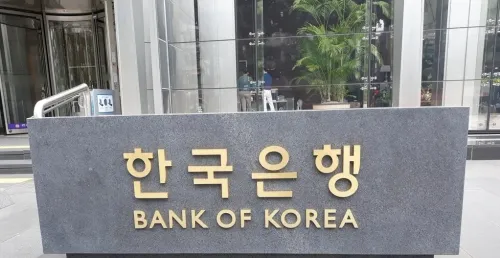
Seoul, April 15 (NationPress) The Korean won has shown notable weakness in recent months, yet the nation possesses adequate dollar liquidity to address external disruptions, stated Shin Hyun-song, the candidate for the leadership of South Korea's central bank, during a confirmation session at the National Assembly in Seoul on Wednesday. He has been selected to succeed the outgoing Bank of Korea (BOK) Governor, Rhee Chang-yong, according to a report by Yonhap news agency.
Shin commented, "While I can't specify exact figures, it is evident that the (won-dollar) exchange rate has remained relatively high in recent months. Overly rapid depreciation of the currency is not favorable."
Nonetheless, the nominee emphasized that the country’s foreign exchange reserves are sufficiently robust to act as a safeguard against external pressures.
As a contributing factor to the won's decline, Shin highlighted the substantial impact of offshore trading activities.
"It seems that we are experiencing a 'tail wagging the dog' situation. The offshore non-deliverable forward (NDF) trading involving the Korean won has significantly influenced the currency's decline," Shin remarked.
He added, "I aim to promote the global usage of the won and establish an offshore settlement framework, which would enhance our ability to manage the exchange rate and bolster the currency's international reputation."
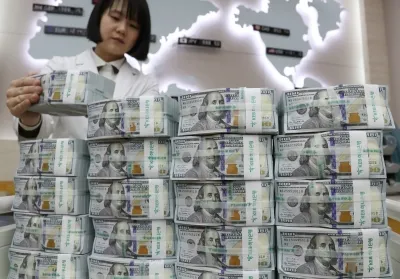
The won had been around the crucial 1,500 won-per-dollar threshold before easing to approximately the 1,450 level, as escalating tensions in the Middle East have driven global oil prices higher, disturbing international markets.
Meanwhile, South Korea's money supply saw an increase for the fourth consecutive month in February, driven by a rise in savings deposits, which offset a drop in certificates of deposit (CDs), as indicated by central bank statistics.
The M2 money supply, a crucial indicator, averaged 4,114 trillion won (approximately US$2.79 trillion) in February, marking an increase of 600 billion won compared to the previous month, based on preliminary data from the Bank of Korea (BOK).
This figure rebounded in November after a previous decline, marking consistent monthly growth since then.
M2 encompasses cash, demand deposits, and other financial assets that can be rapidly converted into cash.
A BOK official noted, "Savings in demand deposit accounts surged as idle funds awaited fiscal action from local governments. Conversely, marketable instruments fell as the issuance of CDs declined due to deteriorating issuance conditions and reduced funding needs."
Point of View
The insights from Shin Hyun-song regarding South Korea's dollar liquidity and the strategy to stabilize the Korean won are critical. Addressing these issues with clarity and foresight is essential for fostering confidence in the financial markets.
NationPress
19 Sept 2026
Frequently Asked Questions
Why is the Korean won currently weak?
The weakness of the Korean won is attributed to significant offshore trading activities and external market pressures, particularly from rising global oil prices.
What measures is the BOK chief nominee proposing?
Shin Hyun-song proposes to enhance the global usage of the won and establish an offshore settlement system to better manage its exchange rate.
How much did South Korea's money supply increase in February?
In February, South Korea's M2 money supply averaged 4,114 trillion won, reflecting an increase of 600 billion won from the previous month.
What is M2 in terms of money supply?
M2 includes cash, demand deposits, and other easily convertible financial instruments, providing a comprehensive view of the money supply.
What impact do offshore transactions have on the won?
Offshore transactions, especially through non-deliverable forward trading, have significantly influenced the depreciation of the won.