Anand Mahindra Unveils 108-Year-Old Engine Prototype on Founders' Day
Synopsis
On Founders' Day 2026, engineers at Mahindra Research Valley in Chennai unveiled a working prototype of a two-cycle engine patented in 1918 by J.C. Mahindra — reconstructed entirely from the original drawings, over 108 years after it was filed. Anand Mahindra called it a tribute to the spirit of 'tinkering' that built the group.
Key Takeaways
Mahindra Research Valley engineers in Chennai rebuilt a working engine prototype from a 108-year-old patent filed by J.C.
The engine was a two-cycle, opposed-piston design intended to run on crude oil — an unusual concept for its era.
The prototype was unveiled and fired up on Founders' Day 2026 , six months after Anand Mahindra first shared the patent story publicly on X.
Anand Mahindra described the project as a labour of love and said his family remembered J.C.
Mahindra as a tinkerer.
The chairman used the moment to call on every engineer and innovator in the Mahindra Group to keep imagining, experimenting, and building.
A 108-year-old patent came roaring back to life on Founders' Day 2026 — and the man most moved by it was Mahindra Group chairman Anand Mahindra. Engineers at Mahindra Research Valley in Chennai did what no one had done since 1918: they read the original drawings filed by group co-founder J.C. Mahindra for a two-cycle, opposed-piston engine designed to run on crude oil, and they actually built it.
Anand Mahindra had shared the story of the patent six months ago, believing it was a historical footnote. The Chennai research team had other plans. Working as what Mahindra called a labour of love,
they interpreted the century-old patent drawings, resolved the engineering gaps across more than a century of missing context, and unveiled a fully functional prototype on the company's Founders' Day — firing it up in front of the group.
The 1918 Patent That Started It All
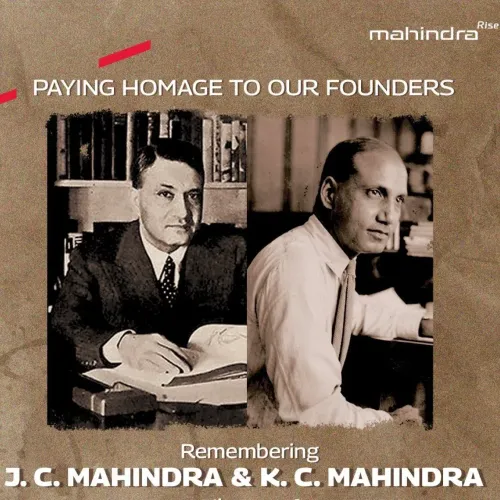
J.C. Mahindra — Jagdish Chandra Mahindra — filed the patent in 1918, two decades before the company that bears his name was formally established. The engine design, a two-cycle opposed-piston format meant to run on crude oil, reflected the engineering curiosity of an era when India's industrial capacity was almost entirely colonial in character. That an Indian entrepreneur was filing engine patents that year is itself a striking historical fact.
Anand Mahindra recalled that his father and uncle described J.C. as a tinkerer
— someone driven not by corporate mandate but by the compulsion to imagine and build. That word, deployed with obvious affection, threads the entire message together.
Mahindra Research Valley's Quiet Feat of Reverse Engineering
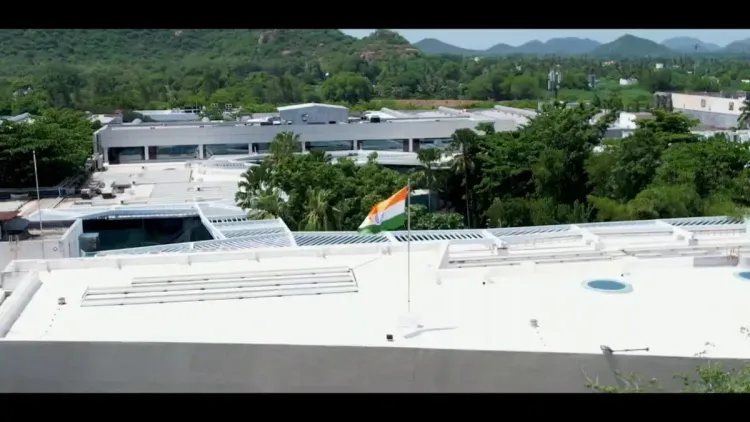
Mahindra Research Valley (MRV) in Chennai is the group's primary automotive and technology research hub. The engineers there did not restore an existing machine — they reconstructed one from drawings alone, bridging a gap of more than a century in materials science, manufacturing tolerances, and fuel standards. The prototype was unveiled and run on Founders' Day, a date chosen with clear symbolic intent: to present the founders' spirit as a living inheritance, not a framed portrait.
Mahindra wrote that he could not adequately express
his gratitude to the team. The restraint in that phrase carries more weight than any superlative could.
The Tinkerer's Mandate
The chairman's closing lines were addressed directly to every engineer and innovator across the Mahindra Group.
The call was unambiguous: May we never stop tinkering. May we never stop imagining, experimenting and building.
It is the kind of internal rallying message that lands differently when it is anchored to a physical object — a running engine — rather than a slide deck.
For a conglomerate navigating electric vehicles, aerospace, and digital services simultaneously, invoking the spirit of a 1918 crude-oil engine is a deliberate act of institutional storytelling. The message is not 'look how far we've come.' It is: the instinct that started this was curiosity. Don't lose it.
Point of View
The 'tinkerer' narrative serves a strategic purpose: it frames radical experimentation as institutional DNA rather than disruption, which is a powerful internal cultural signal. The Founders' Day timing also suggests deliberate sequencing — anchoring innovation ambitions to origin story at a moment when large Indian conglomerates face pressure to articulate identity beyond scale.
NationPress
6 Oct 2026
Frequently Asked Questions
What is the Mahindra 1918 engine patent?
It is a patent filed in 1918 by J.C. Mahindra , co-founder of the Mahindra Group, for a two-cycle, opposed-piston engine designed to run on crude oil. Engineers at Mahindra Research Valley in Chennai recently built a working prototype from the original drawings.
Who is J.C. Mahindra?
Jagdish Chandra Mahindra was the co-founder of the Mahindra Group. Anand Mahindra's grandfather, he was described by the family as a tinkerer — someone driven by curiosity and the impulse to experiment and build.
What is Mahindra Research Valley?
Mahindra Research Valley (MRV) is the Mahindra Group's primary automotive and technology research centre, located in Chennai . The team there reconstructed the 1918 engine prototype as a voluntary project alongside their regular work.
When was the prototype unveiled?
The working prototype of J.C. Mahindra's 1918 engine was unveiled and run on Founders' Day 2026 , six months after Anand Mahindra first shared the patent story on X.
What did Anand Mahindra say about the engine?
Anand Mahindra said he could not adequately express his gratitude to the team and called the project a labour of love. He urged every engineer in the Mahindra Group to never stop tinkering, imagining, experimenting, and building.