PM Modi Unveils Haldia Bulk Terminal to Revolutionize Eastern Maritime Trade
Synopsis
Prime Minister Narendra Modi has inaugurated the cutting-edge Haldia Bulk Terminal, a key facility that will enhance cargo handling efficiency on India's eastern coast, significantly impacting logistics costs and industrial supply chains in the region.
Key Takeaways
4 million metric tonnes annual capacity Direct rail connectivity Reduction in logistics costs and turnaround times Part of India's ‘Sagarmala’ programme Enhances efficiency in bulk cargo handling
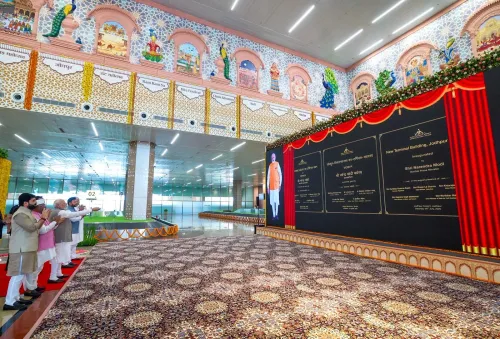
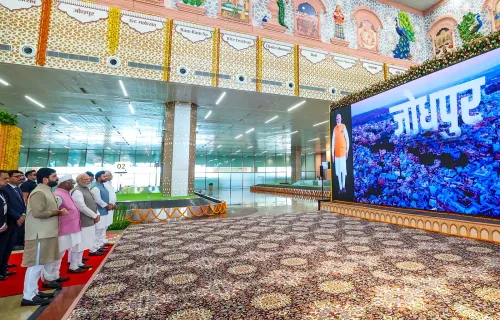
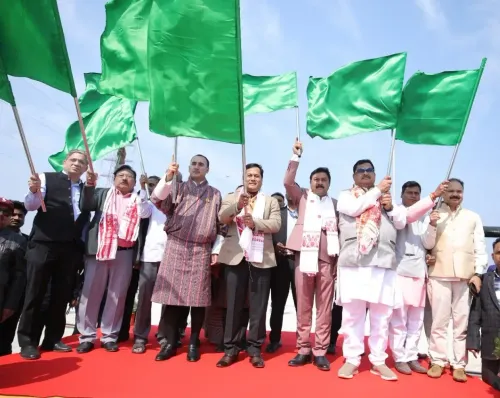
Ahmedabad, March 14 (NationPress) In a significant move to enhance operational capabilities along India’s eastern coastline, Prime Minister Narendra Modi inaugurated the Haldia Bulk Terminal (HBT) on Saturday, officially dedicating it to the nation.
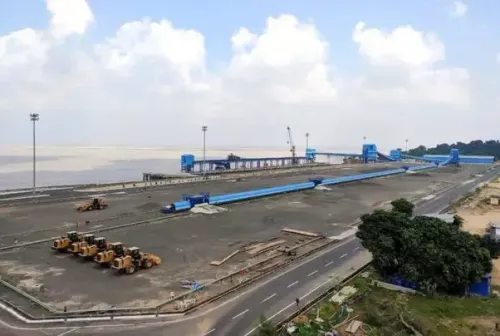
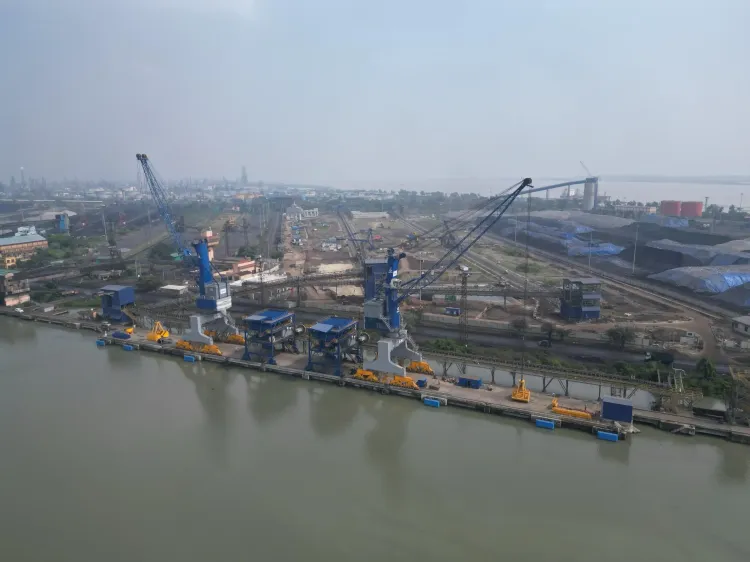
The terminal, engineered to manage dry bulk cargo with an impressive annual capacity of 4 million metric tonnes Per Annum (MMTPA), is a cutting-edge automated facility located on the Hooghly River. It features direct rail links, representing a critical upgrade for bulk cargo transportation in India’s eastern maritime corridor.
“The Haldia Bulk Terminal is a state-of-the-art facility that introduces complete mechanisation and direct rail evacuation to the Hooghly. By eliminating jetty dumping and minimizing cargo loss through sophisticated automated systems, we are promoting cleaner, safer, and more sustainable operations,” stated Ashwani Gupta, Whole-time Director and CEO of APSEZ.
This terminal is set to significantly bolster the industrial supply chains across West Bengal, Odisha, and Jharkhand, aligning with the Prime Minister's vision of reducing logistics costs through modern multimodal infrastructure,” Gupta further explained.
The eastern coast constitutes approximately 60 percent of India’s dry bulk imports, such as coal, bauxite, and limestone, making Haldia the most efficient and direct entry port for the steel, aluminium, and power sectors in West Bengal, Odisha, and Jharkhand.
This enhancement will significantly lower logistics expenses and turnaround times for these industries, according to the company.
Situated within the Haldia Dock Complex (HDC) of Syama Prasad Mookerjee Port, Kolkata, the terminal has been developed under a 30-year concession through the Design, Build, Finance, Operate and Transfer (DBFOT) model by HDC Bulk Terminal Ltd, and was completed within its scheduled timeframe, from the start of construction on July 14, 2023 to its readiness for commissioning today.
“This accomplishment highlights APSEZ's ability to execute projects punctually, every single time,” the company remarked.
Since the beginning of construction, Adani Ports has installed a 2,000 T Railway Wagon Loading System (RWLS) and launched a 1.54 km dedicated railway line, allowing for direct ship-to-train cargo transfer; refurbished the existing jetty; implemented advanced conveyor systems for process automation; and introduced two stacker-cum-reclaimers for efficient stockyard management.
The RWLS and the dedicated rail line are the terminal’s most significant features. Together, they facilitate the direct transfer of bulk cargo from vessels to railway wagons, connecting to main lines, thereby reducing port dwell time and lowering the delivered costs of raw materials for industrial users across three states.
The Haldia Terminal is a concrete manifestation of India’s ‘Sagarmala’ programme and the PM Gati Shakti National Master Plan, both of which emphasize the development of multimodal port infrastructure to decrease India’s logistics expenses.
Point of View
The inauguration of the Haldia Bulk Terminal by Prime Minister Modi marks a pivotal step towards modernizing India's maritime infrastructure. This facility is not just a technological advancement; it is a strategic move to bolster regional economies and streamline industrial logistics, reflecting a commitment to enhancing India's trade capabilities.
NationPress
8 Oct 2026
Frequently Asked Questions
What is the capacity of the Haldia Bulk Terminal?
The Haldia Bulk Terminal has an annual capacity of 4 million metric tonnes Per Annum (MMTPA).
How will the terminal impact logistics costs?
The terminal is expected to significantly reduce logistics costs and turnaround times for industries in West Bengal, Odisha, and Jharkhand.
What are the key features of the terminal?
Key features include a 2,000 T Railway Wagon Loading System (RWLS) and a dedicated railway line for direct cargo evacuation from ships to trains.
Why is the Haldia Bulk Terminal important for the eastern coast?
The eastern coast accounts for about 60 percent of India's dry bulk imports, making Haldia a vital maritime entry point for key industries.
What initiatives does the terminal align with?
The terminal aligns with India's 'Sagarmala' programme and the PM Gati Shakti National Master Plan, both aimed at enhancing multimodal port infrastructure.