South Korea's Money Supply Grows for Fourth Straight Month in February, Driven by Savings Deposits

Synopsis
In February, South Korea's money supply rose for the fourth month consecutively, bolstered by savings deposits. This trend offsets a decline in certificates of deposit, as reported by the Bank of Korea. The financial landscape reflects both challenges and opportunities as investors remain optimistic amid global developments.
Key Takeaways
South Korea's money supply increased for the fourth consecutive month.
The M2 measure reached 4,114 trillion won in February.
Increase in savings deposits offset the decline in certificates of deposit .
Liquidity rose in financial institutions and corporations, but fell for households.
Positive stock market response linked to potential US-Iran peace talks .
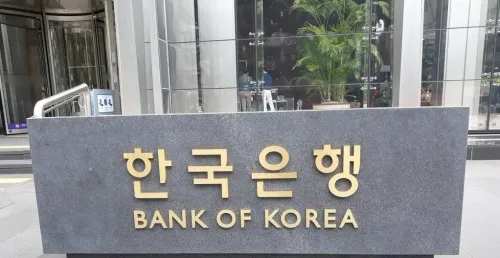
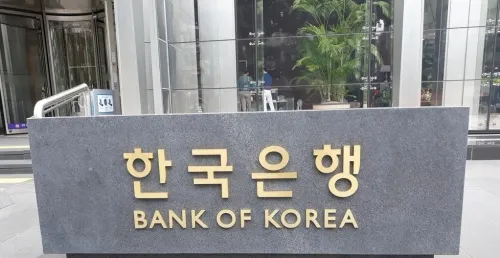
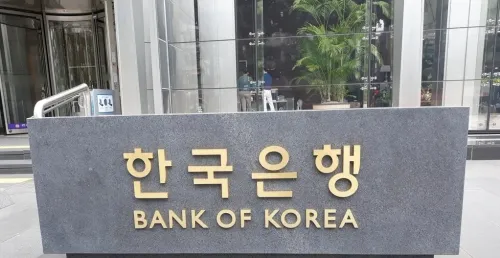
Seoul, April 15 (NationPress) In February, South Korea's money supply experienced an increase for the fourth month in a row, driven by a rise in savings deposits that compensated for a drop in certificates of deposit (CDs), according to data released by the central bank on Wednesday.
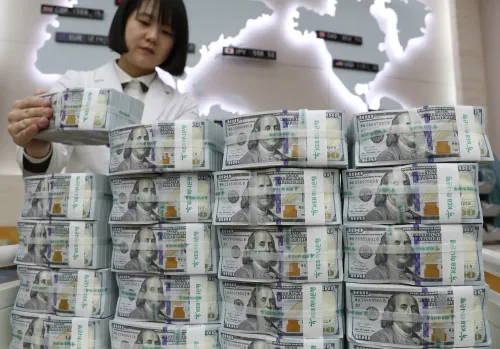
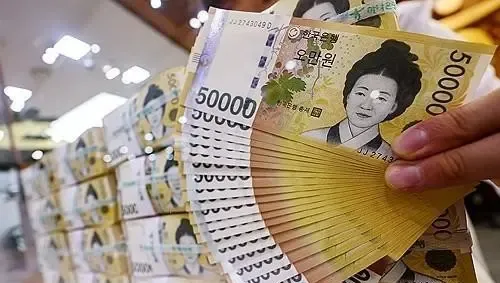
The M2 measure, which serves as an important indicator of the money supply, reached an average of 4,114 trillion won (approximately $2.79 trillion) in February, reflecting an increase of 600 billion won from the previous month, as reported by the Bank of Korea (BOK), cited by Yonhap News Agency.
This figure rebounded in November after a prior decline and has consistently shown monthly gains since.
M2 encompasses cash, demand deposits, and other financial assets that can be quickly converted into cash.
A BOK official noted, "The increase in demand deposit-type savings is attributable to the accumulation of idle funds awaiting fiscal execution by local governments." In contrast, marketable instruments saw a decline, particularly due to decreasing issuance of CDs amid challenging market conditions and lower funding needs.
Sector-wise, liquidity surged by 9.4 trillion won in financial institutions and 5 trillion won in non-financial corporations, while households and nonprofit organizations saw a drop in liquidity by 10.5 trillion won, according to the data.
In a related development, South Korean shares rose significantly late Wednesday morning, fueled by renewed hope surrounding a potential second round of US-Iran peace talks, with the benchmark index surpassing the 6,000-point mark.
The Korea Composite Stock Price Index (KOSPI) increased by 174.62 points, or 2.93 percent, reaching 6,142.37 as of 11:20 a.m. This marked the first time the index had been above 6,000 since February 28, following US and Israeli air strikes on Iran.
Investor sentiment remains positive as discussions are expected to resume between Washington and Tehran after an initial round concluded without an agreement.
Additionally, US stocks closed positively, with the Dow Jones Industrial Average rising by 0.66 percent and the Nasdaq Composite gaining 1.96 percent.
Point of View
It's clear that the ongoing rise in South Korea's money supply signals a complex interplay between savings behavior and market conditions. The increase in M2 showcases consumers' preference for saving while also hinting at broader economic trends worth monitoring.
NationPress
19 Sept 2026
Frequently Asked Questions
What is M2 in the context of South Korea's economy?
M2 is a key measure of the money supply that includes cash, demand deposits, and other financial instruments that can be quickly converted into cash.
Why did the money supply increase in February?
The increase was primarily due to higher savings deposits that offset a decline in certificates of deposit (CDs).
How did financial institutions and corporations respond to liquidity changes?
Liquidity grew by 9.4 trillion won among financial institutions and 5 trillion won among non-financial corporations, while households and nonprofits saw a decrease.
What impact did US-Iran peace talks have on South Korean shares?
Renewed optimism over potential US-Iran peace talks led to a significant rise in South Korean shares, with the KOSPI index surpassing 6,000 points.
What was the performance of US stocks in relation to this news?
US stocks also closed higher, with the Dow Jones and Nasdaq both posting gains, reflecting positive investor sentiment.