Government Introduces New Reforms to Support Exporters
Synopsis
In a significant move to enhance trade facilitation for exporters, the Indian government has rolled out targeted reforms aimed at improving the efficiency of Norms Committees under the DGFT. These changes promise to reduce approval times and bolster transparency, ultimately benefiting MSMEs and boosting India's export capabilities.
Key Takeaways
Targeted reforms to streamline the process for exporters.
Enhanced capacity of Norms Committees with more technical members.
Improved transparency and predictability in the Advance Authorisation Scheme.
Positive outcomes with thousands of cases resolved.
Support for MSMEs to enhance India's competitiveness in exports.
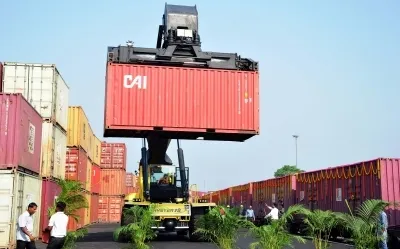
New Delhi, April 17 (NationPress) In alignment with the government's dedication to enhancing the Ease of Doing Business and facilitating trade for exporters, the Ministry of Commerce and Industry has initiated a series of strategic reforms aimed at fortifying the operations of Norms Committees under the Directorate General of Foreign Trade (DGFT). These reforms are designed to boost turnaround times, expedite approvals, and improve transparency and predictability within the Advance Authorisation Scheme, as stated in an official announcement released on Friday.
The newly introduced reforms encompass the provision of detailed guidelines to ensure consistency in the operations of Norms Committees (NCs). This includes a structured schedule for meetings every two weeks, prioritization of long-overdue cases, timely finalization of meeting records, and systematic tracking of case backlogs and aging. Additionally, efforts have been made to convert frequently recurring cases into standard input-output norms (SION), thereby minimizing repetitive approvals, according to the statement.
Line Ministries have been urged to designate more technical officers to the Committees to enhance sector-specific expertise and lessen reliance on a limited number of members. Furthermore, a special initiative has been launched to expedite the processing of pending applications, with meetings occurring on a regular schedule and cases addressed in chronological order to ensure both transparency and fairness.
To bolster capacity, ten additional technical members have been appointed from various Ministries, raising the total number of Technical Authorities from 12 to 22. This expansion has significantly improved the Committees' capacity to manage a larger volume of cases efficiently.
The impact of these reforms has been positive. From January 2026 to April 7, 2026, 38 meetings of Norms Committees were conducted, addressing 3,925 cases and resolving 1,770 of them, as reported.
These initiatives are in line with the government's goal of fostering a supportive and predictable trade environment, especially for MSMEs. A more efficient norms fixation process is anticipated to lower transaction costs, accelerate authorization timelines, and enhance India’s export competitiveness.
The DGFT oversees the Advance Authorisation (AA) Scheme and the Duty-Free Import Authorisation (DFIA) Scheme under the Foreign Trade Policy. These schemes permit the duty-free import of inputs that are physically incorporated into export products. Authorizations are typically issued according to the recognized Standard Input Output Norms (SION). In instances where SION is not available, authorizations are granted based on self-declared input-output norms by applicants, which are then assessed and finalized by sector-specific Norms Committees.
Currently, seven NCs operate under the DGFT, covering a variety of export sectors. These Committees comprise technical authorities and domain experts from relevant Ministries and Departments, responsible for establishing SION and ad-hoc norms, recommending SION notifications, and facilitating authorizations in line with the Foreign Trade Policy and Handbook of Procedures.
The capacity limitations had previously hindered the functioning of NCs due to a shortage of Technical Authorities. As of early February 2026, only twelve technical members were involved with the Committees, including five active Government officers, which led to an increase in backlogs due to overlapping responsibilities, the statement noted.
Point of View
It is evident that the government's latest reforms in trade facilitation demonstrate a proactive approach to enhancing the business environment for exporters. By improving the efficiency of Norms Committees, the initiative aims to address longstanding issues related to approval delays and transparency, ultimately fostering a more competitive export market.
NationPress
16 Sept 2026
Frequently Asked Questions
What are the key reforms introduced by the government?
The government has introduced detailed guidelines to enhance the functioning of Norms Committees, including regular meeting schedules, prioritization of cases, and an expansion of technical expertise.
How will these reforms benefit exporters?
These reforms are expected to improve turnaround times, expedite approvals, and create a more transparent and predictable environment for exporters, particularly benefiting MSMEs.
What is the Advance Authorisation Scheme?
The Advance Authorisation Scheme allows duty-free import of inputs that are used in the manufacturing of export products, helping exporters reduce costs.
How many Norms Committees are currently operational?
There are currently seven Norms Committees operational under the DGFT, covering various export sectors.
What impact have these reforms had so far?
Since the reforms were implemented, there have been 38 meetings held, resulting in the resolution of 1,770 out of 3,925 cases addressed.