NPCI revises UPI MDR framework: 0.4% charge on payments above ₹2,000 from Oct 15
Synopsis
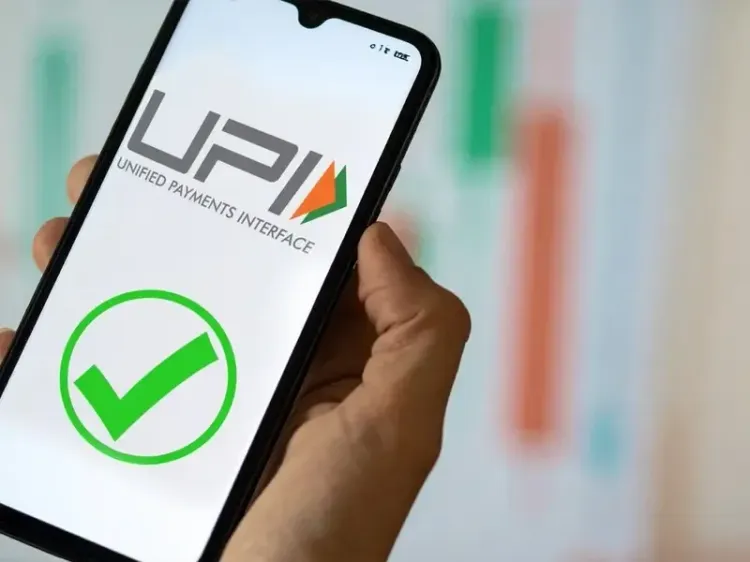
India's UPI payments landscape is about to change structurally. From 15 October 2026, NPCI will levy a 0.4% MDR — capped at ₹300 — on P2M transactions above ₹2,000, ending the blanket zero-MDR era for larger payments. Consumers and small merchants are shielded, but for mid-to-large retailers, this is a new cost reality for one of the world's busiest real-time payment networks.
Key Takeaways
NPCI announced a revised UPI MDR framework on 15 September 2026 , effective 15 October 2026 .
A 0.4% MDR , capped at ₹300 per transaction , will apply to P2M UPI payments above ₹2,000 .
Select categories — railways, telecom, insurance, and fuel — will attract a flat ₹5 per transaction above ₹2,000.
More than 95% of low-value P2M transactions (up to ₹2,000) and all P2P transfers remain free .
Small merchants receiving up to ₹1 lakh per month via UPI QR continue under zero MDR .
A dedicated fund will support UPI expansion in Tier-3 and smaller markets .
The National Payments Corporation of India (NPCI) on Tuesday, 15 September 2026 announced a revised Merchant Discount Rate (MDR) framework for select UPI transactions, under which a charge of 0.4 per cent will apply to certain Person-to-Merchant (P2M) payments above ₹2,000, effective 15 October 2026. Small merchants and low-value transactions will continue to attract zero MDR, and consumers will face no charges on any UPI payment.
What Changes from 15 October
Under the revised structure, a 0.4% MDR will apply to specified P2M UPI transactions exceeding ₹2,000, capped at a maximum of ₹300 per transaction. For select merchant categories — including railways, telecom services, insurance, and fuel — a flat rate of ₹5 per transaction will apply on payments above ₹2,000, providing predictability for high-volume, lower-margin sectors.
Person-to-Person (P2P) transfers will continue to remain entirely free, as will all P2M transactions of up to ₹2,000. NPCI has noted that more than 95 per cent of low-value UPI P2M transactions fall within this threshold and will therefore remain outside the MDR scope entirely.
Small Merchants Continue to Be Protected
Small merchants operating under the Person-to-Person Merchant (P2PM) framework will retain access to zero MDR. This category covers vendors receiving up to ₹1 lakh per month through UPI QR payments directly into their bank accounts — a provision aimed at sustaining digital payment adoption across the unorganised retail sector.
Notably, the revised framework also proposes a dedicated fund to expand UPI acceptance among small merchants, with a specific focus on existing merchant networks and Tier-3 and smaller markets. The fund is intended to strengthen payment infrastructure and bring more micro-businesses into the formal digital ecosystem.
How MDR Revenue Will Be Used
According to NPCI, MDR collected on higher-value transactions will be distributed across the UPI ecosystem. The proceeds are earmarked for investment in payment infrastructure, system resilience, cybersecurity, and innovation — areas that critics have long argued are under-resourced given the scale at which UPI now operates.
This comes amid a broader industry debate about the long-term sustainability of a zero-MDR model. Banks and payment processors have repeatedly raised concerns that the current structure limits their ability to invest in fraud prevention and network upgrades. The revised framework attempts to balance those concerns while shielding consumers and small merchants from any direct cost.
Context and Broader Impact
UPI processed over 20 billion transactions in recent months, making it one of the world's largest real-time payment networks. The introduction of MDR — even on a narrow band of higher-value transactions — marks a structural shift in how India's digital payments backbone is funded. The government had previously mandated zero MDR on UPI in 2020, a move that accelerated adoption but squeezed payment intermediaries.
With the 15 October 2026 effective date now confirmed, merchants processing larger-ticket UPI payments will need to review their cost structures, while the broader ecosystem awaits clarity on how the dedicated small-merchant fund will be operationalised.
Point of View
000 and shielding consumers entirely, NPCI has threaded a politically sensitive needle — but the real test is whether the revenue unlocked is substantial enough to fund the infrastructure and cybersecurity investments the ecosystem genuinely needs. The 0.4% cap at ₹300 is modest, and the carve-outs for fuel, railways, and telecom suggest lobbying pressure was already at work. What this framework does not answer is who audits the dedicated small-merchant fund or how quickly it deploys — two questions that will determine whether this reform expands digital inclusion or merely subsidises incumbents.
NationPress
15 Sept 2026
Frequently Asked Questions
What is the new UPI MDR announced by NPCI?
NPCI has introduced a 0.4% Merchant Discount Rate on UPI Person-to-Merchant (P2M) transactions above ₹2,000, capped at ₹300 per transaction, effective 15 October 2026. Consumers will not pay any charges; the MDR is levied on merchants processing higher-value UPI payments.
When will the revised UPI MDR framework come into effect?
The revised framework takes effect on 15 October 2026. Merchants accepting UPI payments above ₹2,000 will need to factor the new MDR into their cost structures from that date.
Are small merchants affected by the new UPI MDR?
No. Small merchants operating under the Person-to-Person Merchant (P2PM) framework — those receiving up to ₹1 lakh per month via UPI QR directly into their bank accounts — continue to benefit from zero MDR under the revised structure.
Will consumers have to pay any UPI transaction charges?
No. UPI transactions remain completely free for consumers. The MDR applies only to the merchant side for specified P2M payments above ₹2,000; all P2P transfers and P2M transactions up to ₹2,000 also remain free.
What are the special MDR rates for railways, telecom, insurance, and fuel?
For these select merchant categories, a flat MDR of ₹5 per transaction — rather than the 0.4% rate — will apply on UPI payments above ₹2,000, providing a predictable, lower cost for high-frequency, lower-margin payment categories.