ONGC Leader Advocates for Reduced Energy Dependence on Middle East and Increased Domestic Production
Synopsis
ONGC Chairman Arun Kumar Singh calls for India to rethink its energy strategy amidst geopolitical tensions, emphasizing the need to reduce reliance on Middle East resources and enhance domestic production for energy security.
Key Takeaways
India must reassess its energy strategy to reduce reliance on Middle Eastern resources.
Geopolitical tensions have exposed vulnerabilities in the energy supply chain.
Enhancing domestic production is essential for energy security.
Strategic storage capacities must be expanded to deal with supply shocks.
Deepwater exploration remains a significant challenge for the industry.
Mumbai, April 10 (NationPress) In light of escalating geopolitical tensions, India needs to reevaluate its energy security framework and lessen its reliance on conventional supply sources, particularly its closeness to the Middle East, asserted ONGC Chairman and CEO Arun Kumar Singh on Friday.
During an energy security conference hosted by the Petroleum and Natural Gas Regulatory Board, Singh cautioned that the recent turmoil in West Asia, which resulted in one of the most significant energy crises in decades, has unveiled weaknesses in India's energy supply network.
"Currently, India relies on the Middle East for nearly half of its crude oil imports, approximately 30% of its natural gas, and about 85–90% of its LPG requirements," he remarked.
However, Singh warned against presuming that geographical proximity guarantees easy access to these vital resources.
"Believing that the Middle East is close to us and, therefore, its resources are readily available is a naive assumption," he stated.
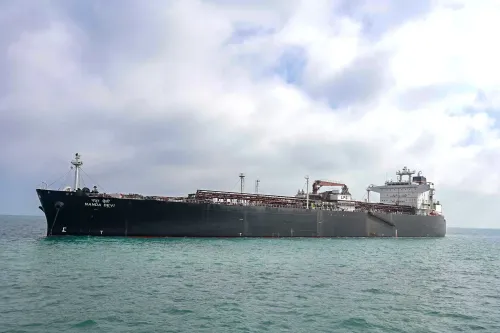
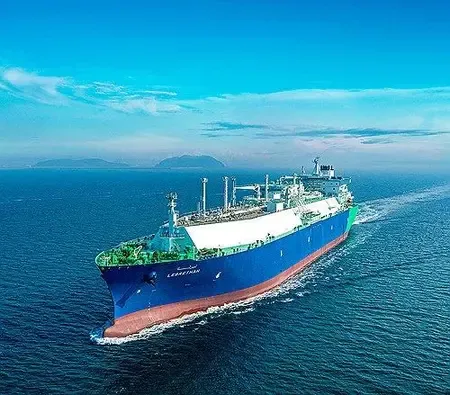
The situation was worsened by a six-week interruption in a crucial shipping lane used by Gulf countries to export crude oil, natural gas, and LPG, resulting in supply shortages for several importing nations, including India.
This disruption compelled authorities to prioritize gas distribution to essential sectors.
Emphasizing the dangers of a more fragmented global landscape, Singh indicated that a "paradigm shift" is in progress.
"As the world becomes increasingly de-globalized, we will face more challenges," he pointed out, adding that India's high dependency on imports makes it particularly susceptible in such scenarios.
He emphasized that enhancing domestic production has become an "existential necessity," urging for more vigorous exploration initiatives.
"We must pursue every opportunity for oil or gas discovery within our borders at any cost, as no one will assist us in a crisis," he asserted, while acknowledging the difficulties of deepwater exploration.
Singh also highlighted the pressing need to augment strategic storage capabilities to shield against supply and price fluctuations.
"We need to tackle storage issues by all means necessary," he insisted. Noting the increasing volatility in global energy markets, he remarked that refining economics have turned increasingly unpredictable, with unusual instances where product margins surpassed crude costs.
Point of View
The insights shared by ONGC's Chairman highlight a critical juncture for India's energy policy. The call for reduced reliance on external resources and a push for domestic production aligns with a broader national interest in ensuring energy security and resilience against global disruptions.
NationPress
19 Sept 2026
Frequently Asked Questions
Why is India reliant on the Middle East for energy?
India imports nearly half of its crude oil, about 30% of its natural gas, and 85-90% of its LPG from the Middle East, making it highly dependent on these resources.
What prompted the call for increased domestic production?
Geopolitical uncertainties and recent disruptions in the Middle East have highlighted vulnerabilities in India's energy supply chain, necessitating a shift to domestic production.
What challenges does India face in enhancing domestic energy production?
Challenges include the complexity of deepwater exploration and the need for strategic storage capacities to manage supply fluctuations.
How does global volatility affect India's energy market?
Increasing global market volatility can lead to unpredictable refining economics, impacting India's energy pricing and availability.
What is the significance of strategic storage in energy security?
Strategic storage is crucial for mitigating the impacts of supply and price shocks, ensuring a stable energy supply during crises.