Rajasthan Tops e-NAM e-Trade Volume: 173 Mandis, Rs 1.3L Cr Traded

Synopsis
Rajasthan has clinched the top spot in e-trade volume on India's e-NAM platform, recording over Rs 1,30,772 crore in agricultural trade since 2016. With 173 mandis integrated, AI-powered quality testing in 134 mandis, and 15.55 lakh farmers onboarded, the state is rewriting the rules of digital agricultural commerce.
Key Takeaways
Rajasthan ranks 1st nationally in e-NAM e-trade volume , with over Rs 1,30,772 crore in cumulative agricultural trade recorded from 2016 to January 2026 .
173 mandis in Rajasthan are now integrated with the e-National Agriculture Market (e-NAM) platform, covering 138 commodities .
Over 15.55 lakh farmers , 87,509 traders , 27,989 commission agents , and 546 FPOs are registered on e-NAM in Rajasthan.
134 e-NAM mandis in Rajasthan use AI and ML tools for quality testing of agricultural produce under CM Bhajan Lal Sharma's initiative.
Rajasthan ranks 4th nationally in e-payment adoption on e-NAM, with over Rs 505 crore processed through 44,711 transactions . e-NAM 2.0 , launched on February 12, 2026 , introduces automated bidding, inter-state trade features, and FinTech integration to further strengthen the platform.
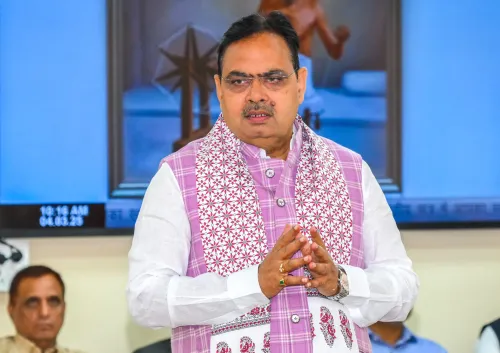
Rajasthan has emerged as the top-ranked state in e-trade volume on India's e-National Agriculture Market (e-NAM) platform, recording a cumulative agricultural trade worth over Rs 1,30,772 crore across 3.16 crore metric tonnes of produce since the platform's launch in April 2016. With 173 mandis now digitally integrated, the state is setting a national benchmark in technology-driven agricultural reform under Chief Minister Bhajan Lal Sharma.
Rajasthan's Dominance on e-NAM: Key Numbers
From 2016 to January 2026, Rajasthan has ranked first nationally in e-trade volume and second in total agricultural arrivals on the e-NAM platform. This performance reflects a decade of consistent digital adoption across the state's agricultural ecosystem.
Currently, 138 commodities are actively traded through e-NAM across Rajasthan's connected mandis. The platform has unified over 15.55 lakh farmers, 87,509 traders, 27,989 commission agents, and 546 Farmer Producer Organisations (FPOs) on a single digital marketplace.
A single state-wide trading licence allows traders to participate seamlessly across all e-NAM mandis in Rajasthan, eliminating bureaucratic friction and expanding market access for both buyers and sellers.
How e-NAM Is Transforming Farmer Incomes
Launched on April 14, 2016, under Prime Minister Narendra Modi, e-NAM was designed to liberate farmers from dependence on local mandis and enable price discovery through nationwide online auctions. The platform provides real-time price tracking, transparent bidding, and direct digital payments to farmers' bank accounts immediately after each transaction.
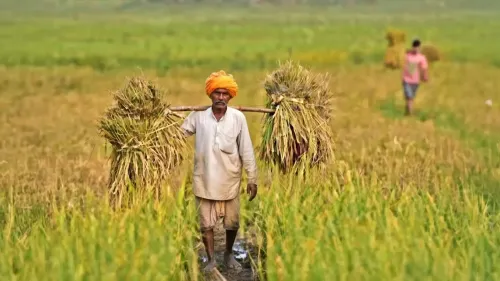
Before e-NAM, farmers in remote areas were often forced to sell at depressed local prices with limited bargaining power. The platform's nationwide reach has fundamentally altered this dynamic, allowing a farmer in Barmer or Bikaner to access buyers from across India without physical travel or intermediary dependency.
This structural shift matters particularly in Rajasthan, where agriculture is heavily dependent on arid-zone crops like mustard, guar, and cumin — commodities with volatile price cycles that reward those with better market intelligence.
e-NAM 2.0 and AI-Powered Quality Testing
The Government of India launched e-NAM 2.0 on February 12, 2026, introducing advanced features including automated bidding, demand-supply analytics, logistics integration, and FinTech support to further streamline inter-state agricultural commerce.
Rajasthan has moved ahead of most states in adopting these upgrades. Under CM Bhajan Lal Sharma's leadership, 134 e-NAM mandis in the state have deployed Artificial Intelligence (AI) and Machine Learning (ML) tools for quality assessment of agricultural produce — enabling faster, more accurate, and objective grading that reduces disputes and improves price fairness.
This AI-enabled quality testing is a significant leap: traditionally, produce grading was subjective and often a source of exploitation. Automated systems reduce human bias, creating a more level playing field for small and marginal farmers who lack the negotiating leverage of larger agricultural enterprises.
Digital Payments and Financial Inclusion Push
Rajasthan ranks fourth nationally in e-payment adoption on e-NAM, with over Rs 505 crore processed through 44,711 digital transactions. Verified digital payment records are also improving farmers' access to institutional credit, as banks and financial institutions can now assess creditworthiness through transaction history.
To accelerate digital payment adoption, the state has integrated the E-Payment Incentive Scheme with the Krishak Upahar Yojana. Under this initiative, farmers and traders who complete e-payments become eligible for lottery-based cash rewards through exclusive gift coupons — a behavioural nudge that has proven effective in driving adoption among first-time digital users.
For technical support and grievance redressal, e-NAM users can reach the toll-free helpline 1800-270-0224, which provides continuous assistance, particularly for first-time users navigating the platform.
Broader Implications: A Model for Agricultural Digitalisation
Rajasthan's performance on e-NAM is not just a state achievement — it is a proof of concept for how India's fragmented agricultural markets can be unified through technology. With e-NAM 2.0's inter-state trade capabilities now active, the potential for Rajasthan's farmers to access premium buyers in distant markets is greater than ever before.
Notably, this comes at a time when farm distress remains a politically sensitive issue nationally. States that can demonstrate measurable income improvements through digital market access will have a significant policy and electoral advantage heading into upcoming state and national cycles.
As e-NAM 2.0 scales up through 2026, all eyes will be on whether Rajasthan can maintain its top ranking in e-trade volume while expanding its AI quality-testing infrastructure to cover all 173 integrated mandis — a milestone that could redefine agricultural commerce standards across India.
Point of View
Why does farm distress remain a national crisis? The answer lies in the gap between platform adoption and actual income realisation — a gap that AI-quality testing and FinTech integration are only beginning to address. Credit must go to consistent state-level execution, but the real test of e-NAM's success will be whether marginal farmers in Rajasthan's arid districts are seeing measurably higher net incomes — not just higher transaction volumes on a government dashboard.
NationPress
16 Sept 2026
Frequently Asked Questions
Why has Rajasthan ranked first in e-NAM e-trade volume?
Rajasthan has ranked first nationally in e-NAM e-trade volume due to the digital integration of 173 mandis, onboarding of over 15.55 lakh farmers, and consistent adoption of online trading since 2016. The state has traded 3.16 crore metric tonnes worth Rs 1,30,772 crore over the past decade.
What is e-NAM 2.0 and when was it launched?
e-NAM 2.0 is the upgraded version of India's National Agriculture Market platform, launched on February 12, 2026. It introduces automated bidding, demand-supply analytics, inter-state trade facilitation, logistics support, and FinTech integration to modernise agricultural commerce.
How many mandis in Rajasthan use AI for quality testing?
As of 2026, 134 e-NAM mandis in Rajasthan use Artificial Intelligence and Machine Learning tools for quality assessment of agricultural produce. This enables faster and more objective grading, reducing disputes and improving price fairness for farmers.
What is the Krishak Upahar Yojana linked to e-NAM?
The Krishak Upahar Yojana is a Rajasthan government initiative integrated with the E-Payment Incentive Scheme on e-NAM. Farmers and traders who complete digital payments are eligible for lottery-based cash rewards through exclusive gift coupons, encouraging adoption of secure digital transactions.
How can farmers get help with the e-NAM platform?
Farmers and traders using e-NAM can contact the toll-free helpline 1800-270-0224 for technical support and grievance redressal. The helpline is especially designed to assist first-time users navigating the digital platform.