Ram Madhav Warns India-US Ties Under Serious Strain at Hudson Institute
Synopsis
Senior BJP leader Ram Madhav delivered a rare public warning at Washington's Hudson Institute: India-US ties are fracturing across strategic, economic, and diaspora pillars. His call for 'mutual respect and mutual sensitivity' signals New Delhi's growing frustration — and raises urgent questions about where one of the world's most consequential partnerships is headed.
Key Takeaways
Ram Madhav , President of the India Foundation , warned on April 23 that India-US bilateral ties are under visible strain across strategic, economic, and people-to-people pillars.
India is experiencing net negative FDI from the United States , signalling a troubling reversal in the investment relationship built over two decades .
Madhav expressed cautious optimism about an upcoming India-US trade deal , calling it a potential reset for the strained economic relationship.
The Indian-American diaspora of over 4 million is experiencing growing anxiety due to US immigration rhetoric and policy shifts, threatening a key bridge in bilateral ties.
Madhav issued a firm warning against the expansion of global conflicts into the Indian Ocean region , citing India's core maritime and economic interests.
He outlined a three-point restoration framework — mutual respect , mutual sensitivity , and mutual interest — urging both nations to rebuild consensus on shared priorities.
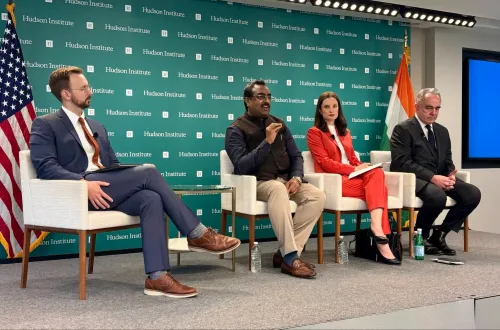
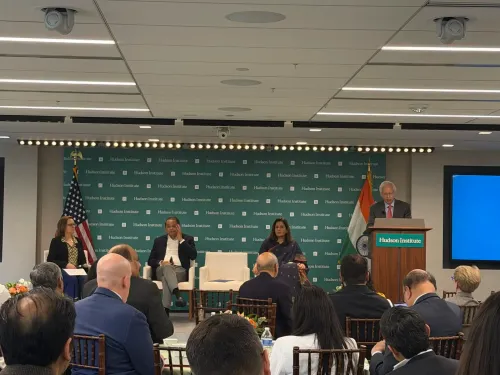
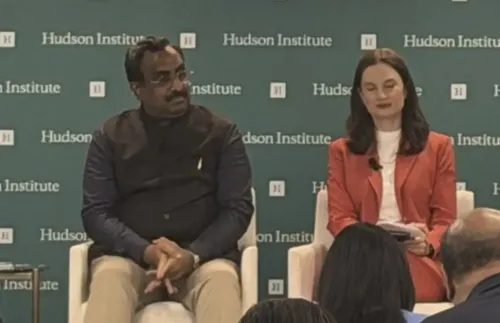
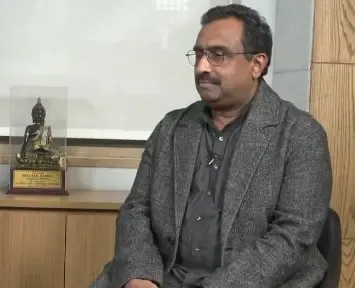
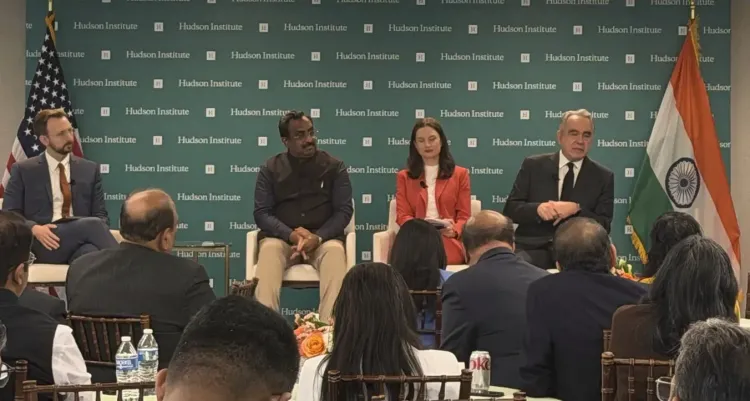
Washington, April 23 — Ram Madhav, President of the India Foundation and senior BJP leader, issued a stark warning on Wednesday that India-US bilateral ties are visibly fraying across their core pillars — strategic, economic, and people-to-people — and demand immediate course correction rooted in "mutual respect, mutual sensitivity, and mutual interest." He made these remarks at the Hudson Institute's New India Conference in Washington D.C., one of the most influential platforms shaping the discourse on India's global role.
Strategic Foundations Showing Cracks
Madhav acknowledged that the India-US strategic partnership, long considered a cornerstone of the post-Cold War Asian order, is no longer operating on the same wavelength it once did. "We had a great understanding of our geostrategic priorities… Today doesn't seem so anymore," he said pointedly.
He highlighted uncertainty in US foreign policy direction — particularly around China policy and broader global alignments — as a key source of friction. This comes at a time when India is carefully calibrating its own posture between Washington, Moscow, and Beijing, making coherent US signalling critically important for New Delhi's strategic calculus.
Notably, this concern echoes a broader pattern: since 2023, analysts have flagged divergences between India and the US on issues ranging from the Russia-Ukraine conflict to H-1B visa pressures and extradition demands, suggesting these are not isolated friction points but structural stresses in the relationship.
Economic Pillar Under Pressure: FDI and Tariff Disputes
On the economic front, Madhav painted an equally sobering picture. He noted that the bilateral economic architecture, painstakingly built over two decades, is now under significant stress due to tariff disputes and investment concerns.
"We are also facing net negative FDI from… the US on the economy," he said — a striking admission that highlights a reversal in capital flows that once symbolised the depth of the partnership. US foreign direct investment into India has been a marker of strategic confidence, making any net negative trend a red flag for policymakers on both sides.
Madhav, however, struck a note of cautious optimism regarding an anticipated India-US bilateral trade deal. "We are looking forward to the trade deal… we are hoping that… we will finally… close the deal," he said, suggesting that a successful agreement could serve as a meaningful reset for the economic relationship. Trade negotiations between the two countries have been ongoing for years, with differences over agricultural market access, digital trade norms, and intellectual property rights historically proving to be sticking points.
Indian Diaspora Anxiety: A Barometer of Bilateral Health
Perhaps one of the most politically sensitive dimensions Madhav raised was the growing unease within the Indian-American community — a constituency that has historically served as a bridge between the two democracies and a powerful lobbying force in Washington.
"There is a lot of anxiety, a lot of worries among the… community," he said, warning that rhetoric targeting Indian-origin populations in the United States must be directly addressed by both governments. The Indian diaspora in the US numbers over 4 million, contributes significantly to the tech and healthcare sectors, and has been a major source of remittances and soft power for India.
This concern is particularly timely given recent debates in the US around immigration enforcement, H-1B visa caps, and broader nativist rhetoric that has created uncertainty for skilled Indian professionals and students.
Three-Point Framework for Restoration
Madhav laid out a clear three-pronged framework for rebuilding the relationship: mutual respect, mutual sensitivity, and mutual interest. He stressed that both sides must move beyond transactional engagements and rebuild a consensus on shared long-term priorities.
He also cautioned against treating current tensions as a "passing phase," warning that in a rapidly evolving global order, nations "do not have that luxury" of complacency. The implicit message was directed at both New Delhi and Washington: structural repairs require deliberate political will, not just diplomatic pleasantries.
Indian Ocean Conflict Warning and Global Implications
Madhav also addressed the ongoing global conflict affecting critical maritime trade routes, issuing a firm warning against its expansion into the Indian Ocean region. "The enlargement of this whole conflict… into the entire Indian Ocean region will not be… welcomed by India," he stated, urging all parties to pursue dialogue and negotiation to prevent dangerous escalation.
This statement carries significant weight given that the Indian Ocean is the world's third-largest ocean and handles over 80% of global seaborne oil trade, making its stability a matter of existential economic interest for India. New Delhi's pushback against any militarisation or conflict spillover into this region aligns with its longstanding SAGAR (Security and Growth for All in the Region) doctrine.
The New India Conference, held on April 23 at the Hudson Institute, brought together senior policymakers, diplomats, and strategic thinkers to assess India's global trajectory. As both nations navigate a complex multipolar world, the next few months — including progress on the proposed trade deal and diplomatic exchanges at the highest levels — will be decisive in determining whether this relationship finds its footing or drifts further apart.
Point of View
Not just at the policy level. What's striking is the venue: the Hudson Institute is Washington's own backyard, and choosing it to air grievances publicly suggests New Delhi wants these concerns heard loudly in American policy circles. The real test will come with the trade deal — if it fails, Madhav's 'passing phase' warning may prove prophetic.
NationPress
18 Sept 2026
Frequently Asked Questions
What did Ram Madhav say about India-US relations at the Hudson Institute?
Ram Madhav said India-US ties are under visible strain across strategic, economic, and people-to-people pillars and need urgent recalibration. He called for rebuilding the relationship on mutual respect, mutual sensitivity, and mutual interest at the Hudson Institute's New India Conference on April 23.
Why are India-US relations under strain in 2025?
India-US relations are strained due to divergences in geostrategic priorities — particularly around China policy — tariff disputes, net negative US FDI into India, and growing anxiety among the Indian-American diaspora. These pressures reflect structural tensions that have accumulated over several years.
What is the India-US trade deal and when will it be signed?
The India-US bilateral trade deal is an ongoing negotiation aimed at resolving differences over tariffs, agricultural market access, digital trade, and intellectual property rights. Ram Madhav expressed cautious optimism that the deal could be finalised soon, calling it a potential reset for the economic relationship.
Why is the Indian diaspora in the US anxious?
The Indian-American community, numbering over 4 million, is facing uncertainty due to US immigration enforcement debates, H-1B visa pressures, and nativist rhetoric affecting Indian-origin professionals and students. Ram Madhav flagged this anxiety as a threat to one of the key pillars of India-US bilateral ties.
What did Ram Madhav say about the Indian Ocean conflict?
Madhav warned that any expansion of ongoing global conflicts into the Indian Ocean region would not be welcomed by India. He urged all parties to pursue dialogue and negotiation, underscoring India's strategic interest in maintaining stability in a region that handles over 80% of global seaborne oil trade.