Ray Dalio Predicts Intensifying Iran Conflict with Key Hormuz Battle Ahead

Synopsis
Billionaire Ray Dalio warns that the Iran conflict's most significant phase is imminent, with a critical battle for the Strait of Hormuz poised to reshape global power dynamics and the U.S. dollar's stability.
Key Takeaways
Ray Dalio warns of an impending critical phase in the Iran conflict .
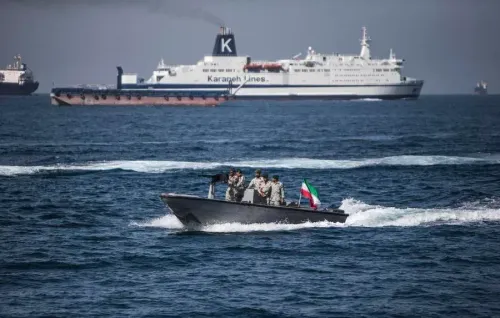
The decisive battle for the Strait of Hormuz is anticipated to determine the outcome of the war.
A U.S. failure to secure Hormuz could signify a major shift in global power dynamics.
Dalio argues that negotiations are unlikely to yield meaningful results.
The consequences of defeat could destabilize the dollar-led financial order .
New Delhi, April 11 (NationPress) Billionaire investor Ray Dalio has warned that the most severe and pivotal stage of the Iranian conflict is yet to unfold. He cautioned that a decisive "final battle" for dominance over the Strait of Hormuz will not only shape the current war's outcome but also test the long-term viability of American power and the stability of the dollar-centric financial system that supports it.
As the founder of Bridgewater Associates, Dalio expressed his views on X, sharing an article that emphasizes this ongoing struggle, where all involved parties are aware that the decisive encounter remains ahead.
He stated, “Both sides acknowledge that the ultimate confrontation, which will clarify the victors and the vanquished, is still forthcoming.”
Dalio outright rejected the idea of a negotiated settlement, labeling agreements in this context as “worthless.” He believes that what lies ahead is likely to be “the most detrimental phase of the conflict.”
He framed the entire situation around a singular, quantifiable measure—whether the United States can ensure secure commercial transit through Hormuz.
According to him, there is “almost unanimous consensus” among the government officials and geopolitical analysts he has consulted that any result falling short of this, including a scenario where Iran retains any negotiating leverage over the strait, would signify a defeat for the U.S.
Dalio cautioned that the ramifications of such a defeat could be grave and self-perpetuating, leading to harm for Gulf allies, disturbances in global energy markets, a decline in allied confidence, and a threat to the dollar's status as a reserve currency as capital shifts towards the perceived winner.
Reflecting on five centuries of imperial cycles, Dalio noted that a U.S. failure to secure Hormuz could parallel what the 1956 Suez Canal Crisis represented for Britain: a clear demonstration of overreach that fundamentally altered how allies, adversaries, and creditors view the leading power.
He highlighted that similar patterns have been observed with the Dutch Empire in the 18th century and the Spanish Empire in the 17th century, where a perceived lesser power challenged control over a vital trade route, the dominant power faltered, and financial and geopolitical dynamics swiftly reorganized around the new reality.
Point of View
Ray Dalio's insights into the Iran conflict highlight a significant geopolitical concern. The potential for instability in the Strait of Hormuz could have far-reaching consequences not only for the U.S. but also for global economic stability. A careful examination of Dalio's warnings is essential for understanding future geopolitical dynamics.
NationPress
19 Sept 2026
Frequently Asked Questions
What is the significance of the Strait of Hormuz?
The Strait of Hormuz is a critical maritime chokepoint through which a significant portion of the world's oil supply is transported, making it vital for global energy security.
What could be the consequences of a U.S. defeat in Hormuz?
A U.S. defeat in Hormuz could lead to severe repercussions, including damage to Gulf allies, turmoil in global energy markets, decreased allied confidence, and a potential challenge to the dollar's reserve currency status.
What historical parallels does Dalio draw?
Dalio compares a potential U.S. failure to secure Hormuz to the 1956 Suez Canal Crisis for Britain, highlighting how historical overreach can redefine perceptions of power.
Is a negotiated settlement likely in the Iran conflict?
Dalio believes that a negotiated settlement is unlikely and considers any agreements in this context to be largely ineffective.