RBI Eases Restrictions on Rupee Derivative Trades to Boost Market Activity
Synopsis
The RBI's recent decision to partially lift restrictions on rupee derivatives signifies a move towards stabilizing market activities amid earlier curbs aimed at controlling currency volatility. This strategic rollback aims to balance normal trading with caution against speculative risks.
Key Takeaways
RBI rolls back restrictions on rupee derivatives.
Focus on stabilizing market activity .
Full lift of restrictions on non-deliverable forwards .
Enhanced rules for foreign exchange derivatives .
Rupee stabilized between 92.50 to 93.50 .
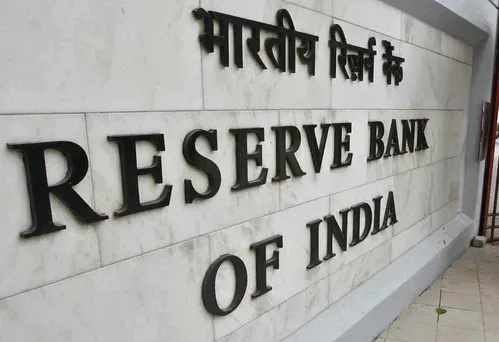
Mumbai, April 20 (NationPress) On Monday, the Reserve Bank of India (RBI) revealed a partial reversal of the restrictions it had implemented earlier this month concerning specific rupee derivative transactions. This move indicates a transition towards normalizing market activities following emergency measures aimed at stabilizing the currency.
The central bank had established a range of controls on April 1, designed to mitigate heightened volatility in the rupee, which had plummeted to unprecedented lows, surpassing the 95 mark in late March.
These controls included prohibiting banks from providing non-deliverable forwards (NDFs) to clients and limiting the rebooking of cancelled forward contracts, with the intention of reducing arbitrage trades that were exerting pressure on the currency.
In this latest action, the RBI has completely lifted both restrictions. Additionally, it has relaxed rules pertaining to foreign exchange derivative contracts involving related parties, permitting the cancellation and rollover of existing contracts and allowing transactions with non-resident entities on a back-to-back basis.
This relaxation signifies a measured withdrawal of crisis-era controls, even as the central bank remains vigilant regarding speculative activities.
The limit on banks' net open rupee positions in the onshore market remains at $100 million.
The initial restrictions aimed to address arbitrage-driven volatility by capping banks' positions.
However, these measures had a less-than-expected impact, as banks reportedly shifted positions to corporates and related entities, diminishing the intended effects.
“After a review, it has now been decided to revoke the instructions issued via A.P. (DIR Series) Circular No. 03 dated April 01,” stated the central bank.
“Moreover, it has been resolved that authorized dealers shall not engage in any foreign exchange derivative contracts involving INR with their related parties except for the following: cancellation and rollover of existing contracts and transactions conducted with non-related non-resident users on a back-to-back basis in accordance with the Master Direction - Risk Management and Inter-Bank Dealings dated July 05, 2016, as amended from time to time,” it further explained.
A second set of restrictions introduced in April contributed to a nearly 2 percent recovery in the rupee, which has since traded within a relatively stable range of 92.50 to 93.50 in recent sessions.
Market observers interpret this latest rollback as an effort by the central bank to find a balance between reinstating normal hedging activities and preventing excessive speculative trading that could destabilize the currency.
This decision also comes amid heightened scrutiny of corporate and related-party transactions, with concerns that some deals were being utilized to circumvent regulatory safeguards.
Point of View
The RBI's latest actions reflect a careful approach to restore normalcy in the financial markets while remaining vigilant against the risks of speculation. The adjustments suggest a responsive and strategic maneuvering by the central bank in fluctuating economic conditions.
NationPress
16 Sept 2026
Frequently Asked Questions
What prompted the RBI to roll back restrictions on rupee derivatives?
The RBI aimed to normalize market activity following emergency measures to stabilize the currency amid heightened volatility.
What specific measures were lifted by the RBI?
The RBI fully lifted restrictions on non-deliverable forwards (NDFs) and eased rules for foreign exchange derivative contracts with related parties.
How has the rupee reacted to the recent policy changes?
Following the second round of curbs, the rupee recovered nearly 2%, stabilizing within a range of 92.50 to 93.50.
What does the RBI's decision indicate about its future policies?
The RBI's decision reflects a balancing act between restoring normal trading activities and preventing excessive speculation.
Is there a limit on banks' positions in the rupee market?
Yes, the cap on banks' net open rupee positions in the onshore market remains unchanged at $100 million.