Jeffrey Sachs: Adani Group's scale gives India clean energy edge
Synopsis
At the Resilient Futures Summit 2026, economist Jeffrey Sachs credited Adani Group's deployment scale as a potential global differentiator in clean energy — while warning that the world is already at 1.5°C of warming and hurtling toward 1.8–1.9°C by the mid-2030s. India's ambition is real, he argued, but vision without sector-level planning is just a slogan.
Key Takeaways
Jeffrey Sachs praised Adani Group's large-scale clean energy deployment at the Resilient Futures Summit 2026 in New Delhi on 30 April 2026 .
Sachs warned global temperatures have already reached approximately 1.5°C of warming, potentially rising to 1.8–1.9°C by the mid-2030s .
He said most countries still lack a clear decarbonisation strategy despite over three decades of international climate discussions.
Sachs called on India to convert its Viksit Bharat 2047 vision into concrete sector-level plans across energy, education, infrastructure, and transport.
He projected India could become the world's second-largest economy by 2047 and eventually the largest thereafter.
NITI Aayog was highlighted as a critical planning hub for aligning national strategy with private investment.
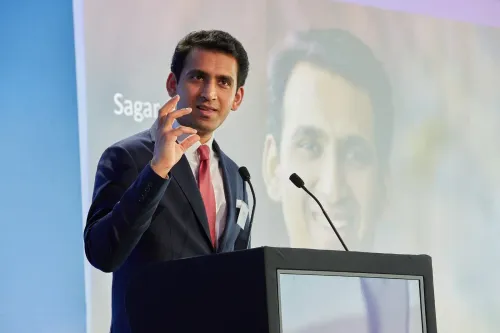
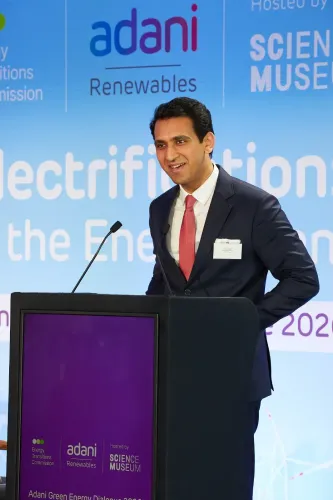
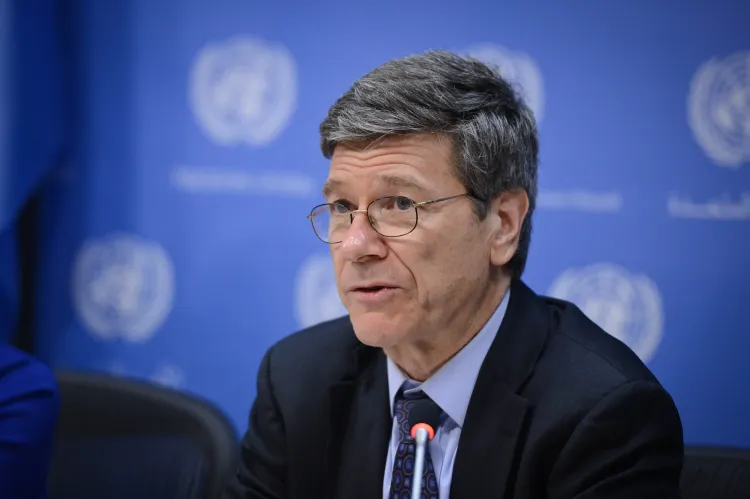
Renowned American economist Jeffrey Sachs has praised the Adani Group's clean energy push, arguing that large-scale deployment of green technologies can create a decisive competitive advantage in the global transition away from fossil fuels. Sachs made the remarks at the Resilient Futures Summit 2026 in New Delhi on 30 April 2026.
Scale as a Strategic Weapon
Sachs highlighted one of the central lessons from the rollout of new technologies: the power of scale. He noted that companies like Adani Group are able to drive down costs and build deep expertise through rapid and extensive deployment. "Such an approach not only helps create national champions but can also position firms as global leaders in emerging sectors like renewable energy," he said.
The observation carries weight given India's stated ambition to reach 500 GW of non-fossil fuel capacity by 2030. Large conglomerates with integrated supply chains — from solar panel manufacturing to grid infrastructure — are increasingly seen as critical execution partners for that target.
Global Climate Response Still Inadequate
Despite his praise for India's progress, Sachs issued a stark warning about the global climate trajectory. He cautioned that the world has already reached approximately 1.5 degrees Celsius of warming, with the pace of temperature rise accelerating. Without a decisive course correction, he projected that global temperatures could approach 1.8–1.9 degrees Celsius by the mid-2030s.
Sachs pointed out that despite over three decades of international discussions on decarbonisation, most countries still lack a clear and actionable strategy. He urged policymakers to prepare for a scenario where global warming reaches or exceeds two degrees Celsius — a threshold that would pose significant challenges but, he argued, can still be managed with the right policy frameworks.
India's Viksit Bharat Vision and Long-Term Planning
Referring to India's long-term development roadmap, Viksit Bharat 2047, Sachs said the country holds an advantage in thinking ahead but must translate that vision into concrete, sector-specific planning — spanning energy, education, infrastructure, and transport. He underscored the importance of institutions like NITI Aayog as central planning hubs capable of guiding long-term strategy through data, technology insights, and policy coordination.
"While large corporations like Adani will play a crucial role in driving investments and innovation, a strong national framework is essential to align efforts," Sachs said. The comment reflects a broader consensus among development economists that private capital alone cannot deliver systemic energy transitions without coherent state architecture.
India as a Future Global Economic Leader
Looking beyond the energy sector, Sachs expressed confidence in India's broader economic trajectory. He projected that India could become the world's second-largest economy by 2047 and eventually the largest in the decades that follow. He urged India to assume a leadership role not just domestically but on the global stage, advocating for cooperation among major powers rather than geopolitical conflict.
With the Resilient Futures Summit 2026 bringing together policymakers, industry leaders, and economists, Sachs's remarks are likely to reinforce calls for India to use its scale — both corporate and national — as leverage in shaping the terms of the global clean energy transition.
Point of View
Not a business lobbyist — it frames scale-based cost reduction as a structural policy tool, not just corporate strategy. Yet the praise sits uneasily alongside his own warning: if global decarbonisation remains inadequate after 30 years of talks, the question is whether national champions like Adani accelerate the transition or simply capture its rents. India's Viksit Bharat framing is aspirational, but Sachs's implicit challenge — translating vision into sector-level execution — is where most large economies have historically stumbled. The NITI Aayog reference is telling: without a credible planning architecture that can hold both government and private actors accountable, scale alone risks becoming a competitive advantage for the firm rather than a climate solution for the country.
NationPress
19 Sept 2026
Frequently Asked Questions
What did Jeffrey Sachs say about Adani Group at Resilient Futures Summit 2026?
Jeffrey Sachs praised Adani Group's large-scale clean energy deployment, arguing it drives down costs and builds expertise that can position the firm as a global leader in renewable energy. He made the remarks at the Resilient Futures Summit 2026 in New Delhi on 30 April 2026.
How serious is the global climate situation according to Jeffrey Sachs?
Sachs warned that global temperatures have already reached approximately 1.5°C of warming and could approach 1.8–1.9°C by the mid-2030s if the pace of temperature rise continues. He said most countries still lack a clear and actionable decarbonisation strategy despite over three decades of international climate discussions.
What is Viksit Bharat 2047 and why did Sachs reference it?
Viksit Bharat 2047 is India's long-term development vision targeting developed-nation status by the centenary of independence. Sachs acknowledged India's advantage in long-term thinking but stressed that the vision must be translated into concrete plans across energy, education, infrastructure, and transport.
What economic projection did Jeffrey Sachs make for India?
Sachs projected that India could become the world's second-largest economy by 2047 and eventually the largest economy globally in the decades beyond. He urged India to take on a global leadership role and advocate for cooperation among major powers.
What role did Sachs assign to NITI Aayog in India's clean energy transition?
Sachs described NITI Aayog as a critical central planning hub that can guide India's long-term strategy through data, technology insights, and policy coordination, ensuring that private investment by corporations like Adani is aligned with national goals.