Are WhatsApp's Privacy Policies Compromising User Rights?
Synopsis
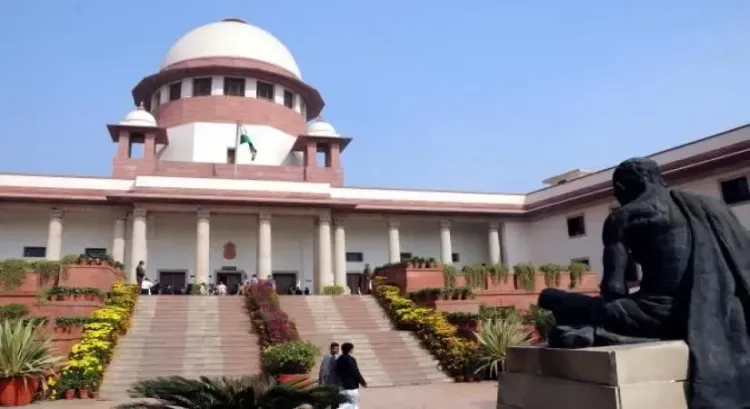
The Supreme Court of India has voiced grave concerns regarding WhatsApp's controversial privacy policy and Meta's data-sharing practices. As the court investigates these issues, the implications for user privacy and data security are under intense scrutiny.
Key Takeaways
The Supreme Court is scrutinizing WhatsApp's privacy policy.
Concerns about user consent and data sharing practices are paramount.
The case highlights the need for transparency in tech companies.
Potential implications for millions of users in India.
Government involvement signifies the seriousness of the issue.
New Delhi, Feb 3 (NationPress) The Supreme Court raised significant concerns regarding WhatsApp's 2021 privacy policy and the user data sharing practices by its parent company, Meta Platforms. The court emphasized that the platform must not be permitted to "manipulate the right to privacy" of Indian users.
This statement came during a session led by Chief Justice of India (CJI) Surya Kant and Justices Joymalya Bagchi and Vipul Pancholi, who were deliberating on appeals from Meta Platforms and WhatsApp LLC against a National Company Law Appellate Tribunal (NCLAT) ruling that upheld a Rs 213.14 crore fine imposed by the Competition Commission of India (CCI).
The CCI has also lodged a cross-appeal disputing the NCLAT's decision that permitted WhatsApp to share user data for advertising ventures.
In agreeing to hear the appeals, CJI Kant’s Bench made pointed comments about WhatsApp’s privacy policy, characterizing it as a "take it or leave it" model that offers consumers little genuine choice.
"What choice do you really provide? You have a complete monopoly, and you're claiming to offer options. It's either leave WhatsApp or allow us to share your data," the apex court noted.
Throughout the proceedings, the Bench repeatedly raised alarms about the equity of the privacy policy, particularly for everyday users.
"Will a poor woman selling fruits on the street grasp the terms of your policy? The language is so artfully constructed that even some of us might struggle to comprehend it," the Supreme Court remarked.
Labeling the alleged data practices as troubling, the Supreme Court stated: "This is a refined method of stealing private information. The right to privacy in this nation cannot be treated lightly. You are undermining the essence of constitutionalism."
Concerns were also raised about targeted advertisements appearing shortly after personal communications, while WhatsApp maintained that its messaging services are end-to-end encrypted and that it cannot access user conversations.
Solicitor General Tushar Mehta, representing the Centre, echoed the apex court's worries, asserting that today, personal data holds significant monetary value and is being exploited commercially.
Following an in-depth hearing, the CJI Kant-led Bench instructed Meta and WhatsApp to submit an affidavit explaining their privacy policy and data-sharing procedures, including how user consent is obtained and communicated. The apex court also included the Union government as a participant in the proceedings. Further hearings are scheduled for next week.
Point of View
It's crucial to acknowledge the Supreme Court's focus on user privacy in the digital age. The concerns raised about WhatsApp's policies highlight the need for greater transparency and accountability from tech giants. Our commitment should always be to protect the rights of citizens while ensuring that technology serves the public good.
NationPress
24 Sept 2026
Frequently Asked Questions
What is the main concern of the Supreme Court regarding WhatsApp?
The Supreme Court is worried that WhatsApp's privacy policy allows the platform to manipulate user privacy rights, particularly through data sharing practices with its parent company, Meta Platforms.
What is the significance of the Rs 213.14 crore penalty?
The penalty represents the Competition Commission of India's decision to impose a fine on WhatsApp for its data-sharing practices, which the NCLAT upheld.
How does WhatsApp justify its data practices?
WhatsApp claims its messaging services are end-to-end encrypted, meaning it cannot access user conversations.
What actions has the Supreme Court taken regarding the appeals?
The Supreme Court has agreed to hear the appeals and has requested Meta and WhatsApp to explain their privacy policies and data-sharing mechanisms.
What are the broader implications of this case?
This case could set a precedent for user privacy rights in India and influence how technology companies handle personal data.