Scindia Launches Adani-Backed Garment Hub in MP's Shivpuri
Synopsis
Union Minister Jyotiraditya Scindia inaugurated an Adani Group-backed garment hub in Shivpuri's Badarwas that has scaled production from 10 to 2,000 jackets daily and plans to hand over ownership to 1,800 women workers within three years — a rare worker-ownership model in Indian manufacturing.
Key Takeaways
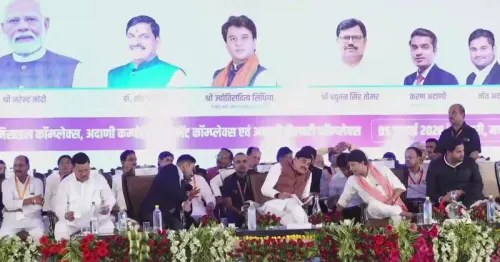
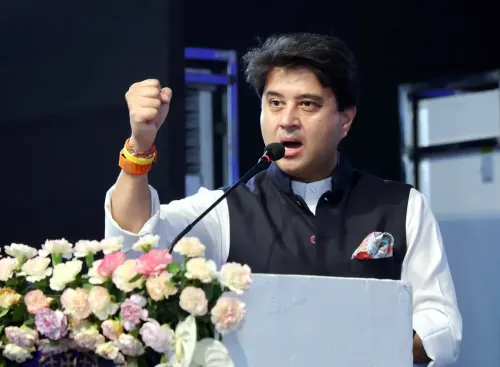
Union Minister Jyotiraditya Scindia inaugurated the Adani Group-backed garment centre in Badarwas, Shivpuri, Madhya Pradesh on April 25, 2025 .
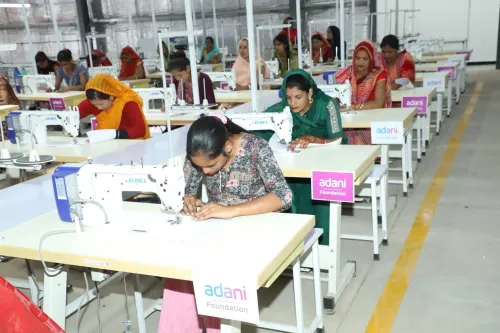
The facility spans 50,000 square feet and currently operates 160 machines , with phased expansion planned to 600 machines .
Production capacity has surged from 10 jackets per day to nearly 2,000 jackets daily using international-standard technology.
Approximately 1,800 women will be directly employed, earning between ₹15,000 and ₹20,000 per month .
Scindia announced a three-year plan to transfer ownership of the facility to the women workers, creating a worker-stakeholder model.
The project's foundation stone was laid in January 2025 and was completed within 18 months , with export targets including London, Paris, and Geneva .
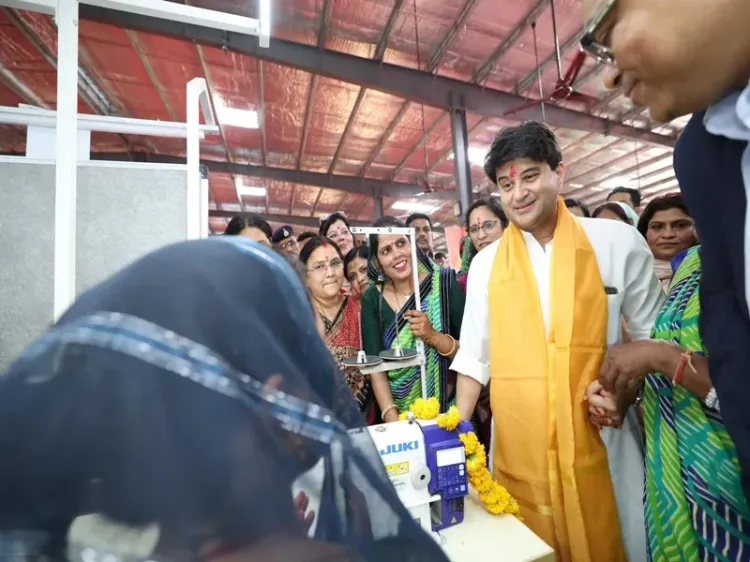
Union Minister Jyotiraditya Scindia on Saturday, April 25, 2025, inaugurated a modern garment training and production facility in Badarwas, Shivpuri district, Madhya Pradesh, developed in partnership with the Adani Group. The centre marks a significant step in private-sector-driven industrial development in one of MP's aspirational districts. The project is designed to boost local employment, skill development, and women's economic empowerment at scale.
What the Inauguration Signals for Shivpuri
The Badarwas garment manufacturing centre spans 50,000 square feet and currently operates with 160 machines, with plans to scale to 600 machines in phased expansion. This scaling is expected to generate direct employment for approximately 1,800 women. The facility has already dramatically transformed local production capacity — from a mere 10 jackets per day to nearly 2,000 jackets daily.
Scindia drew a pointed parallel with Chanderi, a town historically synonymous with handloom textiles, suggesting that Badarwas is on course to carve its own identity in garment manufacturing, particularly in jacket production. The comparison underlines the government's intent to build regionally distinct industrial identities across Madhya Pradesh.
Adani Group's Role and Corporate Investment Model
The Adani Group's involvement in this project reflects a broader pattern of the conglomerate deepening its presence in Tier-2 and Tier-3 industrial zones across India. Scindia described the collaboration as a "strong model" of how large-scale corporate investment can accelerate regional development in areas that have historically struggled to attract manufacturing capital.
The foundation stone for the project was laid in January 2025, and the facility became operational within 18 months — a timeline Scindia cited as evidence of efficient public-private execution. The use of international-standard machinery positions the unit to supply not only domestic markets like Delhi and Mumbai but also export to global fashion hubs including London, Paris, and Geneva.
This comes amid growing scrutiny of large conglomerates' footprint in government-backed projects, making transparency in such partnerships increasingly important for public trust.
Women's Empowerment at the Core
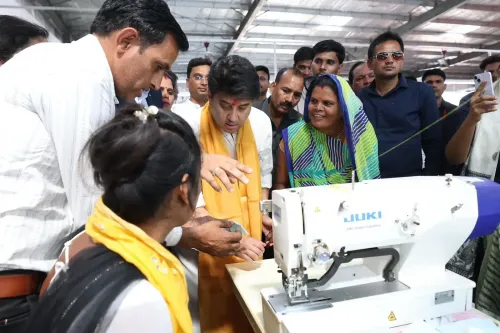
A defining feature of the Badarwas garment hub is its focus on women workers. Scindia interacted directly with women engaged in stitching and production, describing the facility as a "platform for economic independence" rather than merely a factory. Women workers are expected to earn between ₹15,000 and ₹20,000 per month — well above the average rural wage in Madhya Pradesh.
Scindia invoked the concept of 'Lakhpati Didis' — a term used in the national discourse around women achieving annual incomes exceeding ₹1 lakh — framing the initiative as aligned with the Central Government's broader agenda for rural women's financial inclusion. This language echoes the Union Budget 2024-25 target of creating 3 crore Lakhpati Didis nationally.
In a particularly ambitious announcement, Scindia stated that within three years, the facility is envisioned to be transferred to ownership by the women workers themselves — a cooperative or stakeholder model that, if executed, would be a rare example of worker-owned industrial infrastructure in India.
Broader Economic and Political Context
Shivpuri district, though part of the politically significant Gwalior-Chambal belt — Scindia's traditional stronghold — has lagged behind in industrial development compared to western and central MP districts. This project is strategically significant for Scindia, who represents Guna Lok Sabha constituency and has been working to consolidate his political base through visible development initiatives.
Notably, Madhya Pradesh has been aggressively courting private investment since the Invest MP Global Investors Summit 2023, which saw investment intent worth over ₹35 lakh crore. The Badarwas facility represents one of the tangible outcomes of that outreach. Critics, however, argue that the pace of converting investment pledges into operational units remains uneven across the state.
The Adani Group's involvement also invites scrutiny given ongoing national debates around corporate concentration. Independent economists point out that while large conglomerates bring capital and infrastructure, the long-term benefit to local communities depends heavily on whether profit-sharing and ownership models are genuinely implemented — making Scindia's ownership-transfer promise a key metric to watch.
What Happens Next
The phased expansion to 600 machines will be the immediate benchmark for the project's success. The three-year ownership-transfer timeline announced by Scindia will require a clear legal and financial framework — details of which are yet to be made public. Industry watchers will closely monitor whether the export pipeline to European markets materialises, as global fashion supply chains are highly competitive and quality-certification-intensive.
With Madhya Pradesh assembly by-elections and local body polls on the horizon, the political optics of visible employment generation in the Gwalior-Chambal region are unlikely to be lost on any observer. The Badarwas garment hub, if it delivers on its promises, could become a replicable model for industrial development in MP's underdeveloped districts.
Point of View
800 women in Shivpuri are still earning ₹20,000 a month and moving toward ownership three years from now, or whether this becomes another inauguration without accountability.
NationPress
16 Sept 2026
Frequently Asked Questions
What is the Adani-backed garment hub inaugurated in Shivpuri?
It is a state-of-the-art garment training and production centre in Badarwas town, Shivpuri district, Madhya Pradesh, developed in collaboration with the Adani Group. Spanning 50,000 square feet with 160 machines currently operational, it is designed to manufacture jackets for domestic and international markets.
How many jobs will the Badarwas garment centre create?
The facility is expected to create direct employment for approximately 1,800 women once it expands to 600 machines in phases. Workers are projected to earn between ₹15,000 and ₹20,000 per month.
What is Scindia's ownership transfer promise for the garment hub?
Union Minister Jyotiraditya Scindia announced that within three years, ownership of the Badarwas garment facility will be transferred to the women workers employed there. The goal is to transform workers into stakeholders, though no specific legal or financial framework has been publicly detailed yet.
Which markets will the Badarwas garment facility supply?
The facility is equipped with international-standard technology to supply both domestic markets including Delhi and Mumbai, and global destinations such as London, Paris, and Geneva. Its production capacity has already scaled from 10 jackets per day to nearly 2,000.
What is the significance of the Badarwas project for Madhya Pradesh?
The project is significant as it represents private-sector-led industrial development in Shivpuri, a district in the historically underindustrialised Gwalior-Chambal region. It aligns with MP's post-Invest MP Summit 2023 strategy of converting investment pledges into operational manufacturing units.