SCI launches $720 million global tender for six 8,000 TEU container ships
Synopsis
SCI's $720 million tender for six 8,000-TEU container ships is the corporation's biggest shipbuilding bet ever — and a live test of whether India's ₹69,725-crore maritime package can make domestic yards competitive at a scale where South Korean and Chinese builders have long dominated.
Key Takeaways
Shipping Corporation of India (SCI) has launched a global tender for six 8,000 TEU cellular container ships worth an estimated $720 million (₹6,858 crore) .
Two vessels are under firm orders; four are optional.
Eligible Indian shipyards receive Right of First Refusal (RoFR) to match the lowest foreign bid.
Indian yards without container-ship experience may participate via technical partnerships with foreign builders who have delivered at least two 5,000+ TEU vessels in the past 10 years .
Participating Indian yards can access the Centre's ₹24,736-crore SBFAS , offering 15–25% financial assistance per vessel.
The SBFAS is part of a ₹69,725-crore maritime package announced in 2025 .
The Shipping Corporation of India (SCI) has floated its largest-ever global shipbuilding tender, seeking bids for six cellular container vessels of 8,000 twenty-foot equivalent units (TEUs) each, at an estimated cost of $720 million (approximately ₹6,858 crore). The tender marks a significant escalation in India's ambitions to expand its commercial shipping fleet and bolster domestic shipbuilding capacity.
Tender Structure and Vessel Breakdown
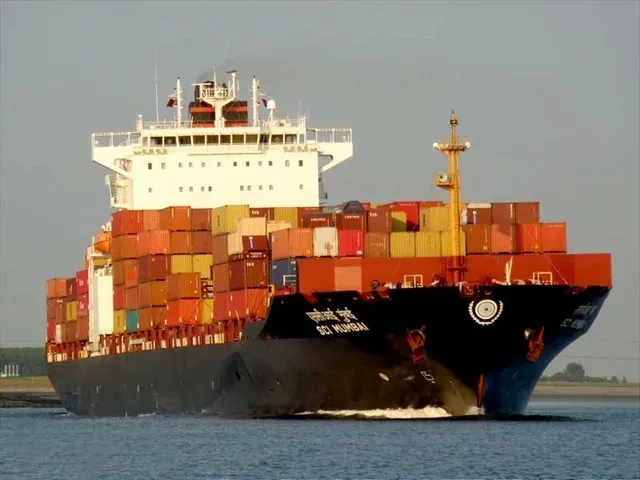
Of the six vessels covered under the tender, two are under firm orders while four are optional, according to analysis by Marine Insight. Each ship is a cellular container vessel — purpose-built with vertical guide rails and slots to stack standardised 20-foot and 40-foot containers securely, enabling high-density cargo operations on major trade lanes.
Right of First Refusal for Indian Shipyards
A key feature of the tender is a Right of First Refusal (RoFR) mechanism that gives eligible Indian shipyards priority access. The lowest-evaluated Indian bidder will be offered the opportunity to match the lowest foreign bid. If the first eligible Indian yard declines, the opportunity cascades to the next eligible domestic bidder. The provision is designed to encourage domestic shipbuilding while keeping Indian yards competitive against established international players.
Pathway for Inexperienced Indian Yards
Notably, Indian shipyards without prior experience in building cellular container vessels are also permitted to participate — provided they enter technical partnerships with qualified foreign shipbuilders. The foreign partner must have delivered at least two cellular container ships of 5,000 TEUs or more in the past 10 years, with those vessels currently in active service. The partner is also required to provide both basic and detailed design support throughout construction.
Government Backing Through SBFAS
Indian shipyards participating in the tender can additionally draw on the Centre's ₹24,736-crore Shipbuilding Financial Assistance Scheme (SBFAS), which offers financial support of 15–25 per cent per vessel. The SBFAS is part of a broader ₹69,725-crore maritime package announced in 2025, aimed at narrowing the cost gap between Indian yards and their global counterparts — particularly South Korean and Chinese shipbuilders who dominate the large-container-vessel segment.
What This Signals for India's Shipping Sector
SCI's move comes as India pushes to reduce its dependence on foreign-flagged vessels for its own trade. Indian-flagged ships currently carry a fraction of the country's seaborne cargo, and fleet expansion at this scale is seen as a strategic step toward greater maritime self-reliance. The tender's outcome will also serve as an early stress test for the 2025 maritime package — whether the SBFAS subsidies and RoFR provisions are sufficient to make domestic yards commercially viable at the 8,000-TEU scale, a segment where Indian yards have little established track record.
Point of View
But the RoFR mechanism is only as strong as the yards behind it. Indian shipbuilders have limited experience at the 8,000-TEU scale, and the SBFAS subsidy of 15–25% may not fully offset the cost disadvantage against South Korean and Chinese yards that have spent decades optimising large-container-vessel production. The technical-partnership route is a pragmatic workaround, but it risks creating assembly operations rather than genuine shipbuilding capability. The real measure of success will not be whether SCI places the order domestically — it will be whether Indian yards can deliver on time, on spec, and at a price that does not require perpetual subsidy support.
NationPress
23 Sept 2026
Frequently Asked Questions
What is SCI's $720 million global shipbuilding tender?
It is the Shipping Corporation of India's largest-ever shipbuilding tender, covering six cellular container ships of 8,000 TEUs each at an estimated cost of $720 million (approximately ₹6,858 crore). Two vessels are under firm orders and four are optional.
What is the Right of First Refusal mechanism in this tender?
The RoFR gives eligible Indian shipyards the opportunity to match the lowest bid submitted by a foreign shipyard. If the top-ranked Indian yard declines, the opportunity moves to the next eligible domestic bidder, prioritising domestic shipbuilding without excluding international competition.
Can Indian shipyards without container-ship experience bid for this tender?
Yes. Indian yards without prior experience in building cellular container vessels can participate by forming technical partnerships with foreign shipbuilders who have delivered at least two container ships of 5,000 TEUs or more in the past 10 years, with those vessels currently in service.
What government support is available to Indian shipyards under this tender?
Indian yards can avail themselves of the Centre's ₹24,736-crore Shipbuilding Financial Assistance Scheme (SBFAS), which provides financial assistance of 15–25 per cent per vessel. The scheme is part of a ₹69,725-crore maritime package announced in 2025.
Why does this tender matter for India's shipping sector?
India currently relies heavily on foreign-flagged vessels for its seaborne trade. SCI's order at this scale — combined with the SBFAS subsidies — is a direct attempt to build domestic fleet capacity and test whether Indian shipyards can compete at the large-container-vessel level, a segment long dominated by South Korean and Chinese builders.