Sensex Drops 400 Points Friday: IT, Pharma Stocks Lead Market Decline

Synopsis
Indian markets fell sharply on April 25 with Sensex down 400 points and Nifty off 100 points as IT giant Infosys, TCS, and pharma majors led a broad selloff. FIIs sold Rs 3,254 crore for a fourth straight session while Brent crude surged to $107, compounding pressure on Asia's third-largest economy.
Key Takeaways
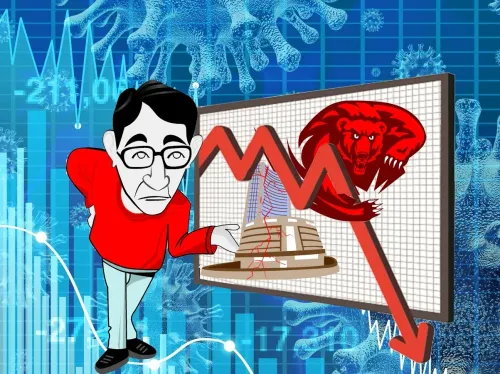
Sensex fell 400 points (0.51%) to 77,263 and Nifty dropped 100 points (0.41%) in early trade on April 25, 2025 .
Top losers included Infosys, TCS, Cipla, Sun Pharma, Dr Reddy's Laboratories , and ICICI Bank .
The Nifty IT index was the worst-hit sectoral index, declining 1.57 per cent ; FMCG and chemical stocks offered limited support.
FIIs sold equities worth Rs 3,254 crore on Thursday — their fourth consecutive session of net selling; DIIs bought Rs 941 crore .
Brent crude surged nearly 2% to $107/barrel , adding macro pressure on India's import-heavy economy.
Analysts advise waiting for Nifty to sustain above 24,500 before initiating fresh long positions amid fragile, news-driven sentiment.
The Indian stock markets opened sharply lower on Friday, April 25, with the BSE Sensex shedding over 400 points and the NSE Nifty 50 declining by 100 points in early trade, weighed down by persistent geopolitical tensions, mixed Q4 earnings results, and broad-based selling in IT, pharma, and financial stocks. The market decline reflects growing investor anxiety over global macro headwinds and domestic earnings disappointments.
Market Performance at a Glance
The Sensex was trading at 77,263, down 0.51 per cent, while the Nifty 50 slipped 0.41 per cent to hover near the 24,300 level. Panic selling was visible across key heavyweight sectors, with only FMCG and chemical stocks providing limited support to the broader indices.
Among the top laggards were marquee names including Cipla, Infosys, Dr Reddy's Laboratories, Sun Pharma, Tata Consultancy Services (TCS), and ICICI Bank — collectively dragging benchmark indices lower.
Sectoral Breakdown: IT and Pharma Bear the Brunt
On the sectoral front, the Nifty IT index was the worst performer, tumbling 1.57 per cent, as concerns over global tech spending slowdowns and tepid Q4 guidance from major IT firms rattled investor confidence. The Nifty Private Bank index declined 0.31 per cent, while the Nifty Pharma index fell 0.27 per cent.
The IT sector's underperformance is particularly notable given that Infosys and TCS — two of India's largest software exporters — recently reported earnings that fell short of street expectations, compounding fears of a prolonged demand slowdown in key markets like the United States and Europe.
Analyst Outlook: Caution Advised Until Nifty Clears 24,500
Market analysts have urged investors to adopt a cautious and selective investment strategy given prevailing global uncertainties and elevated volatility. They recommend accumulating fundamentally strong stocks during market corrections rather than chasing momentum.
"Fresh long positions should ideally be initiated only after the Nifty decisively breaks above and sustains the 24,500 level, which would signal improving sentiment and the possibility of a more sustained bullish trend," analysts noted. This key technical threshold is being closely watched as a barometer of market health.
Analysts further warned that market sentiment remains fragile and highly news-driven, with near-term direction likely to be dictated by geopolitical developments and fluctuations in crude oil prices.
Crude Oil Surge Adds to Market Anxiety
Brent crude surged nearly 2 per cent to $107 per barrel, while US West Texas Intermediate (WTI) crude rose approximately 2 per cent to $97.6 per barrel from the previous close. Rising crude prices are a double-edged concern for India — a net oil importer — as they widen the current account deficit, fuel inflation, and pressure the Indian rupee.
This crude oil spike, driven by ongoing geopolitical conflicts, adds a significant macro headwind to an already jittery domestic market environment.
Asian Markets and Institutional Activity
Across Asian equity markets, the picture was mixed. Japan's Nikkei 225 bucked the trend, rising 0.43 per cent to 59,394. However, Hong Kong's Hang Seng declined 0.37 per cent to 25,819, and South Korea's KOSPI fell 0.40 per cent to 6,450.15.
On the institutional front, Foreign Institutional Investors (FIIs) extended their selling streak for the fourth consecutive session on Thursday, offloading equities worth Rs 3,254 crore. In contrast, Domestic Institutional Investors (DIIs) provided a partial cushion by purchasing equities worth Rs 941 crore, though their buying was insufficient to offset the FII outflows.
The sustained FII selling underscores a broader pattern of capital flight from emerging markets as global risk appetite diminishes amid rising interest rates in developed economies and escalating geopolitical uncertainty. Historically, prolonged FII outflows have preceded extended consolidation phases in Indian equity markets.
Going forward, investors will closely monitor the trajectory of Q4 FY25 earnings, any de-escalation in geopolitical flashpoints, movement in the US dollar index, and the Reserve Bank of India's policy stance — all of which will determine whether Indian markets can stage a meaningful recovery in the weeks ahead.
Point of View
An Indian IT sector facing demand headwinds in its most critical export markets, and a fourth consecutive day of FII exodus that signals eroding confidence in near-term India growth narratives. What the mainstream market commentary often glosses over is the compounding effect — rising crude at $107 directly pressures India's import bill, weakens the rupee, and forces the RBI into a tighter corner on rate policy. The real story here is not just falling index points, but whether India's equity market can decouple from global turmoil on the strength of domestic fundamentals — and right now, the answer from institutional money is a cautious no.
NationPress
19 Sept 2026
Frequently Asked Questions
Why did Sensex fall today on April 25, 2025?
Sensex fell over 400 points on April 25, 2025, due to a combination of geopolitical tensions, rising crude oil prices, and disappointing Q4 earnings from major IT and pharma companies. Panic selling in Infosys, TCS, Sun Pharma, and ICICI Bank dragged benchmark indices lower in early trade.
Which stocks were the biggest losers in today's market fall?
The top laggards included Cipla, Infosys, Dr Reddy's Laboratories, Sun Pharma, TCS, and ICICI Bank. The Nifty IT index was the worst-performing sectoral index, falling 1.57 per cent.
What level should Nifty cross for a bullish recovery?
Analysts recommend that investors initiate fresh long positions only after Nifty decisively breaks above and sustains the 24,500 level. This threshold is seen as a key technical signal for improving market sentiment and a potential sustained bullish trend.
How much did FIIs sell in Indian markets on Thursday?
Foreign Institutional Investors sold equities worth Rs 3,254 crore on Thursday, marking their fourth consecutive session of net selling. Domestic Institutional Investors partially offset this by buying equities worth Rs 941 crore.
How are rising crude oil prices impacting Indian stock markets?
Brent crude surging to $107 per barrel and WTI rising to $97.6 per barrel is a significant negative for India, which is a major oil importer. Higher crude prices widen India's current account deficit, stoke inflation, and put downward pressure on the Indian rupee, all of which dampen equity market sentiment.