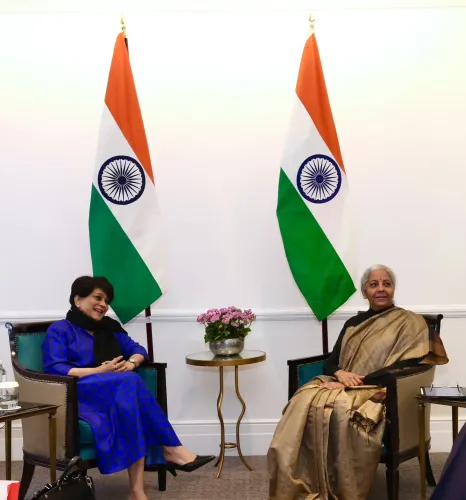
Sitharaman courts Canadian investors for India's banking, fintech and rare earths push
Synopsis
Finance Minister Nirmala Sitharaman took India's investment pitch directly to Toronto, courting Canadian capital for banking, fintech, insurance, semiconductors, and rare earths — and framing GIFT City not just as a domestic hub but as a gateway for regional and global financial activity. With 100% FDI now open in insurance and India's critical minerals push intensifying, the bilateral economic case is stronger than the diplomatic noise suggests.
Key Takeaways
Finance Minister Nirmala Sitharaman addressed the Indian diaspora business community in Toronto on 26 August , inviting Canadian investors to increase engagement with India.
India's scheduled commercial banks, NBFCs , and the broader financial sector are drawing significant international interest, according to Sitharaman.
GIFT City was highlighted as a global platform for cross-border financial activity, with a regulatory and tax framework designed for international institutions.
100 per cent FDI is now permitted in India's insurance sector, opening a major channel for Canadian institutional capital.
Sitharaman flagged semiconductors , magnets , and rare earths as high-potential sectors for Canadian investors, positioning India as a trusted supply-chain alternative.
India was presented as a platform for wider regional and global financial activity , not just a destination market.
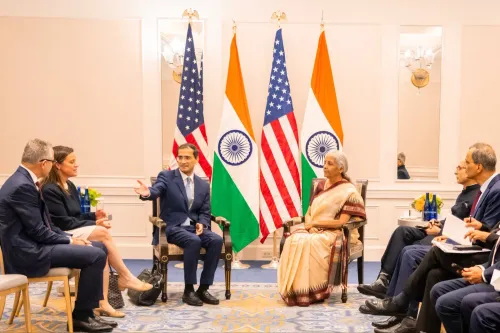
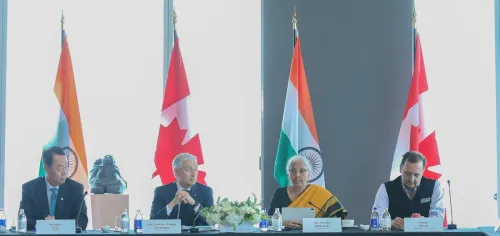
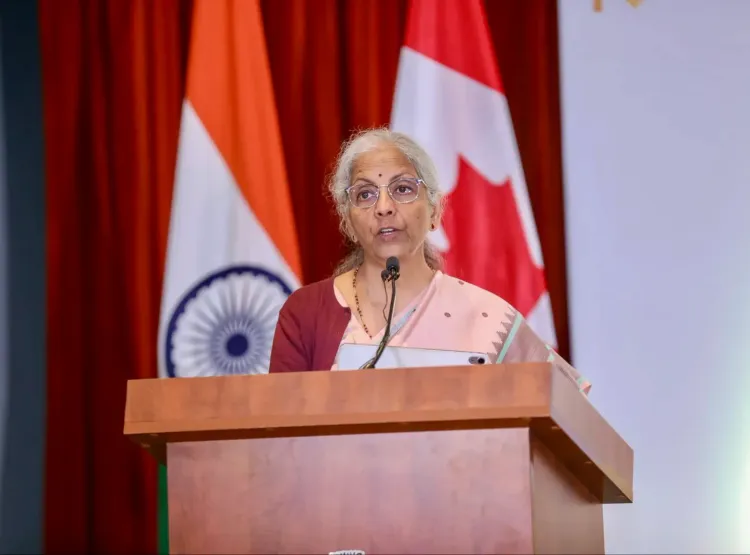
Finance Minister Nirmala Sitharaman on Wednesday, 26 August invited Canadian investors to deepen their engagement with India's growth story, spotlighting opportunities across banking, insurance, fintech, semiconductors, rare earths, and other emerging sectors. The pitch was made at a reception for the Indian diaspora business community in Toronto.
Banking and Financial Sector in Focus
Sitharaman told the gathering that India's scheduled commercial banks were in strong health and attracting significant capital inflows. 'India's financial sector, the banking in particular, the NBFCs and their rapid growth is inviting a lot of international interest,' she said. She also pointed to GIFT City — India's International Financial Services Centre — as a hub already hosting several foreign banks, with room for more international institutions to set up operations.
In a separate post on X, the Finance Minister described GIFT City as an emerging global platform for cross-border financial activity, noting that its regulatory and tax framework had been designed specifically to facilitate international capital flows.
Insurance, Fintech and Supply-Chain Openings
100 per cent foreign direct investment is now permitted in India's insurance sector, Sitharaman noted, calling it a significant liberalisation for global institutional players. She added that India's scale-level leadership in fintech was generating substantial opportunities for international capital. 'India can also provide trusted and cost-effective supply-chain alternatives for global markets,' she said, directly addressing Canadian investors and rare earth operators.
Semiconductors and Rare Earths: The Strategic Pitch
Beyond financial services, Sitharaman flagged semiconductors, magnets, and rare earths as sectors with significant untapped potential for Canadian participation. This framing is notable: Canada holds some of the world's largest rare earth reserves, making the bilateral alignment on critical minerals a potential strategic complement rather than a purely transactional investment pitch.
This comes amid broader efforts by the Government of India to diversify its critical mineral supply chains and reduce dependence on a single geography — a priority that has gained urgency following global supply disruptions in recent years.
India as a Regional Financial Platform
For Canadian institutional investors, Sitharaman argued, the opportunity extends beyond domestic India exposure. She said these developments offer a chance to use India as a platform for wider regional and global financial activity — positioning the country not just as a destination market but as a gateway for capital seeking broader Asian exposure through a stable, regulated jurisdiction.
'The commitment from the Government of India is that we want Canadian investors to come and have greater engagement with India,' she said, citing India's large population, purchasing power, and consumption-driven demand as structural tailwinds underpinning the investment case.
Context: India-Canada Ties and Investor Sentiment
The Toronto outreach comes at a diplomatically sensitive moment in India-Canada relations. Despite political friction at the government level in recent years, Sitharaman's direct engagement with the diaspora business community signals that economic diplomacy is being kept on a separate track. Analysts have noted that Canadian pension funds — among the world's largest institutional investors — have historically had significant India exposure through equity and infrastructure, and a formal government-level invitation could accelerate further commitments.
With GIFT City's regulatory architecture maturing and sectoral FDI caps easing, the conditions for Canadian institutional capital appear more favourable than at any prior point this decade.
Point of View
CDPQ, Ontario Teachers' — already have India exposure, but a formal Finance Minister-level invitation signals an intent to move from passive allocation to structured bilateral frameworks. The rare earths angle is the most strategically underreported element: Canada is a critical minerals powerhouse, and India needs supply-chain diversification. If that thread is pulled seriously, this trip could matter far beyond the financial sector optics. The unanswered question is whether political tensions will allow deal pipelines to mature — or whether this remains a diaspora-facing gesture that stalls at the institutional level.
NationPress
10 Oct 2026
Frequently Asked Questions
What did Finance Minister Nirmala Sitharaman say to Canadian investors in Toronto?
Sitharaman invited Canadian investors to actively participate in India's growth story, highlighting opportunities in banking, insurance, fintech, semiconductors, and rare earths. She spoke at a reception for the Indian diaspora business community in Toronto on 26 August and underscored India's strong banking sector, GIFT City's global platform potential, and the country's scale-level fintech leadership.
What is GIFT City and why did Sitharaman highlight it?
GIFT City, or the Gujarat International Finance Tec-City, is India's International Financial Services Centre designed to facilitate cross-border financial activity. Sitharaman described it as an emerging global platform with a regulatory and tax framework tailored for international institutions, already hosting several foreign banks with capacity for more.
Is 100 per cent FDI now allowed in India's insurance sector?
Yes. Sitharaman confirmed that 100 per cent foreign direct investment is now permitted in India's insurance sector, representing a significant liberalisation that opens the door for Canadian and other global institutional investors.
Why did Sitharaman pitch rare earths and semiconductors to Canadian investors?
India is seeking to build trusted, cost-effective supply-chain alternatives in critical minerals and semiconductors. Canada holds significant rare earth reserves, making it a natural strategic partner. Sitharaman directly invited Canadian rare earth operators to engage more actively with India's growth in these sectors.
How does India's pitch to Canada fit into the broader bilateral relationship?
Despite diplomatic tensions between India and Canada in recent years, Sitharaman's Toronto outreach signals that economic diplomacy is being maintained on a separate track. Canadian pension funds have historically had substantial India exposure, and a formal government-level invitation could accelerate new institutional commitments across financial services and critical minerals.