Ujjivan's Universal Banking License Application Rejected by RBI

Synopsis
In a significant regulatory move, the Reserve Bank of India has returned Ujjivan Small Finance Bank's application for a universal banking license, citing insufficient diversification in its asset portfolio. The bank is encouraged to enhance its loan offerings before reapplying.
Key Takeaways
RBI rejected Ujjivan's application for universal banking license.
Insufficient diversification in asset portfolio cited as the reason.
Ujjivan's gross loan book stood at Rs.
Group loans make up 45% of the loan book.
RBI encourages small finance banks to diversify their offerings.
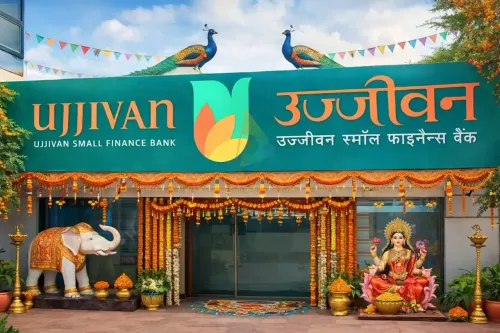
Mumbai, April 13 (NationPress) The Reserve Bank of India (RBI) has declined the universal banking license application submitted by Ujjivan Small Finance Bank (SFB) due to insufficient diversification in its asset portfolio, as indicated in a recent exchange filing.
According to the notice, "The RBI acknowledged the Bank's recent initiatives aimed at diversifying its loan offerings. However, they believe there is room for improvement in this domain. Consequently, the RBI has returned the aforementioned application and recommended that the Bank consider reapplying after proving a more diversified loan portfolio."
This marks the second time in recent weeks that the RBI has rejected a small finance bank's application for a universal banking license. Previously, Jana SFB's application was also returned, while AU SFB received in-principle approval to transition into a universal bank. Additionally, Fino Payments Bank was granted in-principle approval to change its status to an SFB.
As of Q3FY26, Ujjivan SFB reported a gross loan book of Rs. 37,057 crore, with group loans constituting 45% of this total.
The Reserve Bank encourages small finance banks to broaden their loan portfolios to mitigate heavy dependence on high-risk, uncollateralized microfinance, which often leads to elevated non-performing assets (NPAs) during economic downturns. By easing priority sector lending requirements and promoting diversification into retail, vehicle, and SME loans, the RBI aims to enhance asset quality, stabilize earnings, and prepare SFBs for a transition to resilient universal banks.
Many small finance banks currently maintain a significant exposure to microfinance. Transitioning towards secured loans such as those for cars, two-wheelers, and housing finance helps diminish asset quality risks, particularly in stressed microfinance environments.
Diversification serves as a safeguard against rising Gross Non-Performing Assets (GNPAs) that can emerge from sector-specific challenges. This shift acts as a protective measure, evident when SFBs pivoted from high-risk, unsecured lending towards more secure segments.
Point of View
The RBI's rejection of Ujjivan SFB's application underscores the importance of asset diversification in the banking sector. As small finance banks navigate financial landscapes, regulatory bodies are emphasizing the need for robust risk management strategies.
NationPress
20 Sept 2026
Frequently Asked Questions
Why did the RBI reject Ujjivan's application?
The RBI rejected Ujjivan's application due to insufficient diversification in its asset book, indicating that the bank needs to broaden its loan portfolio before reapplying.
What does a universal banking license allow?
A universal banking license enables banks to offer a wide range of services, including commercial banking, investment banking, and insurance services.
What percentage of Ujjivan's loan book is made up of group loans?
Group loans constitute 45% of Ujjivan SFB's total loan book.
What is the RBI's stance on microfinance loans?
The RBI encourages diversification away from high-risk, uncollateralized microfinance loans to reduce potential non-performing assets during economic downturns.
Is this the first time the RBI has returned an application from a small finance bank?
No, this is the second instance in recent times. The RBI previously returned Jana SFB's application as well.