UK Biobank Data Listed on Alibaba: Major Breach Alert
Synopsis
UK Biobank's sensitive health data covering 5 lakh volunteers appeared for sale on Alibaba in at least three listings. The UK government acted swiftly, confirming no purchases were made. Three research institutions had their access revoked — revealing the breach came from within the platform's own user network.
Key Takeaways
At least three listings offering UK Biobank datasets were found on Alibaba , China's e-commerce marketplace, before being swiftly removed.
The data potentially covered all 5 lakh volunteers on the UK Biobank platform, including health outcomes, mental health, diet, and socioeconomic data.
No purchases were confirmed from any of the three listings before they were taken down, according to Minister Ian Murray .
Three research institutions with authorised access were identified as the source; UK Biobank revoked their access immediately.
UK Biobank suspended all platform access and introduced strict file-size export limits as precautionary measures, per CEO Rory Collins .
The UK government acknowledged the Chinese government's cooperation in removing the listings rapidly, adding a diplomatic dimension to the data security incident.
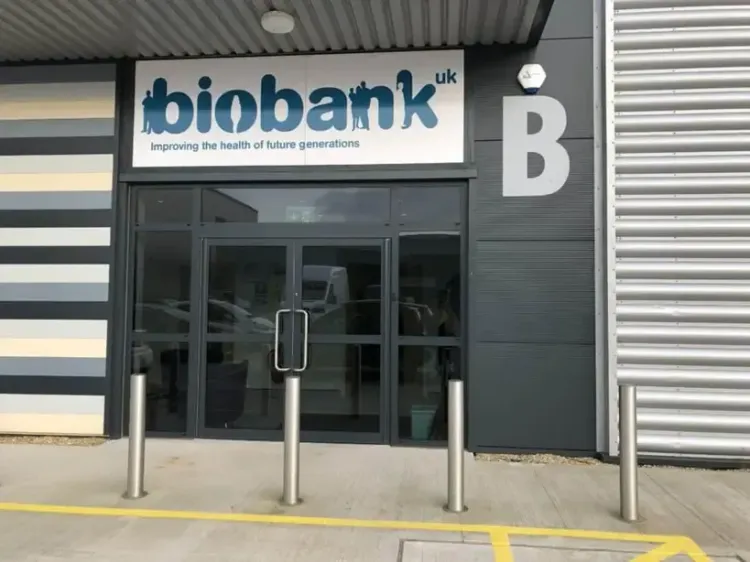
UK Biobank, a major British health research charity, has formally alerted the UK government after confidential datasets drawn from its platform were listed for sale on Alibaba, China's leading e-commerce marketplace. At least three separate listings were identified, raising serious concerns about data security and the protection of sensitive health information belonging to over 5 lakh research volunteers. The listings were swiftly removed, and authorities confirmed no purchases were completed before they were taken down.
What Was Found on Alibaba
According to a report by DW.com, the datasets listed on Alibaba appeared to contain a wide range of sensitive personal and health-related information. Possible data elements included gender, month and year of birth, attendance dates, socioeconomic status, lifestyle habits, sleep patterns, diet, mental health records, and health outcomes data, among several other categories.
Critically, Ian Murray, the Labour MP for Edinburgh South and a Minister of State at the Department of Science, Innovation and Technology, confirmed that the exposed files did not include names, addresses, contact details, or telephone numbers. However, he cautioned that while the risk of individual identification based on the available data is low, it cannot be entirely ruled out.
At least one of the three datasets listed appeared to encompass data from all 5 lakh volunteers who had voluntarily contributed their health information to UK Biobank in a bid to advance global medical research capabilities.
Government Response and Immediate Action
Ian Murray thanked the Chinese government for the speed and seriousness with which they worked with us to help remove these listings.
He confirmed that the UK government had directly spoken to the vendor and that no purchases were believed to have been made from any of the three listings before they were taken down.
Once the government was aware of the situation, we took immediate action to protect participants' data,
Murray was quoted as saying in the report.
Murray further revealed that the government ensured UK Biobank revoked access for the three research institutions identified as the source of the leaked information — a significant step signalling that the breach originated from within the platform's own user ecosystem rather than an external hack.
UK Biobank's Precautionary Measures
UK Biobank responded by suspending all access to its research platform as a short-term precautionary measure. According to its Chief Executive Rory Collins, the charity has also implemented a strict limit on the size of files that can be exported from the platform — a structural safeguard designed to prevent bulk data exfiltration in the future.
This twin-pronged response — suspension of access and file-size restrictions — represents a meaningful tightening of data governance protocols for one of the world's most cited biomedical research repositories. UK Biobank holds data voluntarily submitted by 5 lakh UK residents and is used by researchers globally to study diseases ranging from cancer to cardiovascular conditions.
Deeper Context: A Pattern of Health Data Vulnerability
This incident is not occurring in a vacuum. It comes amid growing global anxiety over the security of large-scale biomedical databases, particularly as geopolitical tensions between Western nations and China intensify. The fact that the listings appeared on Alibaba — a platform subject to Chinese regulatory jurisdiction — has added a diplomatic dimension to what is fundamentally a data security failure.
Notably, this is not the first time research data from Western institutions has found its way into unauthorised channels. Critics argue that as biobanks grow in scale and international access expands, the governance frameworks governing data export have not kept pace. The identification of three research institutions as the source of the breach underscores a systemic vulnerability: authorised access does not guarantee responsible use.
From an Indian perspective, this incident carries a cautionary lesson. India's own health data ecosystem — including the Ayushman Bharat Digital Mission (ABDM) — is rapidly expanding, aggregating sensitive health records of hundreds of millions of citizens. The UK Biobank breach illustrates the catastrophic reputational and ethical consequences when such data escapes controlled environments, even without names attached.
What Happens Next
UK Biobank is expected to conduct a comprehensive internal audit to determine precisely how the data left the platform and through which institutions. Regulatory scrutiny from the UK Information Commissioner's Office (ICO) is anticipated, given the scale of the potential exposure. The three research institutions whose access was revoked may face further investigation.
The incident is also likely to accelerate policy discussions within the UK and the broader EU on tightening data-sharing agreements with research entities in jurisdictions outside the General Data Protection Regulation (GDPR) framework. As biomedical research becomes increasingly globalised, the question of who can access what — and under what oversight — will only grow more urgent.
Point of View
The more attack surfaces you create for misuse. What's particularly alarming is that this wasn't a cyberattack — it was an inside job by authorised institutions, which means technical firewalls alone cannot solve this. For India, which is aggressively building its Ayushman Bharat Digital Mission and aggregating health data at an unprecedented scale, this is a direct warning: robust data governance, strict export controls, and real-time audit trails are not optional luxuries — they are existential necessities. The mainstream narrative focuses on the diplomatic angle with China; the deeper story is about how the global research community has consistently underestimated the commercial value of anonymised health data to bad actors.
NationPress
16 Sept 2026
Frequently Asked Questions
What happened with UK Biobank data on Alibaba?
At least three listings offering datasets from UK Biobank appeared on Alibaba, China's e-commerce platform. The listings were quickly removed and UK authorities confirmed no purchases were made before they were taken down.
Was personal information like names and addresses exposed in the UK Biobank breach?
No. UK Minister Ian Murray confirmed the exposed files did not include names, addresses, contact details, or telephone numbers. However, the data included health outcomes, mental health records, diet, sleep, and socioeconomic information.
Who was responsible for the UK Biobank data leak?
Three research institutions with authorised access to UK Biobank's platform were identified as the source of the leaked data. UK Biobank revoked access for all three institutions as an immediate response.
What action did UK Biobank take after the data appeared on Alibaba?
UK Biobank suspended all access to its research platform as a precautionary measure and implemented strict file-size limits on data exports. Access for the three implicated research institutions was also revoked.
How many people are affected by the UK Biobank data breach?
At least one of the datasets listed on Alibaba appeared to cover data from all 5 lakh volunteers who had contributed their health information to UK Biobank. Authorities say the risk of individual identification remains low but cannot be fully ruled out.