South Korea Introduces Weekend Discounts on EV Charging Fees
Synopsis
Starting this week, South Korea will implement significant reductions in electric vehicle charging costs on weekends. With discounts aimed at encouraging EV usage, this initiative comes alongside growing interest from Middle Eastern nations in utilizing South Korea's oil storage facilities amidst regional tensions.
Key Takeaways
EV charging fees in South Korea will be discounted by up to 15% on weekends.
A 50% discount on electricity for chargers will support this initiative.
Discounts are applicable from March to May and September to October.
Middle Eastern countries are showing increased interest in South Korea's oil storage facilities.
The Strait of Hormuz remains a significant factor in global oil shipments.
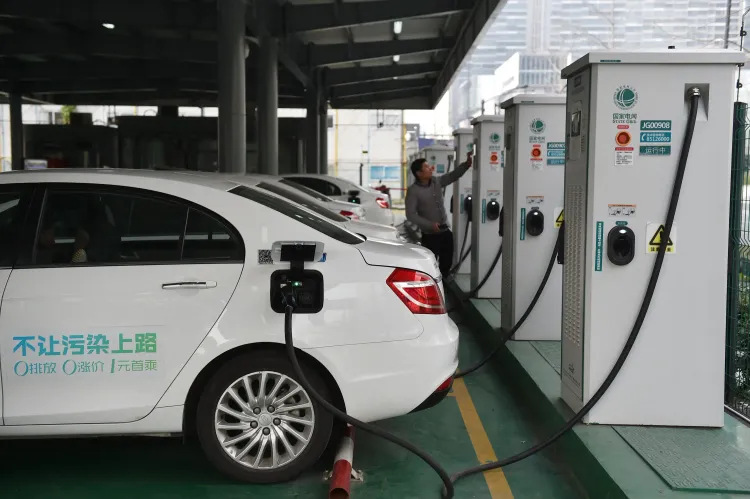
Seoul, April 14 (NationPress) The cost of charging electric vehicles (EVs) will see a discount of up to 15 percent during weekend afternoons, according to an announcement made by the climate ministry on Tuesday.
This price reduction will be facilitated by a 50 percent discount on electricity consumed at 94,000 private home chargers and 13,000 public fast chargers from 11 a.m. to 2 p.m. on weekends and public holidays, as stated by the Ministry of Climate, Energy and Environment.
The ministry indicated that this initiative will lead to a 12-15 percent decrease in charging costs, with discounts available from March to May and again from September to October, as reported by Yonhap news agency.
In alignment with the lowered electricity rates, home chargers will see a reduction of 48.6 won per kilowatt-hour (kWh), while public fast chargers will offer discounts of 48.6 won on Saturdays and 42.7 won on Sundays and public holidays.
The ministry also mentioned that private charging operators may join the discount initiative, with plans to promote further participation by revealing a list of those involved.
On another note, key oil-producing nations in the Middle East are expressing interest in utilizing South Korea's crude oil storage facilities amid ongoing regional conflicts, as noted by a senior official from Seoul's industry ministry.
Yang Gi-uk, head of the ministry's office of industry, trade, and resource security, stated, "An increasing number of nations are seeking to access South Korea's oil storage capabilities," emphasizing a growing demand for Northeast Asian storage bases.
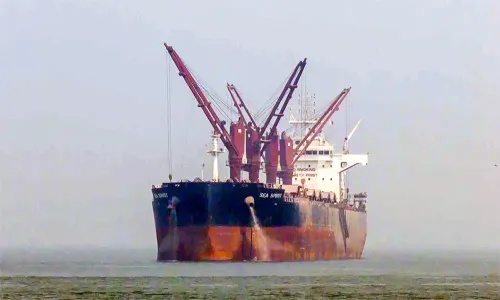
Yang highlighted that Middle Eastern countries are experiencing significant challenges with oil shipments due to the closure of the Strait of Hormuz, which is crucial for their economies heavily reliant on oil exports.
Countries like Saudi Arabia, the United Arab Emirates (UAE), and Kuwait are particularly affected, as they depend largely on crude oil exports for their economic stability.
In addition to the Abu Dhabi National Oil Co., the UAE's leading petroleum firm that has already established a joint oil storage agreement with South Korea, other Middle Eastern oil producers are also seeking collaboration, according to the official.
Point of View
The recent announcement from South Korea's climate ministry about reducing EV charging fees is a progressive step toward promoting sustainable transportation. The added interest from Middle Eastern nations in South Korea's oil storage further emphasizes the global dynamics of energy security and economic dependence.
NationPress
19 Sept 2026
Frequently Asked Questions
What are the new EV charging fees in South Korea?
Charging costs will be reduced by up to 15 percent during weekend afternoons, supported by a 50 percent discount on electricity used at private and public chargers.
When will the discounts on EV charging be available?
The discounts will be available from March to May and September to October.
How much will home and public chargers reduce their rates?
Home-use chargers will see a reduction of 48.6 won per kWh, while public fast chargers will reduce rates by 48.6 won on Saturdays and 42.7 won on Sundays.
Which countries are interested in using South Korea's oil storage?
Countries such as Saudi Arabia, the UAE, and Kuwait are expressing interest in utilizing South Korea's crude oil storage facilities.
What is the significance of the Strait of Hormuz for oil exports?
The Strait of Hormuz is a crucial shipping lane for oil exports, and its closure has heavily impacted Middle Eastern economies.