POSCO workers launch second partial strike over 7.1% wage demand
Synopsis
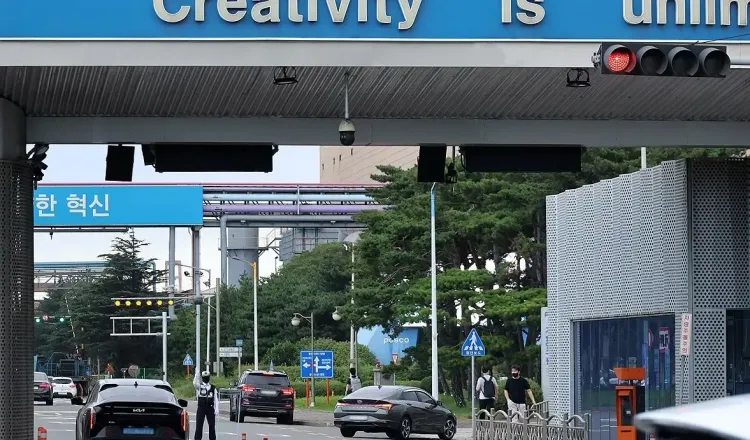
POSCO workers have launched their second partial strike in a week — a 120-hour walkout at Pohang and Gwangyang — as a 7.1% wage demand runs headlong into management's 2% offer. For a company that went 57 years without a single strike, the back-to-back walkouts signal a labour flashpoint at one of Asia's most strategically important steel producers.
Key Takeaways
POSCO workers began a second partial strike on 16 September , lasting 120 hours , at plants in Pohang and Gwangyang .
The union is demanding a 7.1% base pay rise, a 600% performance bonus, 50 company shares per worker, and a 200% holiday bonus.
Management has offered just a 2% base pay increase, leaving a wide gap.
About twice as many workers joined the second strike compared with the first 48-hour walkout last week, which involved 120 workers .
POSCO employs approximately 17,000 workers, including around 10,100 union members.
These are the first strikes at POSCO since its founding in 1968 .
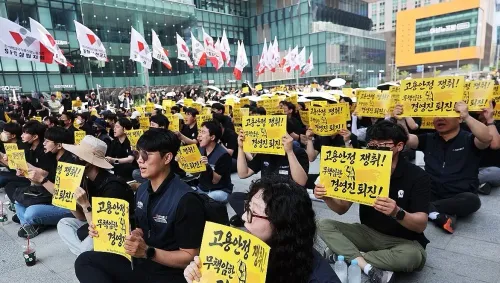
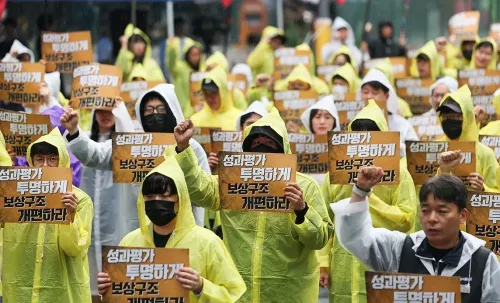
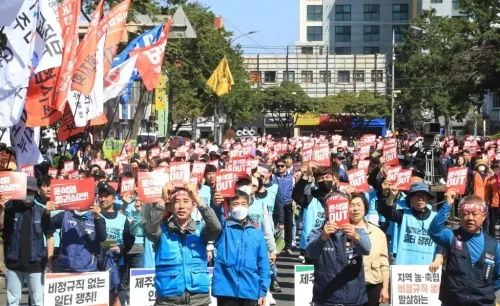
Unionised workers at South Korean steelmaker POSCO launched a second partial strike on Wednesday, 16 September, after wage talks with management failed to yield meaningful progress. The 120-hour walkout commenced at 7 a.m. local time at POSCO's steel plants in Pohang and Gwangyang in southern South Korea, underscoring a deepening labour dispute at one of Asia's largest steel producers.
Strike Details and Scale
The union confirmed that roughly twice as many workers are participating in this second strike compared with the first, which was a 48-hour walkout involving 120 workers that began on Wednesday last week. That earlier action was itself historic — the first strike at POSCO since the company's founding in 1968. POSCO employs approximately 17,000 workers, of whom around 10,100 are union members.
Union spokesperson Yi Jae-hyuk said the strike could be called off early if management tables an acceptable offer. 'We will call off the strike before the end of the five-day walkout if the company comes up with an acceptable proposal,' he said.
The Wage Gap
The union has tabled a set of demands that management has so far declined to meet. Workers are seeking a 7.1% increase in base pay, a performance bonus equivalent to 600% of base pay, 50 company shares per worker, and a holiday bonus equivalent to 200% of base pay. Management, by contrast, has proposed just a 2% base pay rise, leaving the two sides far apart on the central wage question.
Beyond pay, the union has also cited staffing shortages and ageing facilities as factors that could elevate safety risks — adding a non-wage dimension to the dispute that may complicate any swift resolution.
Operational Impact
POSCO maintained that the strike would not cause major disruptions, estimating that approximately 60 workers each from its Pohang and Gwangyang plants would join the action. The union, however, warned that 'inevitable disruptions' should be expected given the larger participation. The contrast in assessments reflects a familiar pattern in industrial disputes, where management and unions frequently diverge on operational impact ahead of a settlement.
Market Reaction in Seoul
South Korean equities showed resilience on Wednesday despite the labour unrest. After opening 0.24% lower, the benchmark Korea Composite Stock Price Index (KOSPI) turned positive, trading 13.21 points, or 0.2%, higher at 6,640.47 as of 11:20 a.m. local time. Technology stocks led the gains, though broader investor sentiment remained cautious ahead of the US Federal Reserve's interest rate decision expected later this week.
What's Next
The union has left the door open for negotiations, signalling it could suspend the five-day strike if POSCO presents a credible counter-proposal. With the two sides separated by more than 5 percentage points on the core base pay demand alone, a quick resolution appears unlikely without significant movement from management. The outcome will be closely watched by South Korea's broader labour movement, given POSCO's symbolic status as a flagship industrial employer.
Point of View
Including company shares and safety-linked staffing, go well beyond a pay rise and suggest workers are pressing for a fundamental shift in how POSCO's profits are shared. Management's 2% counter-offer, against a 7.1% demand and a backdrop of ageing facilities, risks prolonging the dispute into a broader labour relations crisis. For a steel giant that underpins South Korea's industrial supply chain, the cost of a prolonged walkout — operational or reputational — could far exceed the cost of a negotiated settlement.
NationPress
16 Sept 2026
Frequently Asked Questions
Why are POSCO workers on strike?
POSCO workers are striking over a wage dispute in which the union demands a 7.1% base pay rise, a 600% performance bonus, 50 company shares per worker, and a 200% holiday bonus, while management has offered only a 2% pay increase. Workers have also raised concerns about staffing shortages and ageing plant facilities.
Is this the first strike in POSCO's history?
No — but it is historically significant. The first walkout, a 48-hour strike involving 120 workers that began last Wednesday, was POSCO's first since the company was founded in 1968. The current 120-hour action is the second strike in the same dispute.
How long will the POSCO strike last?
The second walkout is scheduled to last 120 hours from 7 a.m. on 16 September. The union has said it could call the strike off early if POSCO tables an acceptable proposal before the five days are up.
Will the POSCO strike disrupt steel production?
The union warned of 'inevitable disruptions' given that roughly twice as many workers are participating compared with the first strike. POSCO, however, stated that no major disruption to plant operations is expected, estimating around 60 workers each from Pohang and Gwangyang would join the walkout.
How many POSCO workers are involved in the dispute?
POSCO has approximately 17,000 employees, of whom around 10,100 are union members. The number of workers actively participating in the second partial strike is larger than the 120 who joined the first walkout, though POSCO has put the figure at roughly 60 per plant.