Amrita Rao hails Farah Khan as 'ahead of her time' as Main Hoon Na marks 22 years
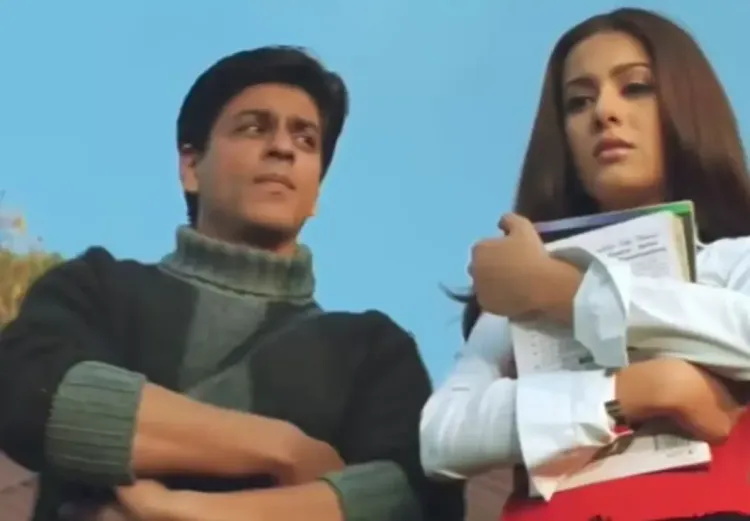
Synopsis
Two decades after its release, Amrita Rao's tribute to Main Hoon Na underscores why Farah Khan's directorial debut remains a watershed moment in Hindi cinema. Khan's maximalist vision—from single-shot song choreography to ensemble casting—set standards that the industry has struggled to match, cementing the film's status as a generational touchstone.
Key Takeaways
Main Hoon Na marked its 22nd anniversary on 30 April 2026 .
Actress Amrita Rao praised director Farah Khan for her visionary approach to filmmaking and technical innovation.
The film was Farah Khan's directorial debut in 2004 , following an acclaimed career as a choreographer.
The ensemble cast included Shah Rukh Khan , Sushmita Sen , Zayed Khan , and Suniel Shetty .
The soundtrack featured chartbusters including "Tumse Milke," "Chale Jaise Hawaayein," and the title track.
Rao highlighted the film's distinctive costume design, cinematography, and single-shot song execution as ahead of its time.
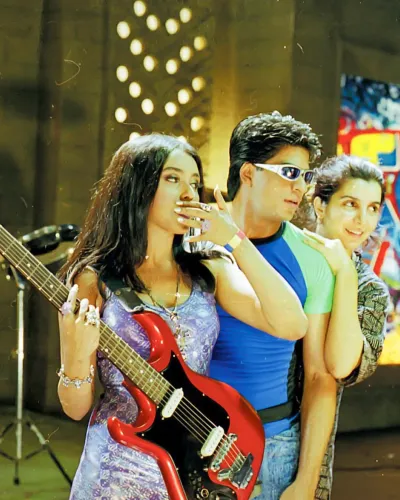
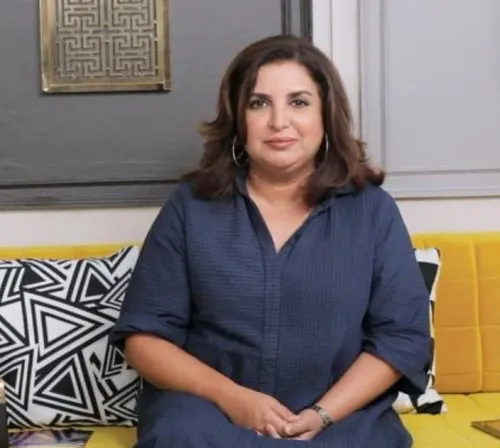
Actress Amrita Rao on 30 April marked the 22nd anniversary of her cult film Main Hoon Na, lavishing praise on director Farah Khan for her visionary approach to filmmaking. In a heartfelt social media note, Rao reflected on the film's enduring cultural footprint, singling out Khan's innovative direction, costume design, and music vision as hallmarks of a filmmaker operating ahead of contemporary norms.
Rao's tribute to Khan's vision
Rao wrote, "Farah Khan my Jhansi ki Rani Director all I can say is SHE IS FAAAR'ah Ahead Of Her Time !! Be the costumes, the hairstyles, envisioning the One take song Chale Jaise Hawayen, and all the songs of Main Hoon Na..really they don't make them any more !!" She highlighted the film's distinctive visual language, from its wardrobe choices to the single-shot execution of the iconic track "Chale Jaise Hawaayein."
What made the film iconic
Main Hoon Na, released in 2004, emerged as Khan's directorial debut after an acclaimed career as a choreographer. The ensemble cast included Shah Rukh Khan, Sushmita Sen, Zayed Khan, Satish Shah, Boman Irani, and Naseeruddin Shah, with Suniel Shetty playing the antagonist. Rao played the lead female role of Sanjana, described as fearless and forthright.
The film's lasting cultural impact
Rao emphasized the film's memorable character work, citing comic turns from Satish Shah as the "Spitting Professor" and Bindu's flirtatious teacher, alongside the ensemble humour and action choreography. The soundtrack—featuring "Tumse Milke," "Chale Jaise Hawaayein," "Gori Gori," and the title track—became chartbusters and remains central to the film's legacy. Rao concluded, "Main Hoon Na will always be a film that we all grew up watching that holds a special place in our heart."
Why the film still resonates
Two decades on, Main Hoon Na continues to be cited as a benchmark for Hindi cinema's action-romance-comedy template. Its success marked a turning point for Khan, establishing her as a director capable of balancing spectacle, sentiment, and humour—a combination that defined mid-2000s Bollywood. Rao's reflection underscores a broader industry sentiment: the film's technical ambition, from cinematography to dance choreography, set standards that subsequent releases struggled to replicate.
Looking back at Khan's debut
The film's box office success and critical reception validated Khan's transition from choreography to direction. Her subsequent filmography—Om Shanti Om, Don 2, Happy New Year—would cement her reputation as a director unafraid of scale and spectacle. Yet Main Hoon Na remains the touchstone, the film where Khan's aesthetic—maximalist, music-forward, ensemble-driven—first fully crystallized.
Point of View
But because it was a statement—Farah Khan's directorial manifesto. In an era when Hindi cinema was still learning to balance spectacle with narrative, Khan delivered both, and made it look effortless. Two decades later, when filmmakers routinely chase franchise IP and algorithmic storytelling, Rao's lament—'they don't make them anymore'—rings true. Khan's maximalism, her willingness to invest in ensemble character work and music as a narrative driver, feels increasingly rare. Main Hoon Na was not just a film; it was a proof of concept for what Hindi cinema could be when ambition and craft aligned.
NationPress
22 Sept 2026
Frequently Asked Questions
What is Main Hoon Na and when was it released?
Main Hoon Na is a 2004 Hindi action-romance-comedy film that marked director Farah Khan's directorial debut. Starring Shah Rukh Khan, Sushmita Sen, and Amrita Rao, the film became a massive box office success and is now considered a cult classic.
Why did Amrita Rao call Farah Khan 'ahead of her time'?
Rao highlighted Khan's innovative approach to filmmaking, including her distinctive costume and hairstyle choices, the single-shot execution of the iconic song 'Chale Jaise Hawaayein,' and her ensemble-driven storytelling. Rao argued that Khan's technical and creative ambition set standards that contemporary filmmakers have not replicated.
What role did Amrita Rao play in Main Hoon Na?
Amrita Rao played Sanjana, the lead female character described as fearless, blunt, and kind. Her performance opposite Shah Rukh Khan became one of the film's defining elements.
Which songs from Main Hoon Na became chartbusters?
The film's soundtrack featured multiple hits, including 'Tumse Milke,' 'Chale Jaise Hawaayein,' 'Gori Gori,' and the title track. The music remains one of the film's biggest strengths and continues to be widely remembered.
What was Farah Khan's background before directing Main Hoon Na?
Farah Khan was an acclaimed choreographer before transitioning to direction. Main Hoon Na was her feature directorial debut, and its success established her as a filmmaker capable of balancing spectacle, sentiment, and humour.