Anupam Kher's 'I Am an Indian' video hits back at global stereotypes
Synopsis
Anupam Kher's 'I Am an Indian' video is less a celebrity post and more a structured counter-argument — dismantling, point by point, the stereotypes Indian professionals and the diaspora face globally. Sparked by a WhatsApp forward, it taps into a real and simmering frustration about how India's contributions are acknowledged abroad while its people remain targets of cultural and economic suspicion.
Key Takeaways
Anupam Kher released the video 'I Am an Indian' on 19 June , addressing stereotypes Indians face globally.
The monologue rebuts charges of poor civic sense, job theft, cultural shallowness, and being 'too loud' at celebrations.
Kher cited yoga, mathematics, philosophy, and meditation as India's enduring contributions to global civilisation.
The video was inspired by a WhatsApp forward Kher received days earlier, which he said 'struck a chord'.
He framed the video as self-affirmation rather than outward rebuttal, signing off with 'Jai Hind! #IAmAnIndian #Pride' .
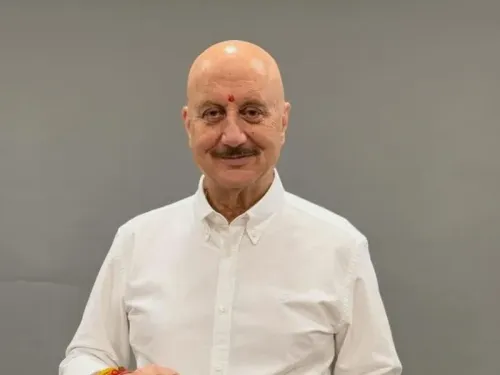
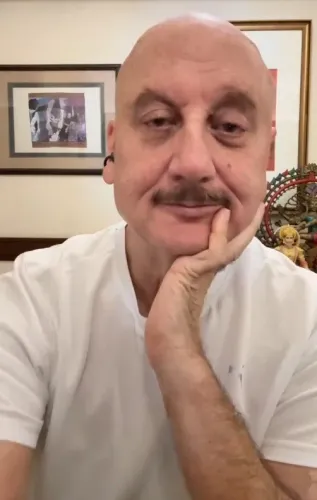
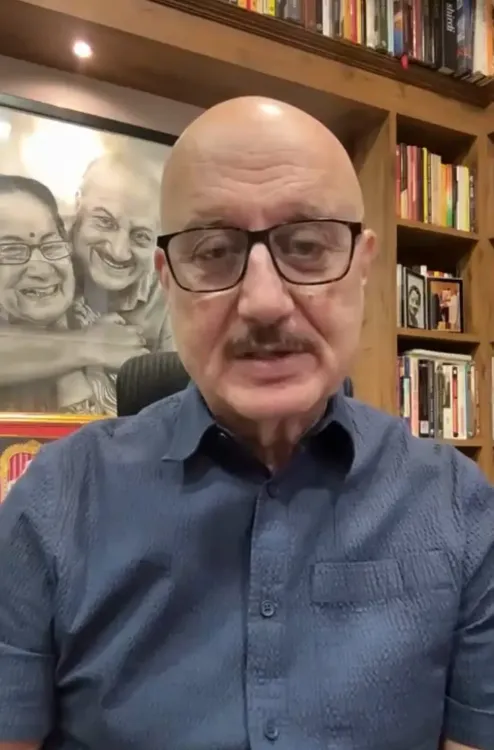
Veteran actor Anupam Kher on Friday, 19 June released a stirring video titled 'I Am an Indian', taking on widely held stereotypes and misconceptions about Indians — from allegations of poor civic sense and job theft to claims of cultural shallowness. The video, shared across his social media handles, has drawn widespread attention for its pointed, first-person rebuttals of criticisms Indians routinely face both at home and abroad.
What the Video Says
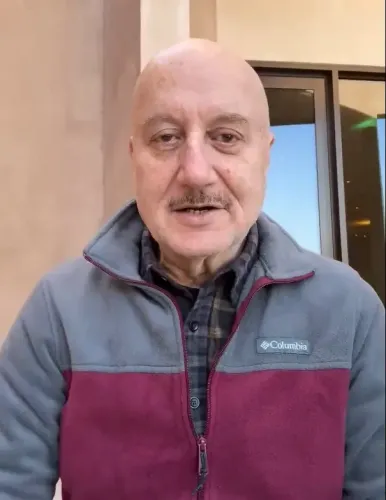
Speaking directly to camera in an emotionally charged monologue, Kher systematically dismantled common Western narratives about Indians. On the charge of lacking civic sense, he said: 'They can overturn cars, burn streets and vandalize a city after a championship game. I dance at an airport excited about my first foreign trip and suddenly I am the face of poor civic sense.'
On the accusation of stealing jobs, Kher countered: 'They move factories across oceans, shift profits through tax havens and automate entire industries overnight. I study, compete, earn a visa, work 18 hours a day, sometimes multiple jobs and somehow, I am the one stealing jobs and scamming the system.'
The video also addressed cultural erasure, with Kher asserting: 'I come from a civilization that counted the stars when much of the world was still learning maps. I speak languages older than nations. I celebrate hundreds of traditions yet I am told I have no culture.'
The Inspiration Behind It
Kher revealed that a WhatsApp forward he received a few days earlier sparked the idea. Writing on Instagram, he said: 'I read it, smiled, and kept it aside. But something made me go back and read it again. And then again. Some of the observations and facts mentioned in it struck a chord. They reminded me how easily stereotypes are created about us in the West!'
He was careful to frame the video not as a rebuttal aimed outward, but as a moment of self-affirmation. 'Not to prove anything to anyone, but to remind ourselves of something important,' he wrote, describing Indians as 'wonderfully different… diverse, contradictory at times, emotional, resilient, chaotic, compassionate — and yet uniquely connected by an invisible thread.'
Key Themes and Arguments
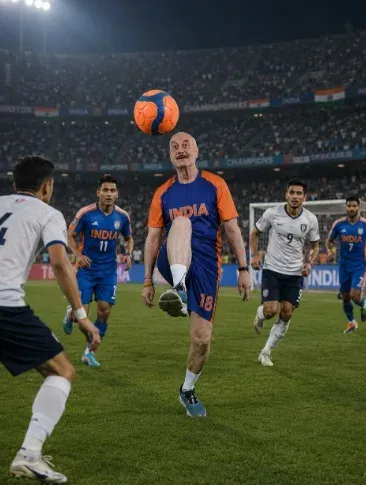
The video covers a broad sweep of grievances and counter-narratives. Kher spoke of Indians being 'everywhere' — building software, treating illness, teaching children, driving taxis — yet having their presence treated as a problem. He pushed back on the idea that Indian celebrations are 'too loud', contrasting festive gatherings with what he described as the constant noise of political rallies and outrage-driven media cycles elsewhere.
Notably, the monologue invokes India's intellectual heritage — yoga, mathematics, philosophy, meditation — as living contributions to global civilisation, not relics of a bygone era. 'The future keeps borrowing from my past while telling me to be embarrassed by it,' Kher said.
Public and Cultural Context
The video arrives at a moment of heightened global conversation around Indian diaspora identity, immigration politics in the United States and United Kingdom, and rising scrutiny of Indian professionals in Western job markets. Kher, known for his outspoken public persona and films such as 'Special 26', has previously used social media to engage with political and cultural debates. He signed off the Instagram post with 'Jai Hind! #IAmAnIndian #Pride', signalling the video's intended reach beyond cinema audiences.
How widely the video resonates — and whether it sparks a broader conversation about how India and its diaspora are perceived globally — remains to be seen.
Point of View
While emotionally satisfying, sidesteps harder internal questions about civic and institutional accountability. The more durable conversation the video could spark is not just about how Indians are perceived abroad, but about how India builds the soft-power narrative to back up those claims — and whether celebrity-led viral moments are the right vehicle for that work.
NationPress
19 Sept 2026
Frequently Asked Questions
What is Anupam Kher's 'I Am an Indian' video about?
'I Am an Indian' is a video monologue released by actor Anupam Kher on 19 June, in which he systematically counters common stereotypes about Indians — including allegations of poor civic sense, stealing jobs, being culturally inferior, and celebrating too loudly. The video frames India's civilisational contributions as a counter-narrative to these criticisms.
What inspired Anupam Kher to make this video?
Kher said he was inspired by a WhatsApp forward he received a few days before posting the video. He read it multiple times, found that its observations about Western stereotypes of Indians 'struck a chord', and decided to adapt the ideas into a video format.
What stereotypes does Anupam Kher address in the video?
Kher addresses several recurring criticisms: that Indians lack civic sense, steal jobs, are culturally shallow, are too loud, worship celebrities excessively, and live in the past. He responds to each with a counter-example drawn from global behaviour or India's historical contributions.
Where did Anupam Kher share the video?
Kher shared the video on Instagram, along with a written note explaining its inspiration and intent. He described the video as 'a small celebration' of the Indian spirit and urged followers to watch, reflect, and share it.
Why is the video significant in the current global context?
The video arrives amid heightened global debate around Indian diaspora identity, immigration politics in the United States and United Kingdom, and scrutiny of Indian professionals in Western job markets — giving its themes immediate relevance beyond Bollywood audiences.