Chaitanya Bhosle: Asha Bhosle Embraced AI & New Ideas at 92
Synopsis
Asha Bhosle's grandson Chaitanya reveals the legend welcomed AI in music with curiosity and kept evolving her worldview even at 92 — a mindset that starkly contrasts with most veteran artists. Her passing on April 12 has left a 12,000-song legacy and a rare lesson in intellectual humility.
Key Takeaways
Asha Bhosle passed away on April 12, 2025 , at age 92 due to multi-organ failure at Breach Candy Hospital, Mumbai .
Her grandson Chaitanya Bhosle revealed she remained intellectually curious and open to changing her perspective even in her final years.
Unlike most veteran artists, Asha Bhosle welcomed AI in music with enthusiasm, expressing genuine wonder at the technology.
She showed great interest when her family played her AI-recreated songs of deceased singers.
Asha Bhosle recorded approximately 12,000 songs across multiple languages over a career spanning more than seven decades .
Her granddaughter Zanai Bhosle first announced her hospitalisation on April 11 via social media, citing severe exhaustion and chest infection.
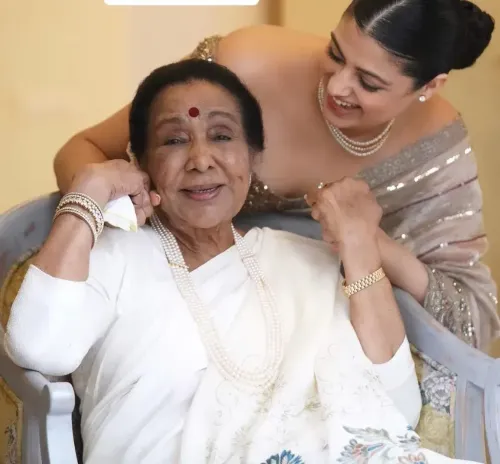
Mumbai, April 24: Even at the remarkable age of 92, legendary playback singer Asha Bhosle never stopped learning — embracing new perspectives, welcoming emerging technology like artificial intelligence, and inspiring everyone around her with an insatiable curiosity. Her grandson Chaitanya Bhosle revealed this deeply personal side of the icon in an exclusive conversation, painting a portrait of a woman whose mind remained as vibrant as her voice right until the very end.
A Mind That Never Stopped Growing
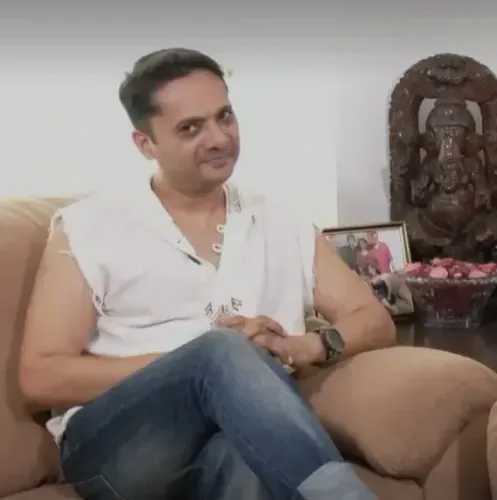
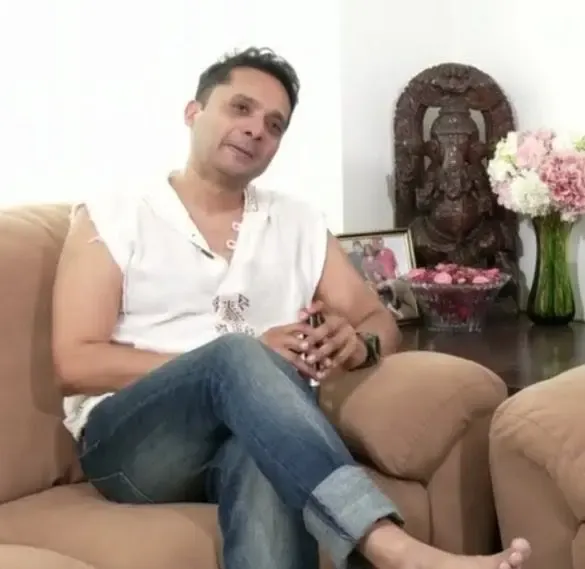
In an interaction with IANS, Chaitanya Bhosle described his grandmother as someone who was never rigid in her beliefs or confined by convention. He noted that she was never the kind of person who would declare something wrong or right without first exploring it fully.
She was always inquisitive about life and open to learning new things, Chaitanya said. He recalled how she would often respond to new information with wonder, asking how something worked and whether there was another way to approach it.
He also noted that once she was genuinely convinced of something, she would willingly revise her point of view — a quality that Chaitanya found deeply inspiring. If at 92 she could keep changing perspective, he reflected, the implication being clear: there was no excuse for anyone younger to remain stuck in their ways.
Asha Bhosle's Surprising Stance on AI in Music
Perhaps the most striking revelation from Chaitanya was how Asha Bhosle reacted to the rise of artificial intelligence in the music industry — a topic that has deeply divided veteran artists globally. While many seasoned singers have vocally opposed AI-generated music, calling it a threat to artistic authenticity, Asha Bhosle's response was characteristically open-minded.
Most singers would call it rubbish and say it should not be used, Chaitanya recalled. She was not like that. Instead, her reaction to hearing about AI was enthusiastic curiosity: AI has come. Wow, interesting.
He shared that when the family played her songs recreated using AI from the voice of a deceased singer, she was extremely interested rather than dismissive. This openness stands in sharp contrast to the broader debate raging in the global music industry, where artists from India and abroad are increasingly alarmed by AI's ability to replicate the voices of legends.
A Legacy That Transcends 12,000 Songs
Asha Bhosle passed away on April 12, 2025, at the age of 92, following multi-organ failure. She had been admitted to Breach Candy Hospital in Mumbai on April 11 after suffering from severe exhaustion and a chest infection — a development first disclosed by her granddaughter Zanai Bhosle via a social media post.
The music world was plunged into mourning at her passing. Over a career spanning more than seven decades, Asha Bhosle recorded approximately 12,000 songs across multiple Indian languages, making her one of the most prolific and celebrated voices in the history of recorded music.
Her contribution to Indian film music, ghazals, pop, and devotional music remains unparalleled. From working with legendary composers like O.P. Nayyar, R.D. Burman, and Laxmikant-Pyarelal to collaborating with contemporary artists in her later years, her range was extraordinary.
Why Her Adaptability Matters Beyond Music
What Chaitanya Bhosle's account reveals is not merely a charming anecdote about a beloved grandmother — it is a profound statement about intellectual humility and the courage to evolve. In an era where debates about AI in creative industries have become increasingly polarized, Asha Bhosle's curiosity-first approach offers a nuanced alternative to blanket rejection or uncritical acceptance.
Her attitude also reflects a generational lesson: that greatness is not preserved by resisting change, but by engaging with it thoughtfully. This is particularly resonant in India's music industry today, where the intersection of tradition and technology is reshaping how content is created, distributed, and consumed.
As the industry continues to grapple with the ethical and creative implications of AI-generated music, Asha Bhosle's perspective — one of wonder rather than fear — may well serve as a guiding philosophy for the next generation of artists. The void she has left, as Chaitanya and countless others have noted, is one that will not easily be filled.
Point of View
Asha Bhosle's instinct to engage rather than reject is a quietly radical act. The mainstream narrative around her passing has focused, rightly, on her musical output — but Chaitanya's account exposes something more instructive: that her longevity as an artist was inseparable from her refusal to calcify. At a time when India's creative economy is at a crossroads with AI, her example challenges both blind technophobia and uncritical adoption. The real tribute to her legacy may be asking, as she always did — how does this work, and how can we do it better?
NationPress
21 Sept 2026
Frequently Asked Questions
How did Asha Bhosle react to AI in music?
Asha Bhosle reacted to artificial intelligence in music with curiosity and enthusiasm, saying AI has come and finding it genuinely interesting. Unlike many veteran artists who opposed AI, she would actively listen to AI-recreated songs and show genuine interest in understanding the technology.
When did Asha Bhosle pass away and what was the cause?
Asha Bhosle passed away on April 12, 2025, at the age of 92 due to multi-organ failure. She had been admitted to Breach Candy Hospital in Mumbai on April 11 after suffering from severe exhaustion and a chest infection.
Who is Chaitanya Bhosle and what did he say about Asha Bhosle?
Chaitanya Bhosle is Asha Bhosle's grandson and a singer himself. He revealed in an exclusive interview that his grandmother remained open to learning new things and changing her perspective even at the age of 92, and was particularly fascinated by AI in music.
How many songs did Asha Bhosle record in her career?
Asha Bhosle recorded approximately 12,000 songs across multiple Indian languages over a career spanning more than seven decades. She is regarded as one of the most prolific solo recording artists in music history.
What is Asha Bhosle's lasting legacy in Indian music?
Asha Bhosle is considered one of the most versatile and prolific playback singers in Indian music history, known for her work across film music, ghazals, pop, and devotional genres. Her collaborations with composers like R.D. Burman and O.P. Nayyar produced some of Bollywood's most iconic songs.