Exclusive: Sudesh Berry Reveals Father's Haunting Partition Link to Film 'Kaun Sahi'

Synopsis
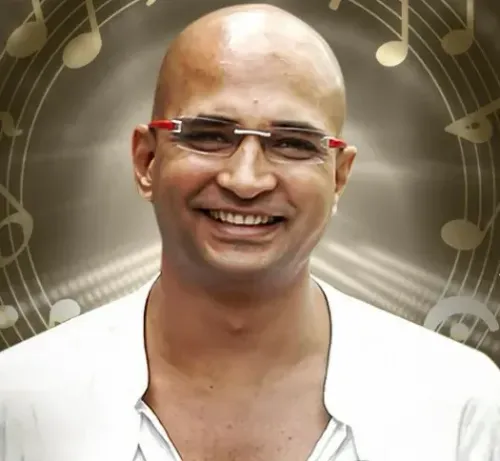
Actor Sudesh Berry has revealed that his father — an RSS worker during Partition — helped retrieve bodies from a train arriving from Pakistan carrying slain Indians. This haunting family memory gives Berry a deeply personal connection to his upcoming film 'Kaun Sahi', which explores Mahatma Gandhi's assassination by Nathuram Godse.
Key Takeaways
Sudesh Berry revealed that his father, an RSS worker during the 1947 Partition , helped retrieve dead bodies from a train arriving from Pakistan — a memory directly tied to his new film.
The film 'Kaun Sahi' explores the assassination of Mahatma Gandhi by Nathuram Godse , one of India's most contested historical events.
The film is produced by Dr.
Pavan Todi , co-produced by Amit Singh Raj , and directed by Manoj Singh .
The cast includes Varsha Usgaonkar , Vijay Aidasani , Raj Premi , and Manoj Kabir in key roles.
Sudesh Berry debuted in 1988 and rose to fame with 'Ghayal' (1990) and 'Border' (1997) , where he played Naib Subedar Mathura Das .
In December 2024 , Berry shared nostalgic memories of working with Sunny Deol on the 1996 film 'Himmat' on social media.
Mumbai, April 26 — Veteran Bollywood and television actor Sudesh Berry has made a deeply personal revelation about his upcoming drama 'Kaun Sahi', disclosing that his late father had a direct and harrowing connection to one of the darkest chapters of India's Partition history. Speaking exclusively, Berry shared how his father — an RSS worker at the time — was among those who received a train arriving from Pakistan carrying the dead bodies of slain Indians, a memory that gives the actor a profound personal stake in this project.
A Father's Haunting Role During Partition's Bloodshed
Sudesh Berry recounted the chilling episode with raw emotion, stating: "My father was a worker with the RSS, and when the train came from Pakistan full of dead bodies, he was also amongst those who helped pick up the dead bodies from the train."
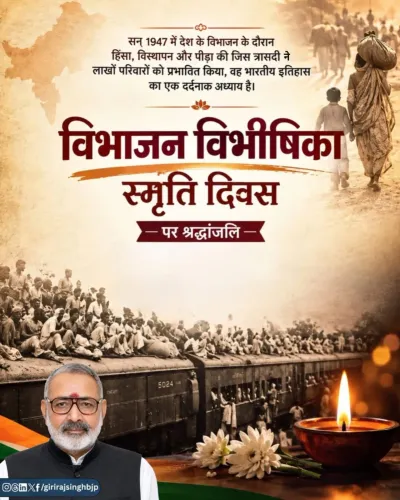
This revelation places Berry's involvement in 'Kaun Sahi' in a deeply intimate light. The Partition of 1947 resulted in one of the largest forced migrations in human history, with estimates suggesting that between 200,000 and 2 million people were killed in the accompanying communal violence. Trains carrying massacred passengers became one of the most haunting symbols of that era — and Berry's father was on the ground, bearing witness and offering dignity to the dead.
This personal history is not merely a backstory — it underscores why actors like Berry choose projects that revisit uncomfortable national truths rather than sanitized historical narratives.
About the Film 'Kaun Sahi' — Revisiting Gandhi's Assassination
The film 'Kaun Sahi' centers on one of modern India's most debated historical events: the assassination of Mahatma Gandhi by Nathuram Godse. This subject has long been a flashpoint in Indian political and cultural discourse, making the project both bold and significant.
The film has been produced by Dr. Pavan Todi and co-produced by Amit Singh Raj, under the direction of Manoj Singh. The cast includes notable names such as Varsha Usgaonkar, Vijay Aidasani, Raj Premi, and Manoj Kabir in key roles.
The film's title — which translates roughly to 'Who Was Right?' — signals an intent to interrogate rather than simply dramatize, inviting audiences to engage with the moral and political complexities surrounding Gandhi's murder and its aftermath in newly independent India.
Sudesh Berry's Illustrious Career Spanning Decades
Sudesh Berry made his acting debut in 1988 with the film 'Khatron Ke Khiladi' and steadily built a reputation as one of Hindi cinema's most dependable character actors. His breakthrough came with the 1990 blockbuster 'Ghayal', and he cemented his legacy with his portrayal of Naib Subedar Mathura Das in the iconic war film 'Border' in 1997.
On the small screen, Berry has delivered powerful performances in landmark shows including 'Mahabharat', 'Suraag – The Clue', 'Agle Janam Mohe Bitiya Hi Kijo', and 'Shakti – Astitva Ke Ehsaas Ki', among others.
His career trajectory — spanning nearly four decades across film and television — makes him one of the few artists who has consistently engaged with India's social, historical, and emotional narratives.
Berry's Bond With Sunny Deol and Nostalgia for 'Himmat'
Beyond his current project, Sudesh Berry remains actively engaged with his fans on social media. In December 2024, he shared a nostalgic post recalling his experience working alongside Sunny Deol on the 1996 action film 'Himmat'.
Sharing a still from the film, Berry wrote: "Himmat ke set par Sunny Deol ji ke saath guzare hue yeh pal… Ek side unki zabardast energy, doosri side humari on-screen chemistry — Har scene mein ek alag hi spark tha. Cinema ka yeh safar yaadon mein hamesha chamakta rahega."
The post resonated widely, reflecting the enduring affection audiences hold for 1990s Hindi cinema and its ensemble of character actors who gave films their emotional backbone.
Why 'Kaun Sahi' Could Spark a National Conversation
Films exploring the Gandhi-Godse debate have historically triggered significant public and political reactions in India. With 'Kaun Sahi' arriving at a time of heightened national consciousness around India's founding history, the project is positioned to generate substantial discourse.
The personal dimension that Sudesh Berry brings — rooted in his father's lived experience during Partition — adds a layer of authenticity that distinguishes this film from purely commercial retellings. As India continues to grapple with its Partition legacy and the contested memory of its freedom struggle, 'Kaun Sahi' may prove to be a timely and necessary cinematic intervention.
With its release date yet to be officially announced, audiences and critics alike will be watching closely to see how the filmmakers navigate this historically charged subject matter.
Point of View
Berry's personal narrative lends 'Kaun Sahi' a moral weight that goes beyond box-office calculations. The mainstream entertainment press will cover this as celebrity trivia, but the deeper story is about how ordinary Indians — like Berry's father — were the silent, uncelebrated witnesses to history's worst moments. That truth deserves more than a press note.
NationPress
19 Sept 2026
Frequently Asked Questions
What is the film 'Kaun Sahi' about?
'Kaun Sahi' is an upcoming Hindi drama centered on the assassination of Mahatma Gandhi by Nathuram Godse. It is directed by Manoj Singh and produced by Dr. Pavan Todi and co-producer Amit Singh Raj.
What is Sudesh Berry's personal connection to 'Kaun Sahi'?
Sudesh Berry revealed that his father was an RSS worker who helped retrieve dead bodies from a train that arrived from Pakistan during the Partition of 1947. This deeply personal family history has strengthened his emotional investment in the film.
Who are the other actors in 'Kaun Sahi'?
The film stars Varsha Usgaonkar, Vijay Aidasani, Raj Premi, and Manoj Kabir in significant roles alongside Sudesh Berry. The project is directed by Manoj Singh.
What are Sudesh Berry's most famous roles?
Sudesh Berry is best known for his roles in the films 'Ghayal' (1990) and 'Border' (1997), where he played Naib Subedar Mathura Das. On television, he is recognized for 'Mahabharat' and 'Shakti – Astitva Ke Ehsaas Ki', among others.
When did Sudesh Berry start his acting career?
Sudesh Berry made his acting debut in 1988 with the film 'Khatron Ke Khiladi'. He has since built a career spanning nearly four decades across Hindi films and television.