Robert Downey Jr. recalls losing 1993 Oscar to Al Pacino: 'Life kicks you'
Synopsis
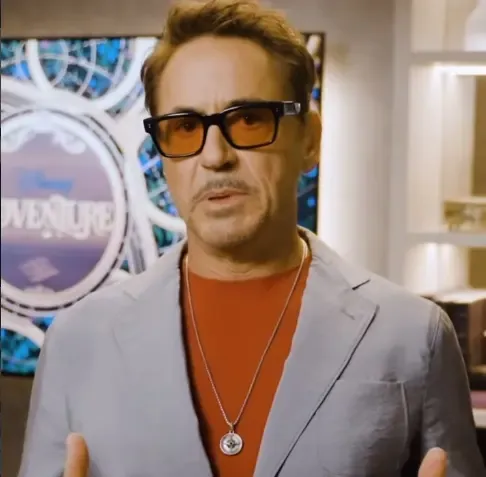
A resurfaced Jimmy Kimmel Live clip captures Robert Downey Jr. reflecting on his 1993 Best Actor Oscar loss to Al Pacino for his transformative role in Chaplin. The actor's candid recollection — 'when you're in your 20s, you're like everything's going to go my way forever. And then life kicks you' — offers insight into a formative professional setback that shaped his later resilience.
Key Takeaways
Robert Downey Jr. lost the Best Actor Oscar at the 65th Academy Awards in 1993 to Al Pacino , who won for Scent of a Woman .
Downey Jr. was nominated for his role as Charlie Chaplin in the biographical drama Chaplin , directed by Richard Attenborough .
In a resurfaced Jimmy Kimmel Live appearance, Downey Jr. reflected on the loss with humour and candour, describing his youthful overconfidence.
The Chaplin performance remains one of the defining roles of Downey Jr.'s career, showcasing his dramatic range before his blockbuster era.
The clip reveals how the early career setback became a formative lesson in resilience and humility for the actor.
An archival appearance by Robert Downey Jr. on Jimmy Kimmel Live has resurfaced online, offering a candid window into how the actor processed his first Academy Award nomination loss in the early 1990s. During the interview, Downey Jr. recounted the moment his name was not called at the 65th Academy Awards in 1993, when the Best Actor honour went to Al Pacino for Scent of a Woman instead of his own transformative turn in Chaplin.
The Oscar moment that stuck with him
When Kimmel asked whether the 1993 nomination was significant, Downey Jr. leaned into the memory with disarming honesty. "Yes, that was a big deal," he said. "I just remember, they were like, 'And the Oscar goes to Al Pacino'. And I was like, 'They must have misread that'. Because when you're in your 20s, you're like, 'everything's going to go my way forever'. And then life kicks you in the s***."
Chaplin: The role that nearly won
Chaplin, directed by Richard Attenborough, is a biographical drama tracing the life of silent-era filmmaker and comedian Charlie Chaplin — from his impoverished childhood in London to his ascent as one of cinema's most influential figures. Downey Jr.'s portrayal stands as the film's centrepiece, a performance that captured not merely Chaplin's physical mannerisms and comedic timing but also the emotional fragility beneath the icon. His interpretation balanced charm, melancholy, ambition, and isolation, rendering the character deeply human rather than merely imitative.
Critical praise and lasting impact
The performance earned widespread critical acclaim and secured Downey Jr. his first Academy Award nomination for Best Actor. Despite the loss to Pacino, the role remains a defining moment in his career — a showcase of range that would inform his later work and cement his status as a serious dramatic actor before his eventual pivot to blockbuster stardom.
What the loss revealed
The resurfaced clip underscores a theme Downey Jr. has revisited in interviews over the years: the gap between youthful invincibility and the harsh realities of a competitive industry. At the time of the 1993 ceremony, Downey Jr. was in his late 20s, riding a wave of critical momentum. The loss, he suggests, was a necessary corrective — a moment that taught him resilience and humility before his subsequent triumphs.
Point of View
But his willingness to frame it as a life lesson rather than a career wound. That maturity, earned through decades of subsequent success and personal struggle, is what the clip inadvertently documents.
NationPress
24 Sept 2026
Frequently Asked Questions
What was Robert Downey Jr. nominated for at the 1993 Academy Awards?
Robert Downey Jr. was nominated for Best Actor at the 65th Academy Awards in 1993 for his transformative performance as Charlie Chaplin in the biographical drama Chaplin, directed by Richard Attenborough.
Who won the Best Actor Oscar in 1993 instead of Robert Downey Jr.?
Al Pacino won the Best Actor Oscar at the 65th Academy Awards in 1993 for his role in Scent of a Woman, defeating Robert Downey Jr. and other nominees.
What did Robert Downey Jr. say about losing the Oscar?
In a resurfaced Jimmy Kimmel Live interview, Downey Jr. recalled the moment his name was not called, saying: 'When you're in your 20s, you're like, everything's going to go my way forever. And then life kicks you.' He reflected on his youthful overconfidence and how the loss served as a humbling reality check.
How was Robert Downey Jr.'s performance in Chaplin received?
Downey Jr.'s portrayal of Charlie Chaplin in the 1993 film earned widespread critical acclaim. His performance captured both the physical mannerisms and emotional vulnerability of the legendary comedian, balancing charm, melancholy, and isolation, and remains one of the defining roles of his career.