'50 First Dates' was originally a hardcore drama, reveals Drew Barrymore

Synopsis
'50 First Dates' almost looked nothing like the film audiences fell in love with. Drew Barrymore has revealed the movie began as a hardcore drama titled 'Fifty First Kisses,' with a bittersweet ending where Henry walks into a diner and reintroduces himself to Lucy — no resolution, no bow. Barrymore says she still mourns it.
Key Takeaways
Drew Barrymore revealed on The Drew Barrymore Show that '50 First Dates' originally began as a 'hardcore drama.' The film was initially titled 'Fifty First Kisses' before producers changed it, fearing the word 'kisses' would deter male viewers.
The original ending saw Lucy and Henry break up, with Henry later walking into the diner and simply saying 'Hi, I'm Henry' — and Lucy responding 'Hi, I'm Lucy.' Barrymore said she 'will always mourn that ending' but believes the released film is perfect as it stands.
The conversation was prompted by actor Brett Goldstein , who called the film's central concept 'the most romantic idea in the world.'
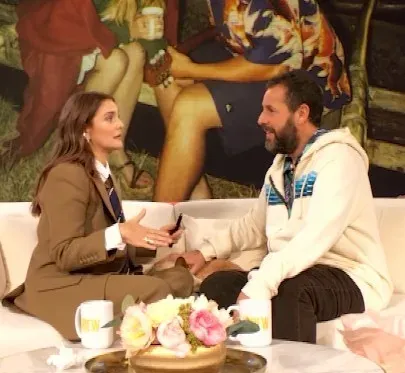
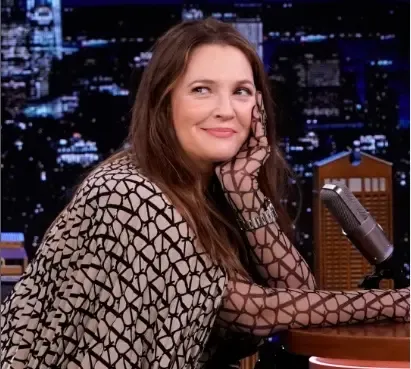
Hollywood star Drew Barrymore has revealed that the beloved 2004 romantic comedy '50 First Dates' began life as a far more emotionally raw project — a 'hardcore drama' with a stripped-back ending that she says she still mourns. The disclosure came during a candid conversation on The Drew Barrymore Show, where Barrymore spoke with actor and writer Brett Goldstein about the film's origins.
The Original Script and Its Title
Barrymore revealed that the film was initially titled 'Fifty First Kisses' before producers decided to change it. 'They changed that because they thought that was too girly,' she explained. 'And kisses may have been a turnoff to males. And we didn't want to do that.' The title was ultimately revised to '50 First Dates', a name Goldstein credited with working precisely because it drew him in as a viewer.
The Ending That Never Made It to Screen
The most striking revelation was the film's original conclusion. In the early script, Barrymore's character Lucy and Adam Sandler's character Henry do not end up together — they break up. 'A long time later, he realised he didn't want to live without her,' Barrymore recounted. 'So he walks into the diner. And he just walks in and he goes, Hi, I'm Henry. And she looks at him. She goes, Hi, I'm Lucy. And that's it.'
Barrymore described the ending as quietly hopeful. 'I will always mourn that ending because I think it still is hopeful without the bow at the end,' she said. 'But I think the film is perfect the way it is.'
Goldstein's Praise and the 'Heart and Humour' Formula
The conversation was sparked by Goldstein, best known for his role in Ted Lasso, telling Barrymore that '50 First Dates' ranks among his favourite films. He praised its central concept — that Lucy is never cured of her memory condition, and Henry must earn her love anew each day — as 'the most romantic idea in the world.' Barrymore noted that Sandler had also appeared on her show recently, underscoring the enduring bond between the film's two leads.
Barrymore drew a parallel between the film's tonal balance and Ted Lasso, saying both works place 'heart and humor at the cornerstone.' The exchange highlighted how the film's final, more optimistic version was a deliberate commercial and creative recalibration from its dramatic roots. Whether the original ending will ever surface remains unknown, but Barrymore's candid reflections have reignited fan curiosity about what might have been.
Point of View
No guarantee of what follows — is arguably more honest to the film's central premise than the version that reached cinemas. That a star of Barrymore's stature still publicly mourns a cut ending two decades later says something about the creative compromises embedded in mainstream romantic comedy. The title change from 'Kisses' to 'Dates' is equally telling: a small word swap driven by gendered marketing assumptions that shaped what millions of viewers ultimately saw.
NationPress
25 Aug 2026
Frequently Asked Questions
What did Drew Barrymore reveal about '50 First Dates'?
Drew Barrymore revealed that '50 First Dates' originally began as a hardcore drama with a bittersweet ending, and was initially titled 'Fifty First Kisses.' She made the disclosure during a conversation with Brett Goldstein on The Drew Barrymore Show.
What was the original ending of '50 First Dates'?
In the original script, Lucy and Henry break up, and only much later does Henry return to the diner, walk in, and say 'Hi, I'm Henry' — to which Lucy replies 'Hi, I'm Lucy.' The scene ends there, without resolution. Barrymore described it as hopeful without a tidy conclusion.
Why was the title changed from 'Fifty First Kisses' to '50 First Dates'?
According to Barrymore, producers felt the word 'kisses' was too feminine and might deter male viewers. The title was changed to '50 First Dates' to broaden its appeal, a decision Goldstein jokingly validated by saying it worked because he watched it.
Who was Drew Barrymore speaking with when she made these revelations?
Barrymore was speaking with actor and writer Brett Goldstein, known for Ted Lasso, on The Drew Barrymore Show. Goldstein had told her that '50 First Dates' is one of his favourite films, which prompted the behind-the-scenes discussion.
Does Drew Barrymore regret the change to the film's ending?
Barrymore said she 'will always mourn that ending' but also stated she believes the released film is perfect as it is. She described the original ending as hopeful in a quieter, less resolved way.