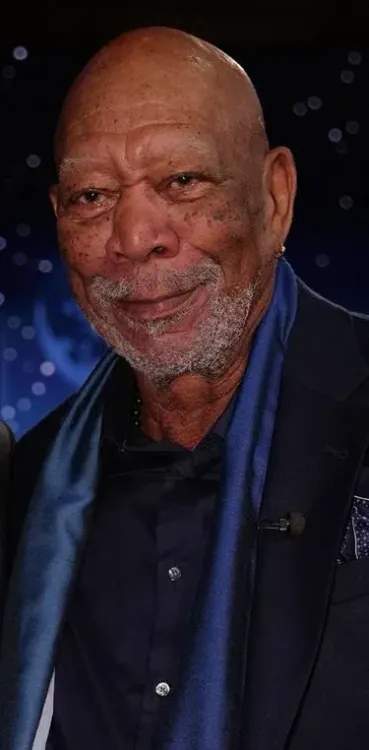
Morgan Freeman on why Black history stories in 'The Gray House' must be told
Synopsis
Morgan Freeman and Ben Vereen aren't just acting in 'The Gray House' — they're making a point. The eight-part Civil War drama about Black women who turned the Underground Railroad into a spy network is, for both veterans, a deliberate act of historical reclamation. Freeman's verdict: 'If you want the story told, you have to tell it.'
Key Takeaways
Morgan Freeman serves as executive producer and Ben Vereen stars in the new historical drama The Gray House .
The eight-part series is based on the true story of three women who built a spy network from an Underground Railroad operation during the American Civil War .
The lead roles are played by Daisy Head , Mary-Louise Parker , and Amethyst Davis .
Vereen plays Isham Worthy , a conductor in the Underground Railroad — a role he links to his iconic turn as Chicken George in Roots ( 1977 ).
Freeman said stories of Black and women's history are 'almost completely disregarded' and that the responsibility to tell them falls on those within the community.
Morgan Freeman and Ben Vereen say they feel a personal and professional obligation to bring overlooked chapters of Black American history to the screen — a conviction that drew both veterans to the new historical drama The Gray House. The eight-part series, currently in promotion, centres on three women whose covert espionage work shaped the course of the American Civil War.
What The Gray House Is About
The drama is based on the true story of three women — played by Daisy Head, Mary-Louise Parker, and Amethyst Davis — who transformed an Underground Railroad operation into a clandestine spy network during the Civil War. The series arrives at a moment when debates over representation and the preservation of Black history remain prominent across film and television.
Why Freeman and Vereen Signed On
Freeman, whose filmography includes The Shawshank Redemption, Million Dollar Baby, Se7en, Driving Miss Daisy, and Invictus, serves as an executive producer on the series. He articulated a clear motivation: 'The American history of Blacks and women. Those stories are almost completely disregarded. And the mantra is, if you want the story told, you have to tell it. Nobody else is going to do that, so that puts us on the spot,' he said. He added, 'We do want our stories told, and like Ben says, our ancestors are demanding, so here we are.'
Vereen, widely recognised for his portrayal of Chicken George in the landmark 1977 miniseries Roots — adapted from Alex Haley's celebrated novel — plays Isham Worthy, a conductor in the Underground Railroad. He described the role as a continuation of work he began decades earlier. 'When I was approached with this one, I had to really sit back and think about how I would approach him because he's not Chicken George. He's a conductor in the Underground Railroad. And I think that's an important story that has to be told,' Vereen said.
Vereen on Ancestral Responsibility
Vereen also spoke about the weight of the subject matter, telling People magazine: 'It's about our ancestors, and our ancestors will not be erased and will not be put aside. It's important to me that these stories are told.' He noted he was surprised by pushback from some who felt there was no need for further stories dealing with slavery and Black history — a reaction he found telling in itself.
The Broader Context
The project lands amid ongoing industry conversations about whose histories are centred in mainstream American storytelling. Notably, both Freeman and Vereen frame their involvement not merely as artistic choices but as acts of historical stewardship. The series follows a growing slate of productions seeking to surface the contributions of Black Americans that standard historical curricula have long marginalised. Whether The Gray House reaches wide audiences will be a test of whether that appetite extends beyond critical circles.
Point of View
You have to tell it' — is both a creative manifesto and an indictment of mainstream Hollywood's historical blind spots. What is notable here is not just the subject matter but the mechanism: a veteran actor using executive producer credits to greenlight stories the industry has repeatedly passed over. Vereen's surprise at audiences resistant to more slavery-era narratives points to a real fault line — between those who see this history as settled and those who see it as barely begun. The commercial performance of 'The Gray House' will matter as much as its critical reception; streaming platforms greenlight sequels, not eulogies.
NationPress
19 Sept 2026
Frequently Asked Questions
What is 'The Gray House' about?
'The Gray House' is an eight-part historical drama based on the true story of three women who converted an Underground Railroad operation into a covert spy network during the American Civil War. The lead roles are played by Daisy Head, Mary-Louise Parker, and Amethyst Davis.
What is Morgan Freeman's role in 'The Gray House'?
Morgan Freeman serves as an executive producer on the series. He has spoken publicly about his belief that stories of Black and women's history are systematically overlooked, framing his involvement as a responsibility rather than simply a career choice.
Who does Ben Vereen play in 'The Gray House'?
Ben Vereen plays Isham Worthy, a conductor in the Underground Railroad. He has described the role as a continuation of his landmark work as Chicken George in the 1977 miniseries Roots, adapted from Alex Haley's novel.
Why do Freeman and Vereen say these stories need to be told?
Both actors argue that Black American history — particularly the contributions of women — remains largely absent from mainstream historical narratives. Freeman has stated that without figures within the community actively championing these stories, they risk being permanently sidelined.
What reaction has Ben Vereen encountered when discussing the series?
Vereen said he was surprised by responses from some people who felt there was no need for further stories dealing with slavery and Black history — a reaction he found significant and which reinforced his conviction that the work remains necessary.