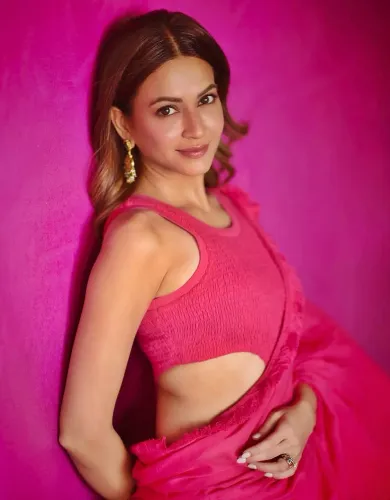
Kriti Kharbanda on social media burnout: 'Stop deciding people's worth'

Synopsis
Kriti Kharbanda’s social media post cuts through the performative noise with a rare admission: the platform itself is the problem. Her account of meeting drained, dream-chasing people held hostage by the pressure to post — and penalised for choosing privacy — captures a tension that millions feel but few public figures name directly.
Key Takeaways
Kriti Kharbanda shared a candid post about social media burnout, describing people who were emotionally, physically, and mentally drained.
She noted that those who chose not to share personal details publicly were perceived as less ‘appealing’ — a word she attributed to the people she met.
Kharbanda stressed that social media is only one part of life , not a measure of a person’s worth or existence.
She called for normalising the choice not to share online, framing privacy as an act of self-protection.
The post reflects a growing global conversation around digital wellbeing and the psychological cost of performative online activity.
Actress Kriti Kharbanda has spoken out about the mounting emotional toll of social media, sharing a candid note on her photo-sharing app in which she described meeting several people who felt drained — not by their work, but by the relentless pressure of maintaining an online presence.
What Kriti Observed
Kharbanda wrote that the people she met were “emotionally, physically and mentally” exhausted, with work feeling “demanding without actually existing and with no guarantee.” She noted a common thread: all of them cited social media as a significant source of stress. “Social media keeps getting in the way,” she wrote, of their ambitions and perseverance.
The Pressure to Stay Active Online
The Pagalpanti actress highlighted the specific burden of constant posting — the expectation to publish updates regardless of whether one has anything meaningful to share. She noted that several people she spoke to were uncomfortable sharing personal details publicly, yet felt compelled to do so. Those who chose to keep their lives private, she wrote, found themselves considered less “appealing” — a word she attributed to them directly. “In that moment, my heart sank a little,” she added.
Her Core Message
Kharbanda argued that social media is only one dimension of life, not its entirety. “If social media didn’t exist, the truly grateful part still does,” she wrote, urging people to decouple their sense of worth — and others’ — from their digital footprint. She called for normalising the choice not to share, framing it as an act of self-protection rather than social failure.
Why This Resonates
The post arrives at a time when conversations around digital wellbeing and social media fatigue are gaining traction globally, with researchers and mental health professionals increasingly flagging the psychological cost of performative online activity. For public figures navigating both a professional need for visibility and a personal need for privacy, the tension Kharbanda describes is especially acute. Notably, her remarks echo a broader cultural shift in which celebrities are beginning to push back against the expectation of constant digital availability.
Kharbanda concluded her post with a direct appeal: “Let’s normalise not wanting to share and letting people in. Protecting your peace. And stop deciding people’s worth based on social media. I know this sounds like a rant, but I’m very certain that many people are thinking it. Hope this makes you’ll feel better. You’re not alone.”
Point of View
It signals that the cost-benefit calculus is shifting even for those with a career incentive to stay plugged in. What mainstream coverage of such posts misses is the structural trap: the algorithm rewards consistency and penalises absence, meaning the ‘choice’ to step back is rarely free. Until platforms redesign their incentive structures, individual appeals to ‘protect your peace’ — however well-intentioned — place the burden of a systemic problem on the individual.
NationPress
19 Sept 2026
Frequently Asked Questions
What did Kriti Kharbanda say about social media?
Kriti Kharbanda shared a post saying she met several people who were emotionally, physically, and mentally drained, with social media pressure identified as a common stressor. She urged people to stop measuring their own and others’ worth based on social media profiles.
Why does Kriti Kharbanda think social media is harmful?
She argues that the constant pressure to post, stay active, and make oneself publicly visible is exhausting and often gets in the way of people’s real ambitions. She also noted that those who chose to keep their lives private were unfairly seen as less appealing.
What did Kriti Kharbanda say about privacy on social media?
Kharbanda said several people she met were uncomfortable sharing personal details publicly but felt compelled to do so. She called for normalising the decision not to share, describing it as protecting one’s peace rather than a social failing.
Who is Kriti Kharbanda?
Kriti Kharbanda is a Bollywood actress known for films including Pagalpanti and Housefull 4. She is active on social media and occasionally uses her platform to share personal reflections on mental health and lifestyle.
Is social media burnout a recognised issue?
Yes. Mental health professionals and researchers have increasingly flagged the psychological cost of performative social media use, including anxiety, comparison fatigue, and the pressure of constant visibility. Kharbanda’s post reflects a broader public conversation on digital wellbeing.