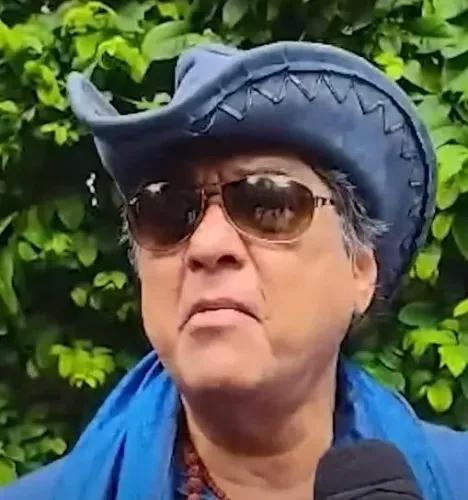
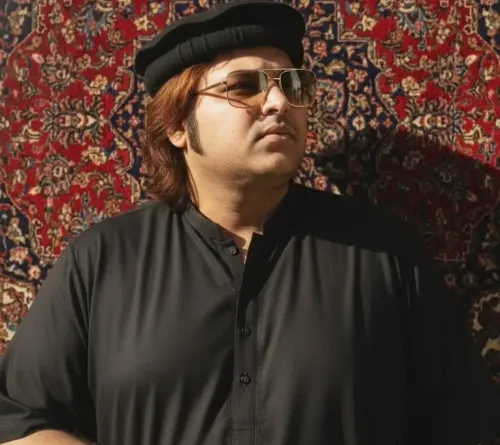
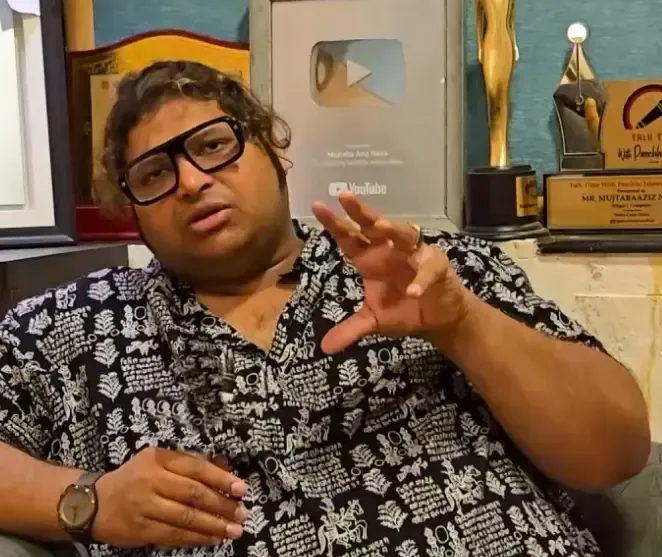
Exclusive: Mujtaba Aziz Naza on Independent Music Freedom & AI's Limits
Synopsis
Sufi singer Mujtaba Aziz Naza says independent music liberates artists from Bollywood's multi-stakeholder constraints, while warning that AI — however advanced — can never capture the spiritual soul of Sufi or Qawwali. His call for mandatory artist rights over AI-cloned voices highlights a critical legal gap in India's music industry.
Key Takeaways
Mujtaba Aziz Naza , a renowned Sufi singer and composer , spoke exclusively on the shift toward independent music in India on April 26, 2025 .
Naza stated that independent music offers artists full creative freedom, unlike Bollywood film music , which involves multiple stakeholders limiting artistic expression.
He firmly asserted that AI cannot replicate the soul of Sufi or Qawwali music , as these genres depend on human emotion, spirituality, and lived experience.
Naza called for mandatory artist rights over AI-cloned voices , stating it is "only fair" and an issue the music industry must urgently address.
India currently lacks specific legislation governing AI voice cloning of artists, unlike the US and EU which have begun addressing this through proposed regulations.
The Indian independent music market has been growing faster than film soundtracks in 2023–2024 , driven by digital platforms and changing audience preferences.
Mumbai, April 26 — Acclaimed Sufi singer and composer Mujtaba Aziz Naza has spoken out on two of the most pressing conversations reshaping the Indian music industry today: the accelerating migration of artists toward independent music, and the growing anxiety over artificial intelligence (AI) threatening to replicate — and potentially commercialize — the human soul of music. In an exclusive interaction, Naza offered a candid, artist-first perspective that resonates far beyond his own career.
Why Artists Are Choosing Independent Music Over Bollywood
Mujtaba Aziz Naza explained that the appeal of independent music lies fundamentally in creative autonomy. In the highly structured world of Bollywood film music, an artist's vision is often subordinated to the demands of directors, producers, and music composers, each pulling in different directions.
"Independent music offers a lot of freedom. In films, there are multiple stakeholders — directors, producers, composers — each with their own vision. That can limit an artist's expression. But independently, you can create what you truly believe in," Naza said.
This shift is not unique to Naza. Across India, a growing number of musicians — from folk artists to classically trained vocalists — are bypassing traditional film industry pipelines and releasing directly to audiences via YouTube, Spotify, Instagram Reels, and other digital platforms. The democratization of music distribution has fundamentally altered the power dynamics of the industry.
Naza acknowledged this structural change directly: "Today, platforms like social media have made it easier to reach audiences directly, which is a big advantage." This direct-to-listener model eliminates gatekeepers and allows niche genres like Sufi music and Qawwali to find global audiences without needing mainstream commercial validation.
The Rise of AI in Music — And Its Spiritual Blind Spot
When the conversation turned to artificial intelligence in music, Naza was measured but firm. He acknowledged AI's utility as a production and compositional tool, but drew a clear boundary at the question of emotional and spiritual depth.
"AI is helpful in many ways, but it cannot replicate the soul of music. Music is deeply emotional and spiritual. AI operates within limitations, while human creativity is boundless. There are certain feelings and inspirations that only a human mind can create," he stated.
This perspective carries particular weight in the context of Sufi and Qawwali music — genres rooted in centuries of spiritual tradition, oral transmission, and deeply personal emotional expression. The Sufi tradition, originating from Islamic mysticism, treats music as a pathway to divine connection — a concept that sits fundamentally outside the algorithmic logic of any AI system.
Naza's stance aligns with a growing chorus of musicians globally who argue that while AI can mimic patterns, it cannot generate intention, pain, longing, or transcendence — the very emotions that define Sufi and devotional music.
AI Voice Cloning — A Rights Crisis the Industry Must Confront
Perhaps the most urgent issue Naza raised was the emerging legal and ethical crisis around AI voice cloning. As technology advances, it has become increasingly possible for AI tools to replicate a singer's voice with alarming accuracy — and potentially use it for commercial purposes without consent or compensation.
Naza was unequivocal on the question of rights: "If someone's voice is being used, they should definitely have the rights. It's only fair. This is something the industry needs to address seriously."
This concern is not hypothetical. Globally, cases of unauthorized AI voice replication have already surfaced, prompting debates in the United States, United Kingdom, and European Union around artist protection legislation. In India, however, no specific legal framework currently governs AI-generated voice cloning of artists — a gap that legal experts and industry bodies have flagged as increasingly urgent.
The Indian music industry, represented by bodies like the Phonographic Performance Limited (PPL) and Indian Performing Right Society (IPRS), has yet to issue comprehensive guidelines on AI-generated content and artist voice rights — leaving performers like Naza in a legal grey zone.
The Bigger Picture — What This Means for Indian Music
Naza's comments arrive at a pivotal inflection point for Indian independent music. Streaming data from 2023 and 2024 consistently showed that non-film music consumption in India has been growing at a faster rate than film soundtracks — a trend driven by younger audiences seeking authentic, genre-specific content.
At the same time, the arrival of sophisticated generative AI music tools — such as Suno, Udio, and Google's MusicLM — has ignited a global conversation about what music is, who owns it, and whether creativity itself can be automated. For genres like Qawwali, which depend on the lived spiritual journey of the performer, the stakes of this debate are existential.
As India's Copyright Act faces pressure to be updated for the digital age, voices like Mujtaba Aziz Naza's represent an important constituency — artists who have built careers on the irreplaceable human element of music, and who stand to lose the most if regulatory frameworks fail to keep pace with technology.
The coming months are likely to see intensified advocacy from Indian artists and industry bodies pushing for clearer AI voice rights legislation — and Naza's public stance may well contribute to that momentum.
Point of View
And the unchecked rise of AI tools that could strip artists of their most personal asset: their voice. While the global conversation on AI rights has produced legislative action in the West, India's regulatory silence is deafening. The irony is sharp — a country that gave the world Sufi and Qawwali, art forms built on the inimitable human spirit, has no law protecting artists from having that spirit digitally replicated and commercially exploited. That must change.
NationPress
19 Sept 2026
Frequently Asked Questions
Why are Indian artists moving towards independent music?
Indian artists are increasingly choosing independent music because it offers complete creative freedom, free from the constraints of multiple stakeholders like directors and producers in the film industry. The rise of digital platforms like YouTube, Spotify, and Instagram has made it easier to reach audiences directly without needing Bollywood backing.
Can AI replicate Sufi or Qawwali music?
According to Sufi singer Mujtaba Aziz Naza, AI cannot replicate the soul of Sufi or Qawwali music because these genres are deeply emotional and spiritual in nature. While AI can mimic musical patterns, it cannot generate the human feelings, longing, and spiritual depth that define these art forms.
What are the rights of artists if AI clones their voice?
Mujtaba Aziz Naza has stated that if an artist's voice is cloned by AI, the artist must hold the rights to that usage. Currently, India has no specific legal framework governing AI voice cloning of artists, creating a significant legal and ethical gap in the music industry.
Who is Mujtaba Aziz Naza?
Mujtaba Aziz Naza is an Indian Sufi singer and music composer known for his work in the devotional and independent music space. He has been an advocate for creative freedom in music and has spoken publicly on issues like AI's impact on the music industry and artist rights.
How is AI affecting the Indian music industry?
AI is increasingly being used in the Indian music industry for composition, production, and now voice replication, raising serious concerns about artist rights and authenticity. While AI tools offer efficiency, artists and legal experts warn that the absence of regulation around AI-generated music and voice cloning poses a major threat to creative ownership.