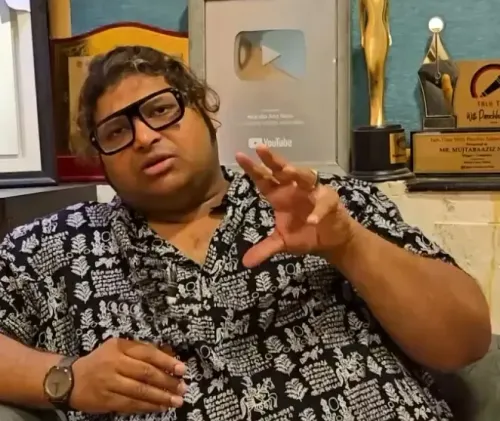
Exclusive: Mujtaba Aziz Naza on Working with Bhansali — No Clashes, Only Magic
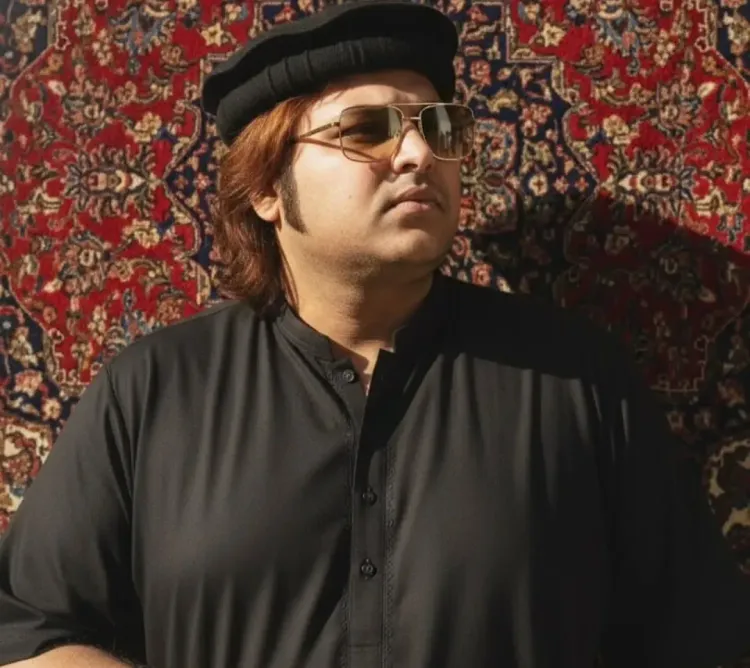
Synopsis
Singer Mujtaba Aziz Naza reveals there were zero creative clashes with perfectionist filmmaker Sanjay Leela Bhansali during Bajirao Mastani and Padmaavat. He describes their sessions as spontaneously magical and credits Bhansali's vision for elevating his career — while passionately defending artistic freedom as non-negotiable for authentic music.
Key Takeaways
Mujtaba Aziz Naza confirmed there were zero creative disagreements with filmmaker Sanjay Leela Bhansali during their collaborations.
Naza contributed Qawwali and Sufi vocal elements to the iconic track "Aayat" from Bajirao Mastani (2015) , calling it a career-defining moment.
Bhansali 's "Bajirao Mastani" won the National Film Award for Best Music Direction in 2016 , validating its musical authenticity.
Naza described sessions with Bhansali as producing spontaneous creativity, with compositions coming together rapidly and the director appreciating the organic process.
The singer strongly advocates for complete artistic freedom , arguing that an artist's individuality cannot and should not be replicated or suppressed.
Naza worked with Bhansali on two landmark productions — "Bajirao Mastani" (2015) and "Padmaavat" (2018) — both celebrated for their classical music integration.
Mumbai, April 25 — Mujtaba Aziz Naza, the acclaimed Sufi and Qawwali singer, has spoken candidly about his creative journey alongside celebrated filmmaker Sanjay Leela Bhansali, dismissing any notion of artistic friction during their collaborations on "Bajirao Mastani" and "Padmaavat". In an exclusive conversation, Naza described the experience as nothing short of transformative, highlighting moments of spontaneous musical brilliance that defined their partnership.
A Perfectionist Who Inspired, Not Intimidated
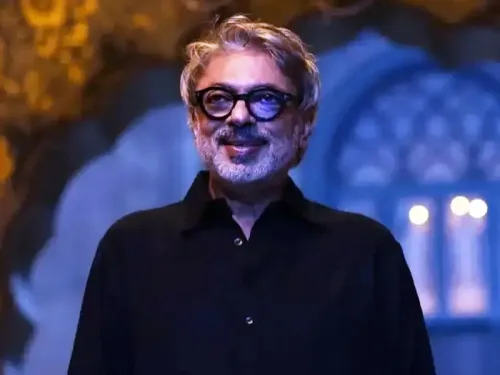
Bhansali, widely regarded as one of Hindi cinema's most exacting directors, is known for his relentless pursuit of perfection — a trait that has sometimes sparked tension with collaborators. However, Mujtaba Aziz Naza offers a strikingly different perspective. "No, there were no disagreements. It's true that he is a perfectionist and gives a lot of time to his work. He wants everything to be just right, regardless of the cost or effort involved," the singer stated.
Rather than finding Bhansali's demanding standards suffocating, Naza found them elevating. He recalled that their sessions produced moments of rapid, organic creativity — compositions that came together swiftly yet powerfully — and that the director genuinely appreciated such spontaneous output. "His vision often pushes you to deliver your best," Naza added, underscoring how the filmmaker's intensity serves as a catalyst rather than a constraint.
The Landmark Impact of 'Aayat' on Naza's Career
Perhaps the most defining chapter of Mujtaba Aziz Naza's association with Bhansali is the track "Aayat" from "Bajirao Mastani" (released in 2015). The soul-stirring composition, rooted in classical Urdu poetry, brought unprecedented mainstream visibility to Naza's distinctive vocal style.
"Working with someone like Sanjay Leela Bhansali was a learning experience in itself. Being part of such a grand project made a huge difference to my career," Naza reflected. He acknowledged that while he was not the lead artist on the track, the association with such an iconic production was a milestone. "It gave recognition to the Qawwali and Sufi elements within the song, which meant a lot to me," he said.
This is particularly significant in the context of mainstream Bollywood music, which had largely drifted toward electronic and pop-influenced sounds by the mid-2010s. "Aayat" reminded audiences and the industry alike that classical and devotional traditions still held profound emotional resonance — a point that critics and music historians have since noted as a quiet but important cultural moment.
Artistic Freedom: Naza's Firm Belief
Beyond his personal experience, Naza used the conversation to advocate strongly for creative autonomy in the music industry. When asked whether artists deserve complete creative freedom, his answer was unequivocal: "Absolutely."
"Every artist has a unique style. You cannot ask one singer to replicate another's style. That individuality is what defines them. Trusting artists and giving them freedom is essential for authentic music," he explained. This stance resonates deeply in an era when streaming algorithms and commercial pressures increasingly push artists toward homogenized sounds.
Naza's advocacy for artistic individuality also reflects a broader tension in the Indian music industry — between the commercial machinery of film production and the organic, tradition-rooted sensibilities of classical and semi-classical vocalists. His experience with Bhansali appears to be a rare case where both worlds coexisted harmoniously.
Bhansali's Legacy as a Music Visionary
Sanjay Leela Bhansali has long been as celebrated for his film scores as for his visual grandeur. From "Devdas" to "Ram-Leela", "Bajirao Mastani", "Padmaavat", and most recently "Heeramandi" on Netflix, his soundtracks consistently blend classical Indian music with cinematic scale. His ability to attract and collaborate with artists across classical, folk, and Sufi traditions — without diluting their essence — is a hallmark of his creative identity.
Notably, "Bajirao Mastani" won the National Film Award for Best Music Direction in 2016, a recognition that validated the film's commitment to musical authenticity. Naza's contribution, though supporting in nature, was part of an award-winning body of work that continues to be celebrated years after its release.
What This Means for Indian Classical Music in Cinema
The conversation with Mujtaba Aziz Naza arrives at a time when the debate around the place of classical and devotional music in mainstream Indian cinema is intensifying. With Bhansali continuing to champion this space — his "Heeramandi" series further embedded Thumri and Mujra traditions into popular culture — artists like Naza stand to gain wider platforms.
As Bhansali continues developing new projects, the industry will be watching whether his model of integrating traditional music into blockbuster productions becomes a template others follow — or remains a singular artistic vision. For Mujtaba Aziz Naza, the journey with one of India's most demanding filmmakers has clearly been one of growth, recognition, and artistic affirmation.
Point of View
Bhansali's model of integrating Sufi and Qawwali traditions into blockbuster productions stands as a deliberate counter-current. Naza's insistence on artistic freedom is not merely personal philosophy; it is a pointed critique of an industry that routinely asks classical artists to dilute their identity for mass appeal. The real story here is how one filmmaker's obsessive perfectionism accidentally became a sanctuary for India's endangered musical traditions.
NationPress
16 Sept 2026
Frequently Asked Questions
Did Mujtaba Aziz Naza have any creative disagreements with Sanjay Leela Bhansali?
No, Mujtaba Aziz Naza confirmed there were no creative disagreements with Sanjay Leela Bhansali. He described their collaboration as filled with spontaneous creativity and mutual appreciation during both Bajirao Mastani and Padmaavat.
What song did Mujtaba Aziz Naza sing in Bajirao Mastani?
Mujtaba Aziz Naza was associated with the track 'Aayat' from Bajirao Mastani (2015). He contributed Qawwali and Sufi vocal elements to the composition, which became one of the film's most celebrated songs.
How did working with Bhansali impact Mujtaba Aziz Naza's career?
Naza described the collaboration as a turning point, saying it brought significant recognition to his career and to Qawwali and Sufi music in mainstream Bollywood. He called being part of such a grand project a 'big achievement.'
What does Mujtaba Aziz Naza think about creative freedom for artists?
Naza is a firm advocate for complete creative freedom for artists. He believes every singer has a unique style that cannot be replicated, and that trusting artists with their individuality is essential for producing authentic music.
Which films did Mujtaba Aziz Naza work on with Sanjay Leela Bhansali?
Mujtaba Aziz Naza collaborated with Sanjay Leela Bhansali on two major Bollywood productions — Bajirao Mastani (2015) and Padmaavat (2018), both of which were critically acclaimed for their music.