Prahaar Review: Rajkummar Rao's restrained brilliance anchors 26/11 courtroom drama
Synopsis
Prahaar doesn't retell the horror of 26/11 — it tells what came after. Rajkummar Rao's restrained portrayal of special prosecutor Ujjwal Nikam, backed by a sharp Jaideep Ahlawat and a haunting Lalit Prabhakar as Kasab, makes this Maddock Films production one of the most disciplined and emotionally honest Hindi films of the year, rated 4.5 out of 5.
Key Takeaways
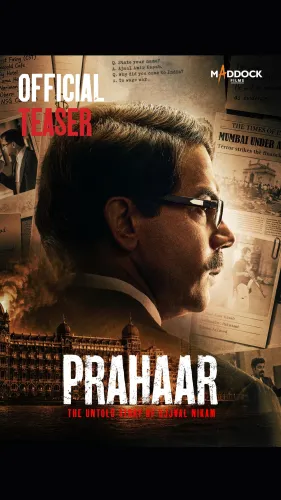
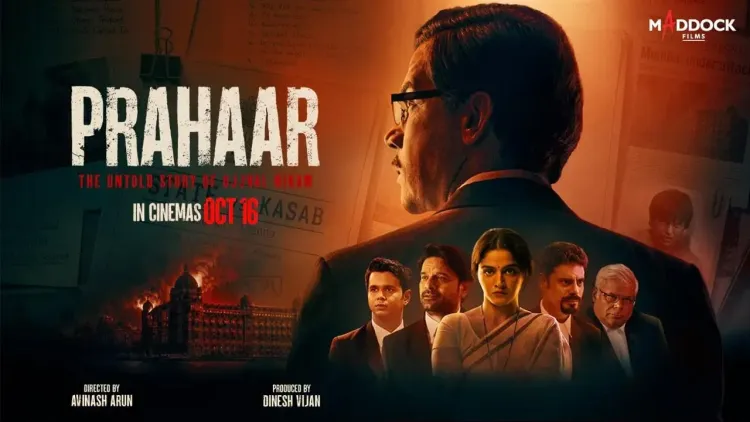
Prahaar: The Untold Story of Ujjwal Nikam is directed by Avinash Arun and produced by Dinesh Vijan under Maddock Films .
Rajkummar Rao plays special prosecutor Ujjwal Nikam ; the film is rated 4.5 out of 5 and runs 140 minutes .
The film covers the legal proceedings around Ajmal Kasab's trial and the 1993 Bombay bombings case.
Lalit Prabhakar plays Kasab, Jaideep Ahlawat portrays a Pakistani public prosecutor, and Wamiqa Gabbi plays Nikam's wife Jyoti.
The film focuses on Nikam's personal sacrifices, including a strained relationship with his son Aniket , who interns under him.
Prahaar: The Untold Story of Ujjwal Nikam, directed by Avinash Arun and starring Rajkummar Rao in the lead, arrives as one of the more quietly powerful Hindi films of 2026 — a courtroom drama rooted in the legal aftermath of the 26/11 Mumbai attacks and the 1993 Bombay bombings case. Running 140 minutes and rated 4.5 out of 5, the film earns its acclaim through performance, restraint, and an unflinching commitment to the idea that justice is not a headline — it is a long, unglamorous fight.
What the film is about
The story centres on Ujjwal Nikam, the special public prosecutor whose courtroom battles — most notably the trial of Ajmal Kasab — defined a critical chapter in India's legal history. The film opens with a line closely associated with Nikam: 'Justice hurried is justice buried.' That philosophy becomes its spine. Rather than revisiting the horror of the attacks themselves, the narrative picks up where most accounts left off — the procedural, painstaking pursuit of accountability in a courtroom where every word carries the weight of a nation.
Rajkummar Rao plays Nikam, Lalit Prabhakar portrays Ajmal Kasab, Sikandar Kher plays Kasab's defence lawyer, and Jaideep Ahlawat appears as a Pakistani public prosecutor who travels to India as part of a special council to examine Kasab's case. Wamiqa Gabbi plays Nikam's wife, Jyoti, while Ashish Vidyarthi portrays Justice M. L. Tahiliyani. The film is produced by Dinesh Vijan under the Maddock Films banner.
Rajkummar Rao: Measured and magnetic
Rao is the film's greatest asset, and he knows better than to overplay the role. His Nikam is built on restraint — measured delivery, deliberate physicality, a courtroom presence that commands without performing. The closing arguments and the pivotal face-offs with Kasab are particularly effective; Rao conveys conviction without tipping into melodrama. Equally compelling is his portrayal of Nikam's personal life — the prosecutor so consumed by his cases that fatherhood becomes a secondary obligation. His dynamic with son Aniket, who joins him as a law intern and receives no preferential treatment, is one of the film's most emotionally resonant threads.
Supporting cast that earns its weight
Lalit Prabhakar leaves a lasting impression as Kasab, bringing an unsettling stillness to the character. His confession monologue near the film's end is the kind of scene that lingers. Sikandar Kher brings stern, considered restraint to Kasab's defence lawyer — a role that risks caricature but avoids it entirely. Jaideep Ahlawat, cast as the Pakistani prosecutor, delivers a layered performance that adds geopolitical texture to the proceedings. Wamiqa Gabbi provides emotional grounding as Jyoti Nikam, and Ashish Vidyarthi lends quiet authority to the bench as Justice Tahiliyani.
Direction, writing, and craft
Arun's direction is assured and deliberately unhurried. He trusts the legal process to generate its own tension rather than manufacturing it through cinematic shortcuts. The writing is sharp — courtroom exchanges carry genuine argumentative weight without feeling scripted for applause. The background score works in service of the drama, amplifying tension during key exchanges and receding during moments of reflection. Maddock Films, which has ranged from the gritty Badlapur to the socially textured Mimi and the horror-comedy universe of Stree, adds a sober legal procedural to a filmography defined by tonal range.
Verdict
Prahaar succeeds because it looks past the event and into the aftermath — the years of arguments, the invisible personal costs, and the quiet heroism of legal perseverance. It is not the loudest film about 26/11, but it may be the most necessary. With Rao anchoring it with one of his most disciplined performances, and Arun steering the narrative with care and confidence, the film is a compelling case for how courtroom cinema can carry both emotional and civic weight. Prahaar: The Untold Story of Ujjwal Nikam is in cinemas now and deserves an audience willing to sit with its silences.
Point of View
Increasingly one of the more genre-adventurous studios in Hindi cinema, has backed a film that asks uncomfortable questions about how quickly public memory fades after a national trauma, and who carries the burden of justice when it does.
NationPress
15 Oct 2026
Frequently Asked Questions
What is Prahaar: The Untold Story of Ujjwal Nikam about?
Prahaar is a courtroom drama about the legal proceedings that followed the 26/11 Mumbai attacks, focusing on special prosecutor Ujjwal Nikam and his role in the trial of Ajmal Kasab. The film also touches on the 1993 Bombay bombings case and explores Nikam's personal and professional sacrifices.
Who stars in Prahaar and who plays Ajmal Kasab?
Rajkummar Rao plays Ujjwal Nikam in the lead role, while Lalit Prabhakar portrays Ajmal Kasab. The supporting cast includes Jaideep Ahlawat, Sikandar Kher, Wamiqa Gabbi, and Ashish Vidyarthi.
What is the review rating for Prahaar?
Prahaar has been rated 4.5 out of 5, with Rajkummar Rao's restrained and committed performance cited as the film's biggest strength. The direction, writing, and background score have also been widely praised.
Who directed Prahaar and who produced it?
Prahaar is directed by Avinash Arun and produced by Dinesh Vijan under the Maddock Films banner. The production house is known for films across varied genres including Badlapur, Mimi, and the Stree franchise.
How long is Prahaar and is it worth watching?
Prahaar runs 140 minutes. Critics consider it a compelling and absorbing watch, particularly for its performances and its portrait of the long, often invisible fight for legal accountability after a national tragedy.