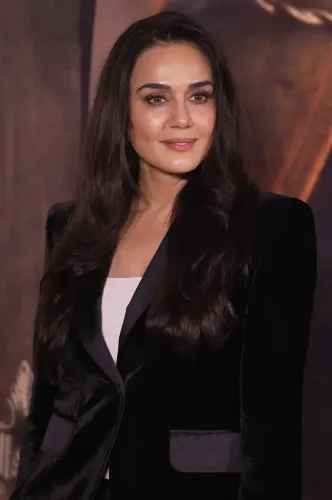
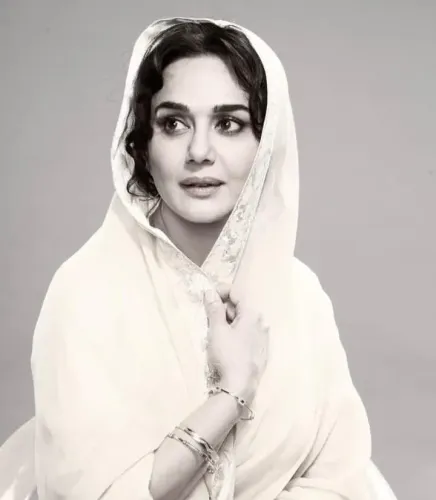
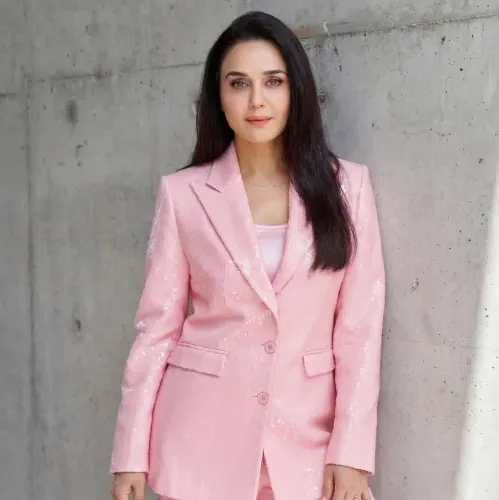
Preity Zinta on Bollywood shift: NRI romances out, India pride and history in
Synopsis
Preity Zinta's candid look back at 28 years in Bollywood doubles as an unintentional industry diagnosis: the NRI romance genre that made her a star has been displaced by films celebrating Indian history, the army, and national identity. Her own comeback vehicle — the Partition drama 'Batwara 1947' — is a case study in exactly the shift she is describing.
Key Takeaways
Preity Zinta says Bollywood has shifted from NRI romance films to stories centred on national pride, history, and the armed forces.
She credits Dil Chahta Hai (2000) as a turning point that introduced live sound recording and reduced dependence on dubbing.
Zinta made her debut in Mani Ratnam 's 'Dil Se' (1998) and went on to star in films including 'Kya Kehna' , 'Veer-Zaara' , and 'Soldier' .
After an eight-year break , she returned with the period drama 'Batwara 1947' , directed by Rajkumar Santoshi and backed by Aamir Khan Productions , released 14 August 2026 .
She notes that while technology and themes have evolved, the core pressure of delivering a strong performance on set remains unchanged.
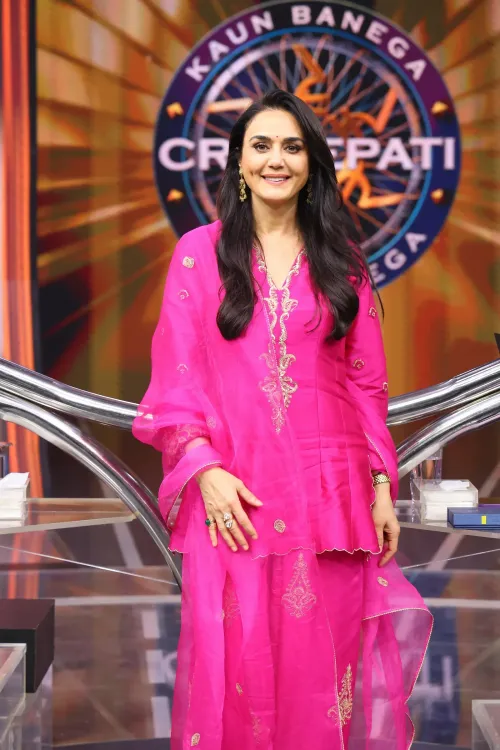
Actress Preity Zinta has reflected candidly on the sweeping changes she has witnessed across nearly three decades in Bollywood, noting a clear thematic pivot from NRI-centric romance films to stories rooted in national pride, history, and the armed forces. The actress, who made her debut in 1998, spoke about how filmmaking technology and storytelling sensibilities have transformed the industry she grew up in.
From NRI Romances to National Pride
Zinta observed that the dominant narrative of an earlier era — the NRI romance genre that defined much of late 1990s and early 2000s Hindi cinema — has given way to a different kind of storytelling. 'So, the one thing that I see that's different about films is that there's a lot more pride in being Indian,' she said. 'Earlier, we did a lot of NRI romances, but now the focus has shifted to India — you know, our pride, historical movies, movies on the army.'
She added that comedies, too, have evolved in tone and energy, though she was careful to note that the fundamental pressures of the craft have not changed. 'So, there are some differences, but not that many,' Zinta said.
Technology That Changed the Set
Zinta traced her career through two landmark technological transitions in Indian cinema. She recalled being part of the shift to live sound recording, which effectively reduced the industry's dependence on post-production dubbing. 'Dil Chahta Hai came in 2000, and it was a film that used live sound, so dubbing stopped. I think I was part of that change when it was happening in the industry,' she said.
The second shift she highlighted was the move from film cameras to digital technology — a transition that brought with it the now-ubiquitous phrase 'fix it in post.' She noted, however, that live-sound shoots have raised the bar for on-set performance. 'You have to get it right because earlier, you could dub it and fix it in dubbing. Now, you have to get it right because very few people dub,' she said.
A Career That Spans Two Eras
Zinta made her acting debut in director Mani Ratnam's 1998 film 'Dil Se', before going on to headline a string of commercially successful films including 'Kya Kehna', 'Veer-Zaara', and 'Soldier'. She recalled that debuting in 'Kya Kehna' — a film she described as 'very different' for a newcomer — was itself a marker of the industry's willingness to experiment.
'By 28 years, I say, I was very lucky that I actually came right at the end of the '90s, really. Films were changing then,' she said, reflecting on the timing of her entry into the industry.
Return to the Screen with 'Batwara 1947'
After an eight-year hiatus from acting — during which she focused on her personal life, marriage, and family — Zinta returned to the silver screen with the period drama 'Batwara 1947'. Directed by Rajkumar Santoshi and backed by Aamir Khan Productions, the film stars Sunny Deol and released in theatres on 14 August 2026. The choice of a historical drama for her comeback is itself consistent with the broader industry trend she described — a move toward stories grounded in India's past and identity.
Zinta's observations offer a rare insider account of Bollywood's evolution, from the technical to the thematic, and raise questions about what drives these shifts — audience demand, changing production economics, or the broader cultural moment.
Point of View
A Partition drama releasing on Independence Day eve, is not incidental — it is the industry's new grammar in action.
NationPress
24 Oct 2026
Frequently Asked Questions
What changes in Bollywood did Preity Zinta highlight?
Preity Zinta said Bollywood has moved away from NRI romance films toward stories rooted in national pride, history, and the armed forces. She also noted technological shifts, particularly the move to live sound recording and digital cameras, as transformative for how films are made.
When did Preity Zinta make her Bollywood debut?
Preity Zinta made her acting debut in director Mani Ratnam's 1998 Hindi film 'Dil Se'. She went on to establish herself with films including 'Kya Kehna', 'Veer-Zaara', and 'Soldier'.
What is 'Batwara 1947' and when did it release?
'Batwara 1947' is a period drama directed by Rajkumar Santoshi and produced by Aamir Khan Productions, starring Sunny Deol. It marks Preity Zinta's return to cinema after an eight-year hiatus and released in theatres on 14 August 2026.
Why does Preity Zinta consider 'Dil Chahta Hai' a turning point?
Zinta considers 'Dil Chahta Hai' (2000) significant because it introduced live sound recording to mainstream Hindi cinema, effectively reducing the industry's reliance on post-production dubbing. She says she was part of that transition as it was happening.
How has digital technology changed acting on Bollywood sets, according to Zinta?
Zinta says digital cameras and live sound have raised on-set performance standards, as actors can no longer rely on dubbing to correct errors. 'You have to get it right,' she said, contrasting it with the earlier era when dubbing offered a safety net.