Rajeev Khandelwal opens up about initial insecurity moving to Maharashtra as an outsider
Synopsis
Actor Rajeev Khandelwal revealed on his reality show that he once feared rejection as an outsider moving to Maharashtra from Jaipur. On Maharashtra Day, he shared how the state's warmth and his marriage into a Maharashtrian family transformed his sense of belonging, culminating in a touching moment where he recited a traditional ukhaana.
Key Takeaways
Rajeev Khandelwal opened up about initial insecurities when relocating from Jaipur to Maharashtra on his reality show Tum Ho Naa .
The actor expressed gratitude for Maharashtra's acceptance and warmth over the years.
Khandelwal recited a traditional ukhaana (Maharashtrian poetic verse) on the show, incorporating his wife Manjiri's name.
He credited his integration to the openness of Maharashtrian culture and his family's support.
The moment highlighted the broader theme of outsiders finding belonging through cultural engagement and personal connections.
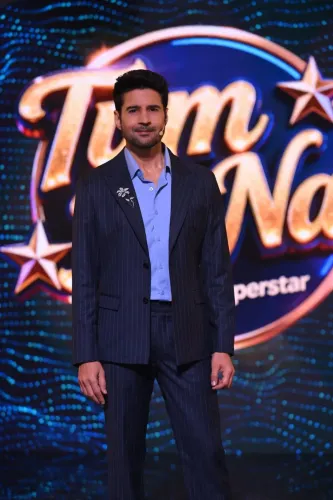
Actor Rajeev Khandelwal took to the stage of his reality show Tum Ho Naa on Maharashtra Day to reflect on his early years in the state, revealing the self-doubt he carried when he first relocated from Jaipur. Speaking candidly, the actor shared how he feared rejection despite eventually finding widespread acceptance.
From Outsider to Accepted
"I was always afraid whether people would accept me or not, whether I would receive love in such a big city," Khandelwal said on the show. "But perhaps your hearts are so big that wherever I go, people greet me with warm smiles. I am truly grateful to all of you." The actor's vulnerability highlighted the common anxiety many transplants to Maharashtra face when establishing themselves in the state's competitive entertainment and professional landscape.
Embracing Maharashtrian Culture
The episode took a cultural turn when show contestants encouraged Khandelwal to recite an ukhaana — a traditional Maharashtrian poetic verse historically recited at weddings and festivals. Initially hesitant, he agreed and, with guidance from a contestant, delivered the lines with sincerity: "Kahi shabd umadtat galaatun, kahi shabd umadtat galayaatun, Manjiri rani tuza ani fakta tuza naav umadta majhya hrudayaatun." The playful moment drew delight from the audience.
Personal Connection to Maharashtra
Khandelwal, who is married to Manjiri, a Maharashtrian-born woman, expressed gratitude for how the state and its people have embraced him. "You said Maharashtra has accepted me as a son-in-law, my mother-in-law has accepted me as a son-in-law," he reflected. "In your eyes I am good, and I hope in my mother-in-law's eyes too I am good." His remarks underscored the deeper integration he has achieved within Maharashtra's cultural and social fabric over the years.
The Outsider's Journey
The actor's candid reflection resonates with many who relocate to metropolitan states in search of opportunity. Khandelwal's journey from initial apprehension to genuine belonging illustrates how cultural openness and genuine effort can bridge the gap between outsiders and established communities. His willingness to engage with local traditions — from the ukhaana to his public acknowledgment of his Maharashtrian family — demonstrates a form of integration that goes beyond professional success.
Point of View
Often-unspoken narrative about regional acceptance in India's entertainment industry. While his story ends warmly — marriage into a Maharashtrian family, public cultural participation — the initial fear he articulated is real for many transplants. Maharashtra's openness is genuine, but the burden of 'fitting in' often falls on the outsider, not the host community. That Khandelwal felt compelled to publicly acknowledge and celebrate his integration suggests the bar for acceptance, even in cosmopolitan spaces, remains conditional on visible cultural deference.
NationPress
19 Sept 2026
Frequently Asked Questions
What did Rajeev Khandelwal reveal about his early days in Maharashtra?
Rajeev Khandelwal revealed that when he first moved to Maharashtra from Jaipur, he harboured fears about whether people would accept him as an outsider. Despite these initial insecurities, he eventually found widespread acceptance and warmth from the state and its people.
What is an ukhaana and why did Rajeev recite one?
An ukhaana is a traditional Maharashtrian poetic verse historically recited at weddings and festive occasions, where the speaker cleverly incorporates their partner's name. Rajeev recited one on his reality show to honour Maharashtrian culture and his wife Manjiri on Maharashtra Day.
Who is Rajeev Khandelwal married to?
Rajeev Khandelwal is married to Manjiri, who is Maharashtrian by birth. His integration into her family and culture has been central to his acceptance and belonging in the state.
On which show did Rajeev Khandelwal share this story?
Rajeev Khandelwal shared his reflections on his reality show Tum Ho Naa, where he took to the stage on Maharashtra Day to discuss his journey and cultural connection to the state.