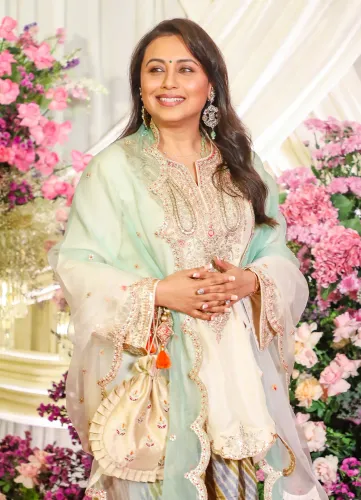
Did Rani Mukerji Really Enter Hindi Cinema Without a Master Plan?
Synopsis
As Rani Mukerji marks 30 years in Hindi cinema, she reflects on her journey of passion and growth, revealing that her path was unplanned yet fulfilling. Discover her thoughts on vulnerability, responsibility, and the transformative power of storytelling in her illustrious career.
Key Takeaways
Rani Mukerji reflects on her journey of 30 years in cinema.
She emphasizes the importance of responsibility over glamour in filmmaking.
Motherhood has sharpened her focus in choosing film roles.
Rani cherishes stories that evoke both discomfort and hope.
She values the audience's role in shaping an actor's destiny.
Mumbai, Jan 12 (NationPress) As she celebrates three decades in Hindi cinema, actress Rani Mukerji reflected on her journey, stating that she never stepped into the film industry with a master plan. She confessed that even now, she carries the same nervousness as that young girl who first faced the camera, hoping to find her place.
In a heartfelt message shared on the Instagram account of Yash Raj Films, Rani reminisced about her entry into the film world devoid of any grand ambitions or long-term goals.
“Thirty years… It feels surreal to say that aloud, but it also reminds me that when you engage in something you genuinely love, time seems to fly and you remain eager for more,” she reflected.
“Three decades ago, I entered a film set without a clear vision of becoming an actress. I didn’t chase the dream; it simply found me. A young girl, almost by chance, drawn into the world of cinema, hesitant at first… and yet, amidst a mix of instinct and vulnerability, I discovered my passion for the craft.”
She emphasized that cinema has a unique ability to capture emotions.
“Deep down, I am still that anxious girl standing before the camera for the first time, praying I wouldn’t forget my lines, wishing to feel accepted. I didn’t enter films with a master plan; I came with curiosity, fear, and a profound love for narratives, seeking to explore the human experience through characters.”
Looking back at her debut in Raja Ki Aayegi Baaraat in 1997, Rani noted that the film imparted an early lesson that cinema is more about responsibility than glamour. Portraying a woman fighting for dignity at the onset of her career significantly influenced her development as an actor.
“When I was part of Raja Ki Aayegi Baaraat, I was hardly aware of what a ‘career’ in cinema entailed. I only knew that acting invigorated me. That film taught me my first crucial lesson: cinema prioritizes responsibility over glamour. Portraying a woman battling for dignity early in my career shaped the actor I would evolve into.”
She described the late 1990s as a magical era, crediting the audience for her success. The films she starred in during this period not only opened new opportunities but also highlighted how deeply rooted Hindi cinema is in people’s hearts.
“The late ’90s were truly magical for me,” she noted.
“I often express that the audience shapes your destiny. The films I participated in during that time not only opened doors but also made me realize how profoundly Hindi cinema resonates with people. I enjoyed my time on set, experienced significant learning curves, and encountered numerous mentors and supporters. I wish I could teleport back to that time to relive those moments…”
For Rani, the early 2000s marked a journey of discovering her voice. She explained that Saathiya was not just a film; it was a pivotal moment.
“I portrayed a flawed, impulsive, emotional woman, which felt liberating. I didn’t strive for perfection on screen; I aimed for authenticity. This desire led me to films like Hum Tum, showcasing that women can be humorous, sharp, and vulnerable simultaneously.”
Then came Black, which she said transformed her perception of herself as an actor.
“Collaborating with Sanjay Leela Bhansali and Amitabh Bachchan challenged me to reach depths within myself I never knew existed. It demanded discipline, surrender, and bravery. Even now, Black remains one of the most emotionally intense experiences of my life.”
Discussing the lessons learned from Black, Rani remarked that silence often conveys more than words.
Rani also expressed her affinity for portraying women who defy societal norms, from Bunty Aur Babli and No One Killed Jessica to Mardaani.
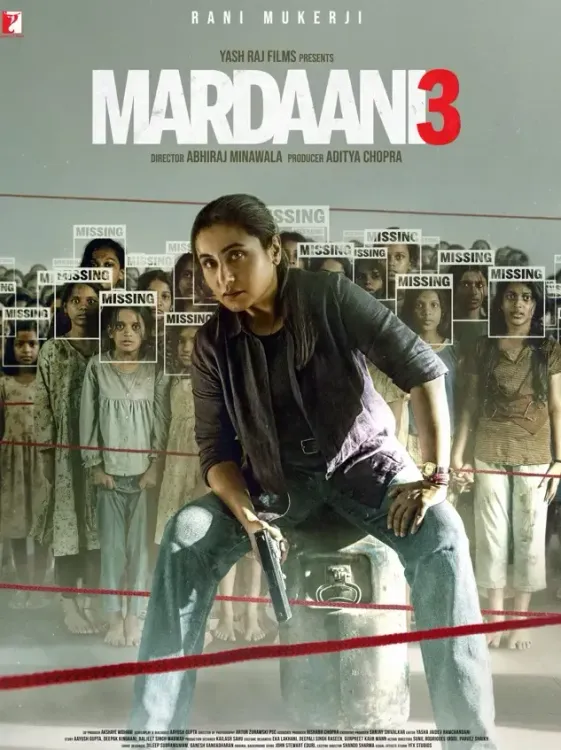
She shared that Mardaani holds a unique significance for her, as the character of Shivani Shivaji Roy embodies quiet strength and the importance of narrating uncomfortable yet hopeful stories.
“In particular, Mardaani is dear to me. Shivani Shivaji Roy exemplifies not loud heroism but quiet resilience. Through her, I discovered the power of sharing narratives that provoke discomfort while inspiring hope.”
The actress, married to YRF head Aditya Chopra, with whom she has a daughter named Adira born in 2015, also discussed how her marriage and motherhood reshaped her outlook, making her more selective and focused.
“Marriage and motherhood transformed me, not by hindering my progress, but by enhancing my focus. I became more discerning, protective of my energy, and acutely aware of the legacy I aspire to create and the films I wish to support.”
Films like Hichki and Mrs. Chatterjee vs Norway deepened her understanding of vulnerability and emotional authenticity.
“Hichki arrived at a point in my life where I comprehended vulnerability on a profound level. Portraying a teacher with Tourette syndrome reinforced the significance of representation and how empathy can alter perspectives.”
“Mrs. Chatterjee vs Norway” earned her the National Award, which she described as a moment of immense humility and gratitude.
Point of View
Responsibility, and the evolution of women in film offer a refreshing perspective, which resonates deeply with the audience. This narrative underlines the importance of personal growth and connection to one's craft in the entertainment industry.
NationPress
24 Sept 2026
Frequently Asked Questions
What inspired Rani Mukerji to pursue acting?
Rani Mukerji shared that acting found her rather than it being a dream she chased, highlighting her initial curiosity and passion for storytelling.
What lessons did Rani learn from her debut film?
Rani emphasized that her first film, Raja Ki Aayegi Baaraat, taught her that cinema is more about responsibility than glamour.
How did motherhood impact Rani's career choices?
Rani stated that motherhood sharpened her focus, making her more selective about the projects she undertakes, aiming for a meaningful legacy.
What themes does Rani explore in her films?
Rani often portrays characters that challenge societal norms and highlight the strength and vulnerability of women.
What significant awards has Rani Mukerji received?
Rani received her first National Award for her performance in Mrs. Chatterjee vs Norway, a moment she described as deeply humbling.