Did Ranveer Singh Apologize After Facing Backlash for His Kantara Mimicry?
Click to start listening
Synopsis
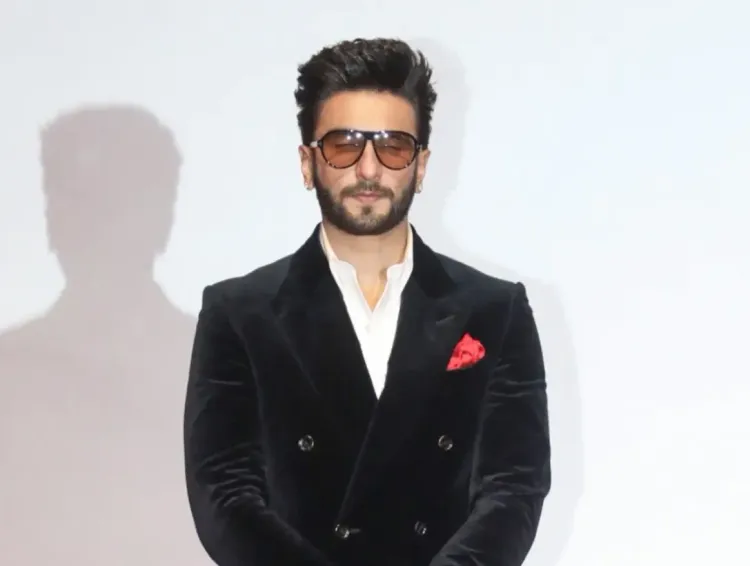
Actor Ranveer Singh recently faced immense backlash after mimicking Rishab Shetty's Daiva from "Kantara Chapter 1" during a film festival. His attempt to honor the performance backfired, resulting in a public apology. Explore the controversy surrounding his actions and the implications for cultural sensitivity.
Key Takeaways
- Ranveer Singh apologized for his mimicry of Rishab Shetty's Daiva.
- The incident sparked significant backlash from netizens and cultural groups.
- Ranveer emphasized his respect for all cultures in his apology.
- The 'Kantara' franchise portrays important cultural elements of the Tulu community in Karnataka.
- Understanding cultural sensitivities is crucial in artistic expressions.
Mumbai, Dec 2 (NationPress) Actor Ranveer Singh is currently under significant scrutiny for his imitation of Rishab Shetty's Daiva from "Kantara Chapter 1". In light of the backlash, he has issued an apology for his actions.
During the International Film Festival of India (IFFI) 2025, Ranveer attempted to recreate a scene where Rishab is overtaken by the Chamundi daiva during a ceremony.
Following the event, the Hindu Janajagruti Samiti (HJS) filed a formal complaint against him for allegedly offending religious sentiments.
The 'Dhurandhar' actor expressed that his aim was to celebrate Rishab Shetty's remarkable acting skills. He shared on Instagram Stories, "My intention was to highlight Rishabh's incredible performance in the film. As an actor, I understand the effort involved in performing that particular scene, and he has my utmost admiration. (sic)."
Ranveer emphasized his respect for all cultures, traditions, and beliefs within our nation.
"If I've hurt anyone's feelings, I genuinely apologize," his statement conveyed.
His troubles began after a video from the event circulated online, where he referred to the Chamundi daiva as a "Female ghost".
Expressing his admiration for the film, Ranveer stated, "I watched Kantara Chapter 1 in theaters, and Rishab, your performance was outstanding, especially when the female ghost (Chamundi daiva) enters your body – that shot was phenomenal."
He then proceeded to mimic the moment when Chamundi daiva takes over Rishab.
This imitation led to a wave of criticism from netizens who pointed out that Chamundi is revered as a Goddess, not a ghost.
For context, the 'Kantara' series showcases the deities worshipped by the Tulu community in Karnataka, where Daiva festivals are celebrated with grandeur across villages.
Rishab Shetty, who was present in the audience, attempted to intervene, signaling Ranveer to stop and reminding him that the portrayals of Daiva are sacred and should not be trivialized.
Taking the hint, Ranveer acknowledged Rishab's caution.
Point of View
I view this incident as a crucial reminder of the importance of cultural sensitivity in the entertainment industry. While artistic expression should be celebrated, it is essential to respect the beliefs and sentiments of diverse communities. Ranveer's apology reflects an understanding of the delicate balance between homage and offense.
NationPress
02/12/2025
Frequently Asked Questions
What triggered Ranveer Singh's apology?
Ranveer Singh faced backlash for mimicking Rishab Shetty's Daiva from "Kantara Chapter 1", which many found disrespectful.
What was the public's reaction to his mimicry?
Netizens criticized Ranveer for referring to Chamundi daiva as a 'Female ghost', pointing out the cultural significance of the character.
What did Ranveer say in his apology?
He expressed that his intention was to appreciate Rishab Shetty's performance and apologized for any hurt caused.
Who filed a complaint against Ranveer?
The Hindu Janajagruti Samiti (HJS) lodged a formal complaint against him for allegedly offending religious sentiments.
What does the 'Kantara' franchise depict?
It showcases the deities worshipped by the Tulu community in Karnataka, highlighting the cultural significance of Daiva festivals.