Sai Tamhankar: Audience, Not Just Industry, Blocks Regional Actors in Hindi Cinema
Synopsis
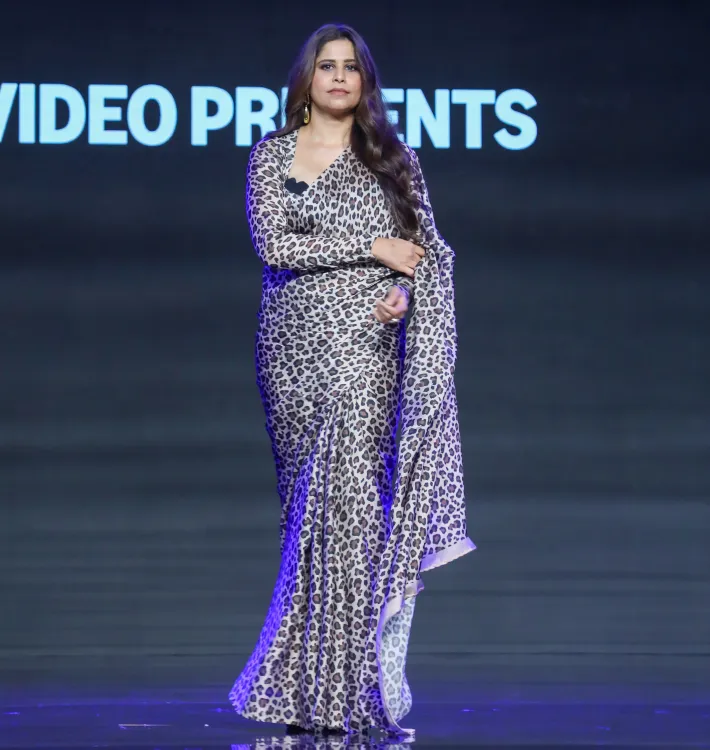
Sai Tamhankar, Marathi cinema's top-paid actress, has revealed that audience possessiveness over regional stars is as responsible as industry bias for blocking crossover careers — a candid admission that challenges Bollywood's self-image and sparks debate ahead of her period drama Matka King.
Key Takeaways
Sai Tamhankar , 39 , stated on April 24 that both the industry and audience are responsible for the regional-to-Hindi cinema divide.
She described audience possessiveness over regional actors as a form of love that inadvertently restricts career mobility across film industries.
Tamhankar's career began with small roles in Aamir Khan's Ghajini and Subhash Ghai's Black & White in 2008 .
She is one of the highest-paid actresses in Marathi cinema , having risen from supporting television roles.
Her latest project, Matka King , is a 1960s Mumbai period drama co-starring Vijay Varma and Kritika Kamra .
Tamhankar advocates that consistent, quality work is the only sustainable solution for actors navigating industry and audience bias.
Sai Tamhankar, one of Marathi cinema's highest-paid actresses, has spoken candidly about the real barriers regional actors face when transitioning into Hindi cinema, asserting that the divide is as much a product of audience mindset as it is of industry bias. The 39-year-old actress made these remarks in Mumbai on April 24, ahead of the release of her latest project, Matka King.
Sai Tamhankar on the Regional-Hindi Divide
When asked whether the Hindi film industry continues to treat regional actors unfairly during their crossover attempts, Tamhankar gave a nuanced response. "Yes and no. I think not just the industry, it's the audience also that is responsible," she told IANS.
She elaborated that the affection audiences carry for their mother tongue often translates into a possessiveness that inadvertently restricts an actor's professional mobility. This emotional attachment, while rooted in love, can become a limiting force for performers seeking to work across multiple film industries simultaneously.
"Sometimes it's out of love for your mother tongue that they feel possessive about you and they box you like you belong to this industry only. That is surely out of love. But otherwise, yes, sometimes, sometimes not," she explained.
Her Prescription: Let the Work Speak
Rather than dwelling on systemic obstacles, Tamhankar offered a pragmatic outlook for actors navigating this challenge. She believes the most powerful response to industry and audience bias is consistent, quality work.
"The only thing that an actor can do is really to keep one's head down and keep working. I think all the answers and all the solutions are hidden in your work," she said. This philosophy reflects a broader sentiment shared by several regional crossover artists who have found that sustained performance eventually breaks down institutional and perceptual walls.
From Television Roles to Marathi Stardom
Tamhankar's own career trajectory is a testament to persistence. She began in supporting roles on Marathi television, appearing in series such as Tuzyavina before earning wider recognition through Ya Gojirvanya Gharat. She subsequently appeared in Hindi television shows including Kasturi and Anubandh, broadening her reach beyond regional audiences.
Her film journey began in 2008 with minor roles in two high-profile productions — Subhash Ghai's Black & White and Aamir Khan's blockbuster Ghajini. She simultaneously made her Marathi film debut in the comedy Sanai Choughade, setting the tone for a dual-industry career that has since made her one of the most bankable names in Marathi cinema.
Matka King and the Mumbai of the 1960s
Tamhankar's latest venture, Matka King, is a period drama set in the Mumbai of the 1960s. The show revolves around an ambitious cotton trader who, driven by a hunger for legitimacy and social respect, launches a gambling game that comes to be known as 'Matka' — a game that would go on to grip the city's underworld and working-class imagination for decades.
The series also stars Vijay Varma and Kritika Kamra, bringing together a cast that blends Hindi and regional cinema talent — an irony not lost given Tamhankar's own statements about industry barriers. The show's premise taps into a rich vein of Mumbai noir and socio-economic history that has drawn significant audience curiosity.
Broader Implications for Regional Cinema Crossovers
Tamhankar's observations arrive at a time when the conversation around linguistic and regional identity in Indian cinema has intensified. The unprecedented pan-India success of films like RRR, KGF, and Pushpa has forced a rethinking of how regional and Hindi film industries relate to each other. Yet, for individual actors — especially women — the crossover remains more complicated than for directors or male leads.
Notably, several Marathi, Tamil, and Telugu actresses have publicly spoken about typecasting and limited casting calls in Bollywood, suggesting that Tamhankar's experience is far from isolated. Critics argue that the Hindi film industry's star system, dominated by established families and networks, creates structural disadvantages for outsiders regardless of talent.
As Matka King prepares to reach audiences, Tamhankar's candid reflections may spark a broader industry conversation about how streaming platforms — which increasingly commission multilingual and regional content — are quietly dismantling the very walls she describes. With OTT platforms blurring linguistic boundaries more rapidly than theatrical releases, the next chapter for regional actors crossing over could look very different from the one Tamhankar navigated.
Point of View
She surfaces an uncomfortable truth that the film industry rarely acknowledges publicly. This matters because as OTT platforms dissolve linguistic borders and pan-India films rewrite box-office logic, the old gatekeeping structures are being challenged from below, not above. Yet for women in regional cinema, the crossover ceiling remains stubbornly lower than for their male counterparts, a disparity that neither the industry nor its audiences have been held accountable for. Tamhankar's philosophy of 'work over noise' is admirable, but systemic change requires more than individual resilience — it demands structural reform in casting, representation, and how the industry values multilingual talent.
NationPress
19 Sept 2026
Frequently Asked Questions
What did Sai Tamhankar say about regional actors moving to Hindi cinema?
Sai Tamhankar said the divide between regional and Hindi cinema is created by both the industry and the audience. She noted that audience possessiveness over regional actors — rooted in love for their mother tongue — often boxes performers into a single industry.
What is Sai Tamhankar's new show Matka King about?
Matka King is a period drama set in 1960s Mumbai, following a cotton trader who starts the gambling game known as 'Matka' in his pursuit of legitimacy and respect. The show also stars Vijay Varma and Kritika Kamra.
How did Sai Tamhankar start her acting career?
Sai Tamhankar began her career in supporting roles on Marathi television, appearing in shows like Tuzyavina and Ya Gojirvanya Gharat. She made her film debut in 2008 with small roles in Ghajini and Black & White before rising to stardom in Marathi cinema.
Is Sai Tamhankar one of the highest-paid actresses in Marathi cinema?
Yes, Sai Tamhankar is widely recognised as one of the highest-paid actresses in Marathi cinema. Her success spans both Marathi films and television, with notable appearances in Hindi productions as well.
Why do regional actors struggle to transition into Bollywood?
According to Sai Tamhankar, the challenge comes from both industry bias and audience perception, where fans feel possessive about regional stars and resist seeing them in Hindi films. Structural factors like established star networks in Bollywood also create barriers for outsiders.