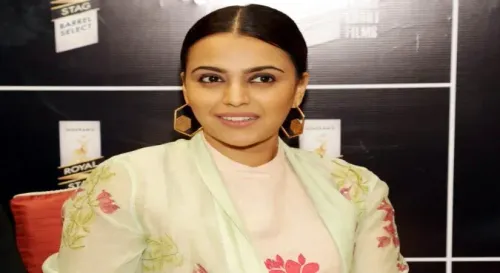
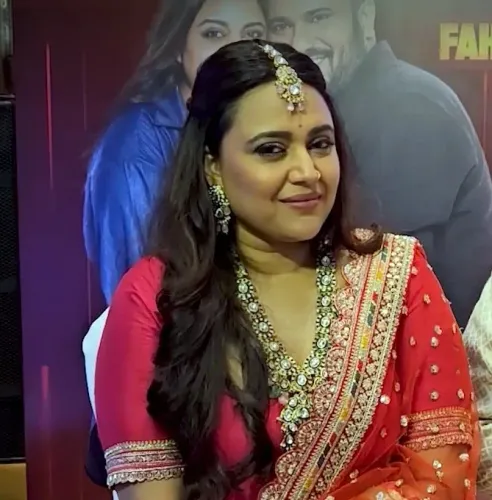
Swara Bhasker recalls director's misconduct on film after Tanu Weds Manu
Synopsis
Swara Bhasker's account on Rise & Fall Season 2 is striking not just for its detail but for what it reveals about the unspoken trade-offs young actresses make to protect their careers. Her line — 'He was the director; if I hit him, I would lose the film' — captures the structural silence that enables misconduct in the industry long after #MeToo.
Key Takeaways
Swara Bhasker described alleged misconduct by an unnamed director on a 56-day shoot taken up shortly after Tanu Weds Manu .
The director reportedly pushed for private, one-on-one rehearsals for a romantic song sequence, which Bhasker refused.
She alleged the director visited her hotel room door at night and asked for a hug, which she declined.
Bhasker said she could not confront him directly because doing so would have meant losing the film.
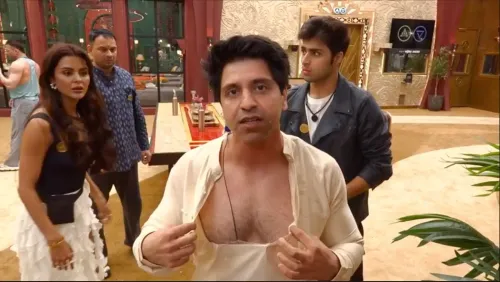
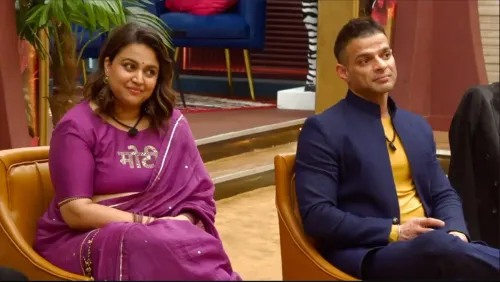
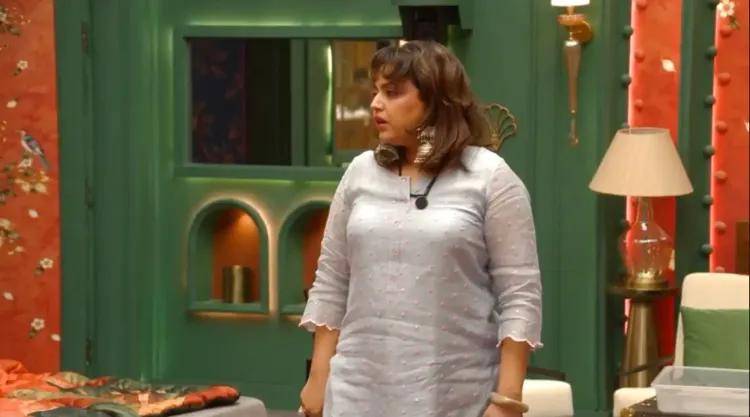
The account was shared on the reality show Rise & Fall Season 2 , with contestants Tej Pratap Yadav and Priyanka Chahar Choudhary present.
Actress Swara Bhasker has spoken about an uncomfortable and allegedly boundary-crossing experience with an unnamed director during the early years of her career, in an account that surfaced on the reality show Rise & Fall Season 2. The incident, she said, occurred on a major lead project she had taken up shortly after the breakthrough success of Tanu Weds Manu.
What Swara Bhasker Described
Bhasker recalled that the director of the unnamed film began making unsolicited advances under the cover of professional interactions. She said he repeatedly pushed for private rehearsals and script readings, framing his conduct as creative necessity. According to her account, he first suggested that a director must 'fall in love' with his actress — a remark she said she initially let pass.
The situation escalated, she recalled, when the director proposed a one-on-one rehearsal for a romantic song sequence. Bhasker said she pushed back immediately: 'You call the actor, you call the camera person. If it is a rehearsal, then everyone should be there. Why should we do it alone?' Her refusal to participate privately was, by her account, deliberate and firm.
The Guest House Incident
Bhasker further described an episode at a guest house during what was reportedly a 56-day shoot, where she found herself in the company of the director and the cinematographer while both men were drinking. She questioned the appropriateness of expecting a woman in her early twenties to engage in a reading or rehearsal in that setting. 'Can you imagine why a young woman — a girl who is in her early 20s — should be made to rehearse or do a reading between two drunk men?' she said.
The evening did not end there. Bhasker alleged that the director later came to her door at night and knocked. When she opened it, he asked, 'Can I get a hug?' She said she declined.
Why She Did Not Confront Him Directly
During the show, fellow contestant Tej Pratap Yadav asked why she had not physically reacted to the director's conduct. Bhasker explained that retaliating was not a viable option at the time: she could not risk losing the film. 'He was the director of that film; if I hit him, I would lose the film,' she said. The remark underscores the professional power dynamics that can silence young performers facing harassment on set.
Contestant Priyanka Chahar Choudhary then pointed out that Tej was present now, to which Bhasker responded that she would address the director directly.
Broader Context
Bhasker's account is the latest in a pattern of disclosures by Indian actresses describing misconduct by senior industry figures — a conversation that gained momentum following the #MeToo wave and has continued in various formats since. The fact that she has chosen to speak about it now, naming no one but describing the incidents with specificity, reflects both a shift in the space available for such disclosures and the limits that still exist around naming perpetrators. The unnamed director has not responded publicly to the allegations.
Point of View
A shoot duration, and a sequence of escalating incidents — which makes it harder to dismiss as general grievance. Yet the deliberate withholding of the director's name points to a structural problem: the industry's power architecture still makes naming costly enough that even a well-established actress hedges. The real story here is not just what the director allegedly did but why, years later, the calculus of naming him still does not feel safe. Until that changes, candid accounts on reality shows remain catharsis without accountability.
NationPress
1 Oct 2026
Frequently Asked Questions
What did Swara Bhasker reveal on Rise & Fall Season 2?
Swara Bhasker described a series of alleged boundary violations by an unnamed director on a film she took up shortly after Tanu Weds Manu. The incidents included pressure for private rehearsals, an uncomfortable guest house situation involving alcohol, and an alleged late-night visit to her door where the director asked for a hug.
Which film was Swara Bhasker referring to?
Bhasker did not name the film, but said it was a major lead role she had taken on shortly after the success of Tanu Weds Manu, with a 56-day shoot schedule. The director's identity was also not disclosed.
Why did Swara Bhasker not confront the director at the time?
Bhasker explained that physically retaliating or directly confronting the director would have risked her losing the film. She said the professional power dynamic made it difficult to push back beyond refusals. This reflects a broader pattern seen in many industry misconduct accounts.
Who else was present when Bhasker shared this account?
The disclosure was made on Rise & Fall Season 2. Fellow contestants Tej Pratap Yadav and Priyanka Chahar Choudhary were among those who reacted to Bhasker's account during the conversation.
How does this fit into the broader conversation about misconduct in Bollywood?
Bhasker's account is part of an ongoing pattern of disclosures by Indian actresses describing inappropriate behaviour by senior industry figures, a conversation that gained significant momentum during the #MeToo movement. Her account adds specificity — a timeframe, a shoot length, and a sequence of incidents — but the withholding of the director's name highlights the professional risks that still accompany such disclosures.