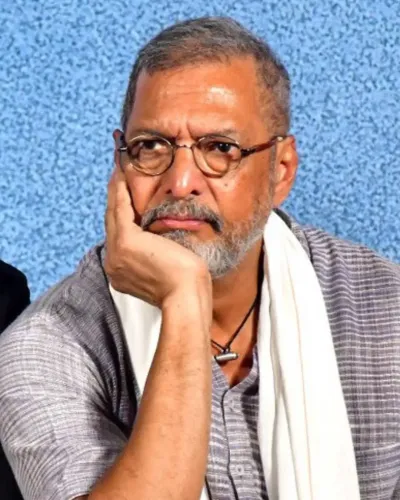
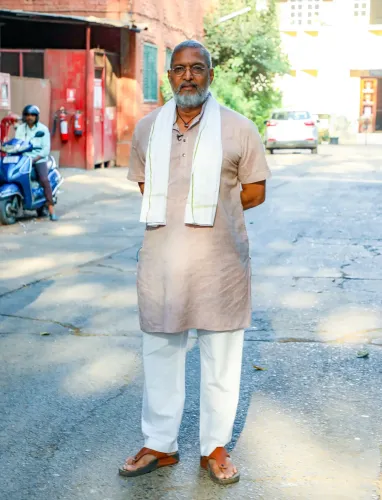
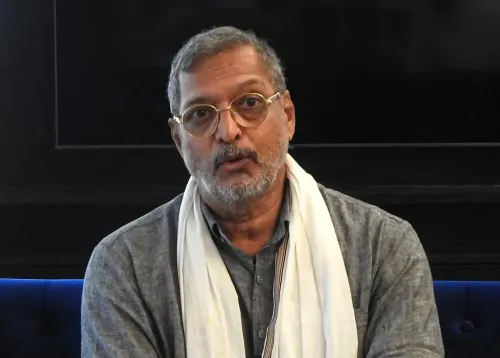
Tanushree Dutta doubts Nana Patekar's death, links it to SSR probe

Synopsis
Tanushree Dutta used an Instagram Live session to cast doubt — without evidence — on whether Nana Patekar, who died on 8 October at 75, had actually passed away, suggesting his death could be a bid to escape exposure in the Sushant Singh Rajput investigation. Her remarks revive one of Bollywood's most high-profile #MeToo cases and underscore how unresolved allegations outlast the accused.
Key Takeaways
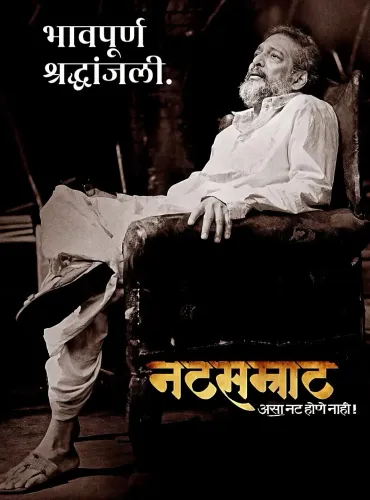
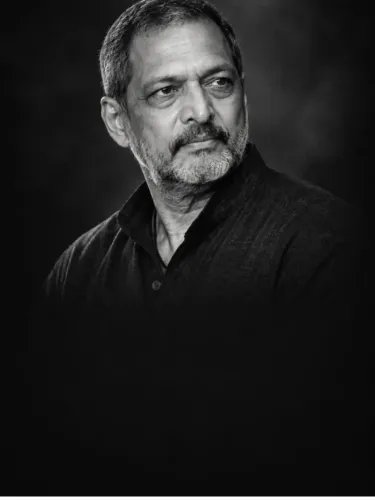
Nana Patekar died on 8 October 2026 following a cardiac arrest, aged 75 .
Tanushree Dutta publicly expressed doubt about his death during an Instagram Live session, without providing evidence.
Dutta drew a speculative link between Patekar's death and the ongoing probe into the deaths of Sushant Singh Rajput and Disha Salian .
Dutta had originally accused Patekar of sexual harassment on the sets of the 2008 film Horn 'OK' Pleassss during India's #MeToo movement in 2018 ; Patekar denied the allegations.
Dutta alleged she suffered career sabotage, emotional distress, and physical injury in the years following her accusations.
She also challenged the norm of refraining from criticising the deceased, invoking the example of Ravana .
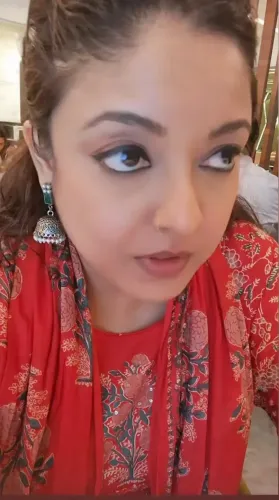
Actress Tanushree Dutta has publicly expressed doubt over whether veteran actor Nana Patekar, who died on 8 October 2026 following a cardiac arrest at the age of 75, has actually passed away — suggesting, without evidence, that his death could be a means of escaping scrutiny linked to the ongoing investigation into the deaths of Sushant Singh Rajput and Disha Salian. Dutta made the remarks during an Instagram Live session with her fans.
What Tanushree Said
Speaking candidly to her followers, Dutta drew a speculative connection between Patekar's death and the renewed investigations surrounding Rajput and Salian. 'Best thing, he died by his own hands. If he has died also I am a little bit doubtful. Because now the case of Sushant Singh Disha Salyan has come out. So, a lot of people are getting exposed. And a very deep investigation is going on. So, if there is a connection from far away, then his name is going to come out today or tomorrow,' she said.
She added: 'So, I have a little doubt that he has really died or it is a way to escape. Anything can happen. But if he has really died, then a very big devilish person has gone from this world.'
It is important to note that Dutta provided no evidence to support her doubts, and her remarks represent personal opinion, not verified fact.
Background: The 2018 #MeToo Allegation
Dutta first accused Nana Patekar of sexually harassing her on the sets of the 2008 film Horn 'OK' Pleassss, a claim that became one of the most prominent cases of India's #MeToo movement in 2018. Patekar consistently denied the allegations. The case drew widespread attention and is widely credited with galvanising a broader conversation about workplace harassment in the Indian film industry.
During the same live session, Dutta described the alleged aftermath of her accusations in stark terms. 'The person who ruined my life. The person who sent goons. The person who gave me anxiety. The person who harassed me. The person who ruined my work. The person who did weird things outside my house. He wasn't alone. He was a group of devils,' she said. She alleged that she had suffered career sabotage, emotional distress, and physical health consequences as a result of prolonged stress.
Allegations of Personal Hardships
Dutta recounted a series of incidents she attributed to intimidation and harassment, including suspicions about a domestic worker she alleged was conspiring against her and a claim that an autorickshaw she was travelling in had its brakes tampered with, leaving her injured and still recovering. These claims have not been independently verified.
'He ruined my life. He ruined my career. He ruined my mind. He almost ruined my mental balance,' she said, adding that her faith and spiritual practices — including visits to Ujjain, devotion to Mahakal, and chanting the Hare Ram, Hare Krishna mantra — had helped her through what she described as an extremely difficult period.
On Speaking Ill of the Dead
Dutta also challenged the social convention of refraining from criticising a person after their death. Drawing on Hindu mythology, she invoked the example of Ravana to question the principle. 'Today's lesson is, if it is such a thing that a dead person should not be disturbed, then from the coming year, stop burning Ravana's statues. Because he was a great Hindu, a scholar. He had great powers. He was very educated. He was very bright,' she said.
Her remarks are likely to keep the spotlight on her long-running allegations even as the film industry mourns Patekar's passing, and raise questions about the unresolved legal and moral dimensions of India's #MeToo cases.
Point of View
However, is a deeper failure: India's #MeToo moment generated enormous cultural heat in 2018 but produced almost no legal resolution, leaving accusers with no institutional closure and a platform-driven void to fill. The Sushant Singh Rajput investigation has become a vessel for a wide range of unverified conspiracy theories, and Dutta's comments risk adding to that noise rather than advancing accountability. The more important story is why, eight years on, neither the courts nor the industry have delivered a credible reckoning with the allegations she first raised.
NationPress
10 Oct 2026
Frequently Asked Questions
What did Tanushree Dutta say about Nana Patekar's death?
Tanushree Dutta said she has doubts about whether Nana Patekar has actually died, speculating — without evidence — that his death could be a way to escape scrutiny linked to the investigation into the deaths of Sushant Singh Rajput and Disha Salian. She made these remarks during an Instagram Live session on 10 October 2026.
When and how did Nana Patekar die?
Nana Patekar died on 8 October 2026 following a cardiac arrest. He was 75 years old at the time of his death.
What were Tanushree Dutta's original allegations against Nana Patekar?
Tanushree Dutta accused Nana Patekar of sexually harassing her on the sets of the 2008 film Horn 'OK' Pleassss. Her allegations, made public during India's #MeToo movement in 2018, were among the most prominent cases of that period. Patekar denied the allegations.
What other claims did Tanushree Dutta make during her Instagram Live?
Dutta alleged she faced career sabotage, emotional distress, intimidation, and physical harm in the years after her #MeToo allegations. She also claimed a domestic worker had conspired against her and that an autorickshaw she was in had its brakes tampered with, leaving her injured. These claims have not been independently verified.
Why did Tanushree Dutta reference the Sushant Singh Rajput investigation?
Dutta suggested that an ongoing investigation into the deaths of Sushant Singh Rajput and Disha Salian was exposing new names, and that this scrutiny could have eventually implicated Nana Patekar. She offered no evidence linking Patekar to that investigation; the remarks were speculative and personal in nature.